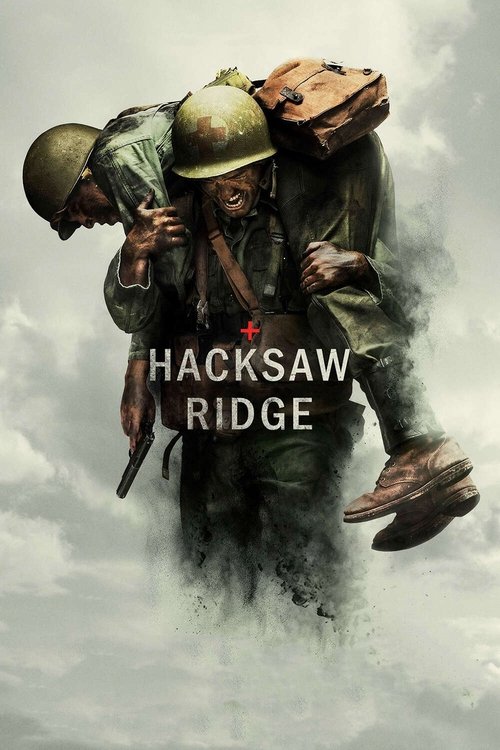
Hacksaw Ridge
2016 · Directed by Mel Gibson
Woke Score
CriticCritic Score
Audience
Ultra Based
Critics rated this 67 points above its woke score. Among Ultra Based films, this critic score ranks #584 of 1469.
Representation Casting
Score: 0/100
The cast reflects the historical military unit and contains no apparent effort to diversify representation beyond what the 1940s setting might demand. No evidence of deliberate inclusive casting practices.
LGBTQ+ Themes
Score: 0/100
No LGBTQ+ characters, themes, or representation appear in the film. The narrative focuses entirely on heterosexual relationships and traditional family structures.
Feminist Agenda
Score: 0/100
Women in the film serve as romantic interests and family members without agency or narrative prominence. No feminist themes or female-centered storytelling is evident.
Racial Consciousness
Score: 0/100
The film contains no exploration of racial dynamics, systemic racism, or racial consciousness. Japanese soldiers are depicted as generic enemies without humanization or cultural context.
Climate Crusade
Score: 0/100
Climate change, environmental consciousness, or ecological themes play no role whatsoever in the film's narrative or thematic concerns.
Eat the Rich
Score: 0/100
No critique of capitalism, wealth inequality, or economic systems appears in the film. Military hierarchy is presented as natural and necessary rather than questioned.
Body Positivity
Score: 0/100
The film contains no body diversity messaging or body positivity themes. Physical standards for soldiers are presented as unquestioned norms.
Neurodivergence
Score: 0/100
No characters demonstrate or discuss neurodivergence, disability representation, or neurodivergent perspectives in any meaningful way.
Revisionist History
Score: 5/100
The film presents a sympathetic portrayal of a conscientious objector within a military context, which offers a counter-narrative to typical war heroism, though this reflects the actual historical record rather than revisionism.
Lecture Energy
Score: 0/100
The film does not lecture the audience about progressive values or social issues. Its moral lessons derive from religious faith and personal conviction rather than social commentary.


Synopsis
WWII American Army Medic Desmond T. Doss, who served during the Battle of Okinawa, refuses to kill people and becomes the first Conscientious Objector in American history to receive the Congressional Medal of Honor.
Consciousness Assessment
Hacksaw Ridge concerns itself with a question of profound moral consequence: what does it mean to maintain one's convictions in the face of institutional pressure and collective violence. The film, however, treats this question as fundamentally a matter of personal faith rather than social consciousness. Desmond Doss's refusal to carry weapons emerges not from any critique of militarism or systemic violence, but from Seventh-day Adventist doctrine. The narrative remains firmly rooted in individual conscience and spiritual heroism, categories that predate modern progressive discourse by decades.
The film presents its historical subjects, military structures, and social hierarchies with minimal interrogation. The cast is predominantly white, which reflects both the historical composition of the unit and the filmmaking conventions of 2016, but there is no visible effort to expand or complicate the representational landscape. Women appear primarily as romantic interest and family members. No characters demonstrate neurodivergence, engage with climate science, or challenge economic structures. The film's moral framework centers on personal virtue, sacrifice, and faith in God instead of collective action or systemic reform.
This is a war film that celebrates individual heroism and moral clarity without engaging with the vocabulary of contemporary progressive sensibilities. The violence is depicted with considerable graphic intensity, and the film's reverence for Doss's courage speaks to a more traditional American mythology of virtue than to any modern concern with structural oppression or intersectional awareness. It is a film about conscience, but not about consciousness.
Analysis generated by our Consciousness Algorithm
Critic Reviews
“The best war film since "Saving Private Ryan." It is violent, harrowing, heartbreaking and unforgettable. And yes, it was directed by Mel Gibson. He deserves a medal, too.”
“Hacksaw Ridge is one of the best films of 2016. And the victory is all the more sweet for Gibson in that he succeeds on his own weird terms. ”
“Remarkably, Hacksaw Ridge coalesces into a memorable whole. ”
“It is almost as if Gibson is daring his audience to turn away from his opera of barbarity – but perversely, his violence is the only compelling element of Hacksaw Ridge. Perhaps ironically for a war film, the rest of it is mostly a draw.”
Consciousness Markers
The cast reflects the historical military unit and contains no apparent effort to diversify representation beyond what the 1940s setting might demand. No evidence of deliberate inclusive casting practices.
No LGBTQ+ characters, themes, or representation appear in the film. The narrative focuses entirely on heterosexual relationships and traditional family structures.
Women in the film serve as romantic interests and family members without agency or narrative prominence. No feminist themes or female-centered storytelling is evident.
The film contains no exploration of racial dynamics, systemic racism, or racial consciousness. Japanese soldiers are depicted as generic enemies without humanization or cultural context.
Climate change, environmental consciousness, or ecological themes play no role whatsoever in the film's narrative or thematic concerns.
No critique of capitalism, wealth inequality, or economic systems appears in the film. Military hierarchy is presented as natural and necessary rather than questioned.
The film contains no body diversity messaging or body positivity themes. Physical standards for soldiers are presented as unquestioned norms.
No characters demonstrate or discuss neurodivergence, disability representation, or neurodivergent perspectives in any meaningful way.
The film presents a sympathetic portrayal of a conscientious objector within a military context, which offers a counter-narrative to typical war heroism, though this reflects the actual historical record rather than revisionism.
The film does not lecture the audience about progressive values or social issues. Its moral lessons derive from religious faith and personal conviction rather than social commentary.