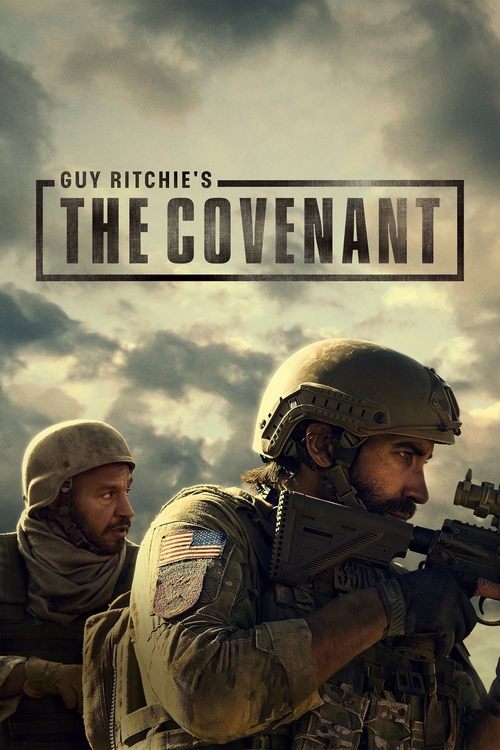
Guy Ritchie's The Covenant
2023 · Directed by Guy Ritchie
Woke Score
CriticCritic Score
Audience
Based
Critics rated this 41 points above its woke score. Among Based films, this critic score ranks #217 of 345.
Representation Casting
Score: 20/100
Afghan interpreter is a central character, but his presence serves the plot rather than representing conscious DEI casting. The character is treated with narrative weight but not identity-focused positioning.
LGBTQ+ Themes
Score: 0/100
No LGBTQ+ themes, characters, or subtext present in this military action film.
Feminist Agenda
Score: 5/100
Emily Beecham appears in the cast but the film is fundamentally focused on male military hierarchy and brotherhood. Minimal feminist agenda or female-centered storytelling.
Racial Consciousness
Score: 30/100
The film features cross-cultural bonding between American and Afghan characters and some critics note it touches on American exceptionalism, but the focus remains on individual duty rather than systemic racial or colonial critique.
Climate Crusade
Score: 0/100
No climate themes or environmental messaging present in this military action drama.
Eat the Rich
Score: 0/100
Standard military action film with no critique of capitalism or 'eat the rich' messaging.
Body Positivity
Score: 0/100
War film focused on military combat and physical prowess. No body positivity agenda or messaging.
Neurodivergence
Score: 0/100
No representation of neurodivergent characters or exploration of neurodivergence themes.
Revisionist History
Score: 15/100
The film deals with the Afghanistan war and some critics note it engages with American exceptionalism, but it prioritizes narrative momentum over systematic historical reexamination.
Lecture Energy
Score: 25/100
While the film carries thematic weight about duty and sacrifice, it is primarily an action-thriller that avoids heavy-handed messaging or preachy speech-making about social issues.


Synopsis
During the war in Afghanistan, a local interpreter risks his own life to carry an injured sergeant across miles of grueling terrain.
Consciousness Assessment
Guy Ritchie's The Covenant presents itself as a straightforward military action drama, the kind of film that concerns itself primarily with the logistics of survival and the bonds forged under fire. Jake Gyllenhaal's Sergeant Kinley and Dar Salim's Afghan interpreter Ahmed are locked into a narrative of duty and honor that transcends the political complications of their respective nations, which is precisely the film's limitation when evaluated through the lens of contemporary social consciousness. The film exists in a pre-woke register, operating according to the older logic of universal soldierly values rather than the fractured, identity-conscious frameworks that have come to dominate prestige cinema in the 2020s.
The critical consensus noted that the film flirts with a more substantive interrogation of American exceptionalism in its opening movements, only to abandon such questioning in favor of visceral action sequences and the personal covenant between its two leads. This retreat into pure narrative momentum rather than thematic persistence is the film's defining characteristic. We encounter an Afghan character of consequence, yet the film shows no interest in centering his cultural perspective or leveraging his presence to complicate American military mythology in any systematic way. He is, ultimately, a vehicle for Gyllenhaal's character's redemption.
The production values are competent, the action sequences functional, and the emotional beats serviceable. What the film does not do is perform the elaborate cultural work that has become expected of prestige action cinema. There are no speeches about systemic injustice, no characters whose identities are foregrounded as sites of political significance, no interrogation of the machinery that produces both interpreters and the wars they serve. It is, in short, a war film in the old sense: concerned with duty, sacrifice, and the individual moral choices made under duress. One can respect the refusal to performatively signal progressive values while simultaneously noting that this refusal leaves the film substantially untouched by the cultural preoccupations of its own historical moment.
Analysis generated by our Consciousness Algorithm
Critic Reviews
“In “The Covenant,” Guy Ritchie tells a story of two men, but he’s really giving this war that never succeeded a kind of closure. He uses the power of movies to coax out the heart that fueled our actions, and that made our loss so hard to bear. ”
“It’s almost as if Ritchie wants to make sure we know he directed this, because it doesn’t seem like “a Guy Ritchie film.” Duly noted, and kudos to the veteran filmmaker for delivering a skillfully made and gripping tale about the hell of modern war and the universal nature of sacrifice, commitment and heroism.”
“The Covenant is so self-assured in its noble filmmaking values and beliefs. It makes a knowing nod between two men— and the heroically punishing sacrifices they risked for one another— one of the most moving moments on screen this year.”
“The film bangs the drum loudly on behalf of American exceptionalism.”
Consciousness Markers
Afghan interpreter is a central character, but his presence serves the plot rather than representing conscious DEI casting. The character is treated with narrative weight but not identity-focused positioning.
No LGBTQ+ themes, characters, or subtext present in this military action film.
Emily Beecham appears in the cast but the film is fundamentally focused on male military hierarchy and brotherhood. Minimal feminist agenda or female-centered storytelling.
The film features cross-cultural bonding between American and Afghan characters and some critics note it touches on American exceptionalism, but the focus remains on individual duty rather than systemic racial or colonial critique.
No climate themes or environmental messaging present in this military action drama.
Standard military action film with no critique of capitalism or 'eat the rich' messaging.
War film focused on military combat and physical prowess. No body positivity agenda or messaging.
No representation of neurodivergent characters or exploration of neurodivergence themes.
The film deals with the Afghanistan war and some critics note it engages with American exceptionalism, but it prioritizes narrative momentum over systematic historical reexamination.
While the film carries thematic weight about duty and sacrifice, it is primarily an action-thriller that avoids heavy-handed messaging or preachy speech-making about social issues.