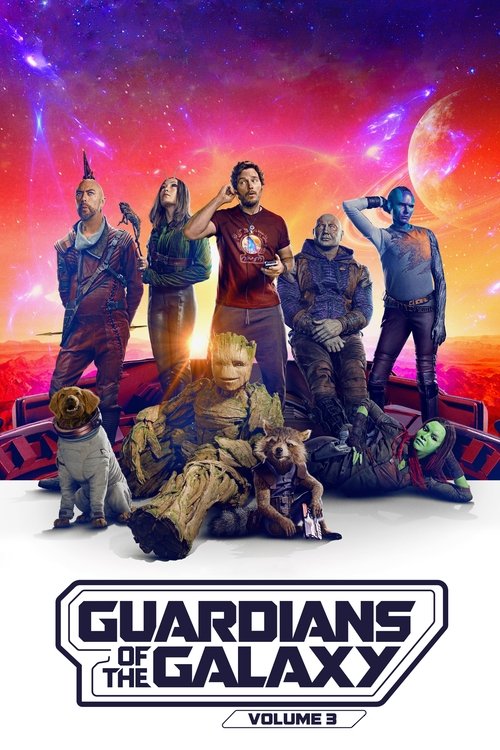
Guardians of the Galaxy Vol. 3
2023 · Directed by James Gunn
Woke Score
CriticCritic Score
Audience
Based
Critics rated this 36 points above its woke score. Among Based films, this critic score ranks #209 of 345.
Representation Casting
Score: 45/100
The ensemble features actors of various ethnic backgrounds and genders in prominent roles, but this diversity is presented as narrative fact rather than as a deliberate statement about representation. The casting appears natural to the story rather than curated for progressive visibility.
LGBTQ+ Themes
Score: 15/100
While Mantis has been subject to fan speculation about gender identity and neurodivergence, the film itself does not explicitly engage with LGBTQ themes or representation. No canonical queer relationships or identities are foregrounded in the narrative.
Feminist Agenda
Score: 20/100
Female characters are present and capable, but the film does not pursue any particular feminist agenda or commentary on gender dynamics. Gamora's absence and Nebula's arc involve trauma and agency, but these are treated as character development rather than feminist statement.
Racial Consciousness
Score: 25/100
The film features a racially diverse cast but does not engage with racial consciousness as a thematic concern. Characters of color exist within the narrative without their racial identity being a subject of cultural interrogation.
Climate Crusade
Score: 5/100
Climate themes are entirely absent from the film. The High Evolutionary's villainy involves genetic experimentation and bodily autonomy, not environmental destruction or climate activism.
Eat the Rich
Score: 35/100
The High Evolutionary serves as a figure of unchecked power and exploitation, with his experiments representing corporate and authoritarian abuse of sentient beings. This functions as anti-capitalist commentary, though it remains relatively surface-level and does not interrogate systemic economic structures.
Body Positivity
Score: 20/100
While the film involves themes of bodily autonomy and the violation of bodies through experimentation, it does not engage with body positivity as a modern progressive marker. The concern is with consent and freedom rather than the acceptance of diverse body types.
Neurodivergence
Score: 30/100
Mantis is presented as having atypical cognition and social patterns, and the film treats her with affection and respect. However, neurodivergence is not explicitly foregrounded or discussed, and her character arc does not center on disability acceptance or neurodivergent identity.
Revisionist History
Score: 0/100
The film contains no revisionist history. It is a science fiction narrative with no engagement with historical events, revisionism, or reinterpretation of the past.
Lecture Energy
Score: 15/100
The film earns its emotional weight through character moments and plot development rather than through preachy exposition or lecture-based moralizing. Its themes emerge organically from the narrative without characters explicitly discussing progressive principles.


Synopsis
Peter Quill, still reeling from the loss of Gamora, must rally his team around him to defend the universe along with protecting one of their own. A mission that, if not completed successfully, could quite possibly lead to the end of the Guardians as we know them.
Consciousness Assessment
Guardians of the Galaxy Vol. 3 arrives as a deeply earnest meditation on found family, mortality, and the ethics of bodily autonomy, which would be remarkable if the film did not assume these themes require absolutely no nuance whatsoever. James Gunn has crafted a spectacle that wears its emotional sincerity like an oversized costume, asking us to mourn sentient raccoons and genetically engineered beings with the gravity typically reserved for Shakespearean tragedy. The High Evolutionary's experiments function as a metaphor for corporate exploitation and the violation of bodily integrity, yet the film treats this setup as window dressing for what amounts to a fairly conventional superhero narrative of good versus evil.
The cast remains aggressively diverse, a fact the film neither celebrates nor interrogates. Zoe Saldaña continues her career-long mission to portray green women, while Pom Klementieff's Mantis occupies an interesting space as a character whose neurodivergent traits and gender presentation have been topics of fan discourse. The film does not, however, make these aspects central to its social consciousness in any deliberate way. We witness a story about found family, belonging, and acceptance, but these themes operate at the level of basic humanism rather than contemporary progressive sensibility. The film's central tragedy involves a father figure learning to care for a child, which is touching but not particularly reflective of modern cultural preoccupations.
What emerges most clearly is a film comfortable with its own earnestness without feeling the need to lecture about the systems it critiques. The High Evolutionary is a villain, his crimes are presented as crimes, and the rescue of his victims is presented as heroic. This straightforward moral clarity, while admirable in its own way, does not constitute an engagement with the specific markers of contemporary cultural awareness that have come to define modern progressive cinema. Guardians Vol. 3 is a film about marginalized beings (a raccoon, an assassin, a tree, a humanoid with impulse control issues) who find meaning together, but it treats this premise as a story about people rather than a statement about representation itself.
Analysis generated by our Consciousness Algorithm
Critic Reviews
“It’s not just a film, it’s a blaze of glory, and that sense of daring is both the best thing about Vol. 3 and, occasionally, the worst.”
“Guardians of the Galaxy Vol. 3 mixes Gunn's usual wacky action and laugh-out-loud humor with a grounded, emotional story to create something special.”
“Unlike other filmmakers, who make it feel like we’re sitting back and watching someone else get to play, Gunn keeps the surprises coming, so audiences are actively engaged throughout, trying to manage multiple storylines and the ever-changing loyalties between characters.”
“The full-on assault on the audience’s tear ducts in much of “Guardians 3″ may be sincere, but the rhythms and pacing of the film never find the beat. We end up waiting for the reductive punchline, or for another round of wanton slaughter.”
Consciousness Markers
The ensemble features actors of various ethnic backgrounds and genders in prominent roles, but this diversity is presented as narrative fact rather than as a deliberate statement about representation. The casting appears natural to the story rather than curated for progressive visibility.
While Mantis has been subject to fan speculation about gender identity and neurodivergence, the film itself does not explicitly engage with LGBTQ themes or representation. No canonical queer relationships or identities are foregrounded in the narrative.
Female characters are present and capable, but the film does not pursue any particular feminist agenda or commentary on gender dynamics. Gamora's absence and Nebula's arc involve trauma and agency, but these are treated as character development rather than feminist statement.
The film features a racially diverse cast but does not engage with racial consciousness as a thematic concern. Characters of color exist within the narrative without their racial identity being a subject of cultural interrogation.
Climate themes are entirely absent from the film. The High Evolutionary's villainy involves genetic experimentation and bodily autonomy, not environmental destruction or climate activism.
The High Evolutionary serves as a figure of unchecked power and exploitation, with his experiments representing corporate and authoritarian abuse of sentient beings. This functions as anti-capitalist commentary, though it remains relatively surface-level and does not interrogate systemic economic structures.
While the film involves themes of bodily autonomy and the violation of bodies through experimentation, it does not engage with body positivity as a modern progressive marker. The concern is with consent and freedom rather than the acceptance of diverse body types.
Mantis is presented as having atypical cognition and social patterns, and the film treats her with affection and respect. However, neurodivergence is not explicitly foregrounded or discussed, and her character arc does not center on disability acceptance or neurodivergent identity.
The film contains no revisionist history. It is a science fiction narrative with no engagement with historical events, revisionism, or reinterpretation of the past.
The film earns its emotional weight through character moments and plot development rather than through preachy exposition or lecture-based moralizing. Its themes emerge organically from the narrative without characters explicitly discussing progressive principles.