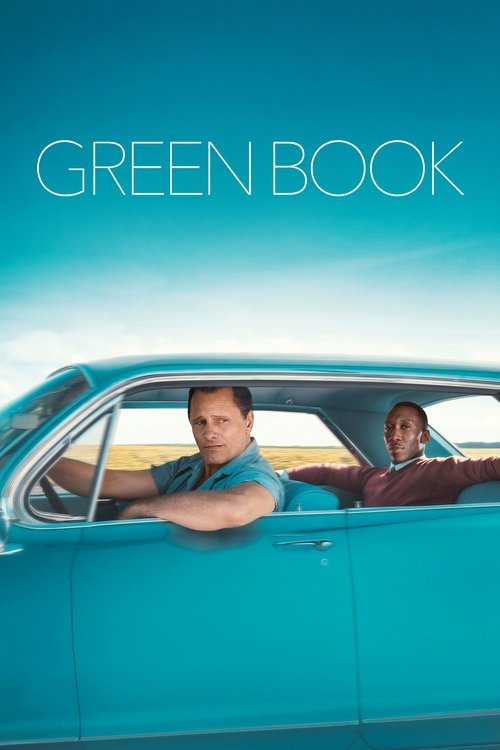
Green Book
2018 · Directed by Peter Farrelly
Woke Score
CriticCritic Score
Audience
Woke-Adjacent
Critics rated this 27 points above its woke score. Among Woke-Adjacent films, this critic score ranks #85 of 151.
Representation Casting
Score: 45/100
Mahershala Ali stars as Don Shirley in a leading role, providing representation of a Black protagonist. However, the narrative structure privileges the white character's journey, making this representation somewhat compromised by the film's broader framing.
LGBTQ+ Themes
Score: 15/100
Don Shirley's sexuality is subtly hinted at but never explicitly addressed, and the film was criticized for potentially erasing this significant aspect of his real life. Minimal engagement with LGBTQ themes beyond subtext.
Feminist Agenda
Score: 5/100
Female characters are sparse and largely relegated to supporting roles. Linda Cardellini as Tony's wife has little agency or development. No meaningful feminist themes present.
Racial Consciousness
Score: 55/100
The film directly depicts Jim Crow segregation and the indignities faced by Black Americans. However, critics noted the problematic 'white savior' narrative structure that frames racial injustice through the white character's education rather than the Black character's experience.
Climate Crusade
Score: 0/100
No climate themes, environmental consciousness, or ecological concerns appear in the film.
Eat the Rich
Score: 10/100
The film touches on economic disparities and the commodification of Black talent through concert performances, but does not mount any sustained critique of capitalism or the economic system.
Body Positivity
Score: 0/100
No body positivity themes, discussions of body image, or related content appears in the film.
Neurodivergence
Score: 0/100
No representation, portrayal, or discussion of neurodivergence or neurodivergent characters appears in the film.
Revisionist History
Score: 25/100
The film takes significant liberties with historical facts and Don Shirley's actual biography, presenting a somewhat sanitized version of events. However, this revisionism is not ideologically progressive in nature.
Lecture Energy
Score: 40/100
The film contains explanatory moments about segregation and racism, particularly as Tony learns about racial injustice. However, it balances this with character moments and humor, maintaining moderate rather than heavy-handed preachiness.


Synopsis
Tony Lip, a bouncer in 1962, is hired to drive pianist Don Shirley on a tour through the Deep South in the days when African Americans, forced to find alternate accommodations and services due to segregation laws below the Mason-Dixon Line, relied on a guide called The Negro Motorist Green Book.
Consciousness Assessment
Green Book occupies the curious position of having won the Academy Award for Best Picture while simultaneously becoming a case study in how progressive intentions can curdle into something more complicated. The film concerns itself with segregation-era racism and features a Black pianist as its nominal subject, yet the narrative gravitates relentlessly toward the emotional education of its white driver, transforming a story about indignity into one about cross-racial friendship and mutual understanding. This is the essence of what makes the film culturally peculiar: it engages with genuine historical injustice while framing it through a lens that ultimately reassures the white audience member of their own capacity for growth.
The performances are competent, particularly Mahershala Ali's controlled portrayal of a man navigating impossible circumstances, yet the film's structural choices undermine what might have been a more challenging work. Tony Lip's arc from casual racist to enlightened friend follows a narrative template so well-worn that it barely registers as subversive. The film adds humor and warmth to soften the edges of its historical setting, which has the effect of suggesting that racism was a problem that could be solved through personal connection and good intentions rather than systemic change.
What we have here is a film that engages with the vocabulary of progressive cinema without fully committing to its implications. It won major awards partly because it offers audiences a comforting narrative about racial progress while maintaining a fundamentally conservative structure. The controversies that followed its release suggest that critics and audiences became increasingly aware of this gap between surface-level social consciousness and the actual ideological work the film performs.
Analysis generated by our Consciousness Algorithm
Critic Reviews
“There’s something so deeply right about this movie, so true to the time depicted and so welcome in this moment; so light in its touch, so properly respectful of its characters, and so big in its spirit that the movie acquires a glow. ”
“Most winningly, Green Book puts two of the finest screen actors working today in a sexy turquoise Cadillac, letting them loose on a funny, swiftly-moving chamber piece bursting with heart, art and soul.”
“Witty and warm as cashmere, Green Book is a two-hander in which both stars soar with humor and heart.”
“It’s a calculatedly heartwarming and good-humored look at atrocious actions, ideas, and attitudes with a pallid glow of halcyon optimism, a view of a change of heart that’s achieved through colossal exertions and confrontations with danger.”
Consciousness Markers
Mahershala Ali stars as Don Shirley in a leading role, providing representation of a Black protagonist. However, the narrative structure privileges the white character's journey, making this representation somewhat compromised by the film's broader framing.
Don Shirley's sexuality is subtly hinted at but never explicitly addressed, and the film was criticized for potentially erasing this significant aspect of his real life. Minimal engagement with LGBTQ themes beyond subtext.
Female characters are sparse and largely relegated to supporting roles. Linda Cardellini as Tony's wife has little agency or development. No meaningful feminist themes present.
The film directly depicts Jim Crow segregation and the indignities faced by Black Americans. However, critics noted the problematic 'white savior' narrative structure that frames racial injustice through the white character's education rather than the Black character's experience.
No climate themes, environmental consciousness, or ecological concerns appear in the film.
The film touches on economic disparities and the commodification of Black talent through concert performances, but does not mount any sustained critique of capitalism or the economic system.
No body positivity themes, discussions of body image, or related content appears in the film.
No representation, portrayal, or discussion of neurodivergence or neurodivergent characters appears in the film.
The film takes significant liberties with historical facts and Don Shirley's actual biography, presenting a somewhat sanitized version of events. However, this revisionism is not ideologically progressive in nature.
The film contains explanatory moments about segregation and racism, particularly as Tony learns about racial injustice. However, it balances this with character moments and humor, maintaining moderate rather than heavy-handed preachiness.