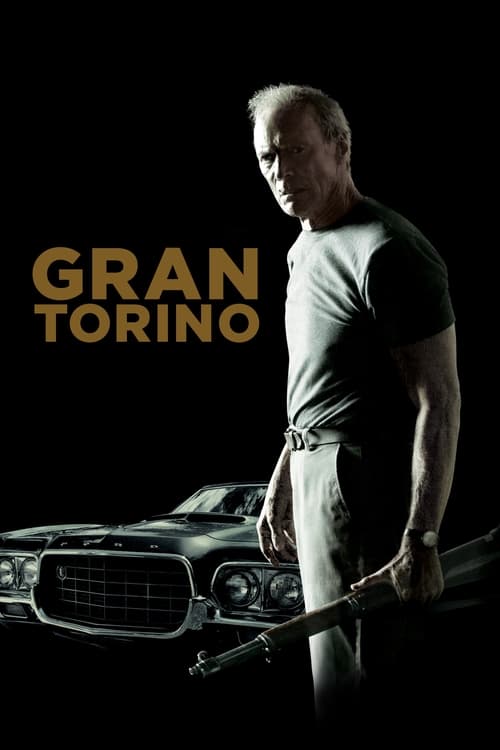
Gran Torino
2008 · Directed by Clint Eastwood
Woke Score
CriticCritic Score
Audience
Based
Critics rated this 35 points above its woke score. Among Based films, this critic score ranks #132 of 345.
Representation Casting
Score: 55/100
The film features a significant Hmong American cast in mainstream Hollywood roles, a genuine break from convention at the time. However, the Hmong characters function primarily as catalysts for the white protagonist's arc rather than as fully realized protagonists in their own right, limiting the progressive impact of this representation.
LGBTQ+ Themes
Score: 0/100
No LGBTQ+ themes, characters, or representation are present in the film.
Feminist Agenda
Score: 5/100
The film contains minimal feminist content. Female characters are largely underdeveloped, with Hmong women depicted primarily as victims or supporting figures. The narrative focuses almost entirely on male relationships and male agency.
Racial Consciousness
Score: 48/100
The film engages explicitly with racism and racial prejudice through Walt's transformation, creating a surface-level racial consciousness narrative. However, the extensive use of racial slurs, combined with scholarly critique from the Hmong community about stereotyping, suggests the film's racial awareness is limited and potentially reinforces the very stereotypes it claims to critique.
Climate Crusade
Score: 0/100
No climate-related themes or environmental consciousness is present in the film.
Eat the Rich
Score: 0/100
The film contains no anti-capitalist messaging or critique of economic systems. Walt's car and possessions function as personal symbols rather than commentary on capital or consumption.
Body Positivity
Score: 0/100
No body positivity themes or representation of diverse body types beyond the narrative norm are present in the film.
Neurodivergence
Score: 0/100
No neurodivergent characters or representation of neurodiversity are present in the film.
Revisionist History
Score: 15/100
The film makes minimal engagement with historical revision. Walt's Korean War service is mentioned but not explored in depth. The narrative does not fundamentally reimagine historical events or challenge conventional historical narratives.
Lecture Energy
Score: 35/100
The film contains moderate preachy elements, particularly in Walt's gradual articulation of tolerance and his final sacrifice functioning as a moral lesson. However, the message is delivered primarily through action and character arc rather than explicit dialogue, limiting the overt lecture quality.


Synopsis
Disgruntled Korean War veteran Walt Kowalski sets out to reform his neighbor, Thao Lor, a Hmong teenager who tried to steal Kowalski's prized possession: a 1972 Gran Torino.
Consciousness Assessment
Gran Torino occupies an uneasy middle ground in the landscape of contemporary progressive cinema. On its surface, the film presents a redemption narrative wherein an explicitly racist protagonist learns empathy and ultimately sacrifices himself for his marginalized neighbors. This arc, framed through the lens of personal transformation, suggests a certain alignment with contemporary sensibilities around overcoming prejudice. Yet the mechanics of that transformation depend heavily on the Hmong characters functioning primarily as catalysts for Walt's moral journey rather than as fully realized human beings with their own interiority.
The film's use of racial slurs presents the central paradox. Eastwood deploys this language as characterological authenticity, a window into Walt's unreconstructed mindset. The narrative arc suggests we are meant to witness his evolution beyond such language and sentiment. However, this framing sidesteps a more fundamental question: the film still saturates itself with anti-Asian epithets, and it does so in service of a white male protagonist's self-improvement. The Hmong American community, as documented in academic discourse, has critiqued the film for reinforcing stereotypes of hyperviolence and victimhood, suggesting that the surface-level message of tolerance obscures deeper structural patterns in how minority communities are represented.
The casting of Hmong actors in significant roles marks a genuine break from Hollywood convention, yet this formal inclusion does not automatically translate to meaningful agency within the narrative itself. Walt remains the moral and dramatic center; the Hmong characters exist in relation to him. The film asks us to sympathize with a man learning not to be racist, which is a modest achievement at best and a fundamentally conservative narrative move. It preserves the white male protagonist as the locus of moral development while requiring minority characters to serve as the instruments of that development. This is progressive in the narrowest possible sense.
Analysis generated by our Consciousness Algorithm
Critic Reviews
“If you can survive the F-bombs and the near-constant ethnic invective, Gran Torino is not to be missed, if only as the gutsy, thoroughly unexpected valedictory of an icon fully willing to spend every bit of his considerable capital.”
“A movie at once understated and radical, deceptively unremarkable in presentation and ballsy in its earnestness. Don't let the star's overly familiar squint fool you: This is subtle, perceptive stuff.”
“Above all, it feels like a summation of everything he (Eastwood) represents as a filmmaker and a movie star, and perhaps also a farewell.”
“It's no compliment to say a movie is "all of a piece" if the piece is all worn out. For all its surface harshness, this movie is a star vehicle at once rickety and cozy.”
Consciousness Markers
The film features a significant Hmong American cast in mainstream Hollywood roles, a genuine break from convention at the time. However, the Hmong characters function primarily as catalysts for the white protagonist's arc rather than as fully realized protagonists in their own right, limiting the progressive impact of this representation.
No LGBTQ+ themes, characters, or representation are present in the film.
The film contains minimal feminist content. Female characters are largely underdeveloped, with Hmong women depicted primarily as victims or supporting figures. The narrative focuses almost entirely on male relationships and male agency.
The film engages explicitly with racism and racial prejudice through Walt's transformation, creating a surface-level racial consciousness narrative. However, the extensive use of racial slurs, combined with scholarly critique from the Hmong community about stereotyping, suggests the film's racial awareness is limited and potentially reinforces the very stereotypes it claims to critique.
No climate-related themes or environmental consciousness is present in the film.
The film contains no anti-capitalist messaging or critique of economic systems. Walt's car and possessions function as personal symbols rather than commentary on capital or consumption.
No body positivity themes or representation of diverse body types beyond the narrative norm are present in the film.
No neurodivergent characters or representation of neurodiversity are present in the film.
The film makes minimal engagement with historical revision. Walt's Korean War service is mentioned but not explored in depth. The narrative does not fundamentally reimagine historical events or challenge conventional historical narratives.
The film contains moderate preachy elements, particularly in Walt's gradual articulation of tolerance and his final sacrifice functioning as a moral lesson. However, the message is delivered primarily through action and character arc rather than explicit dialogue, limiting the overt lecture quality.