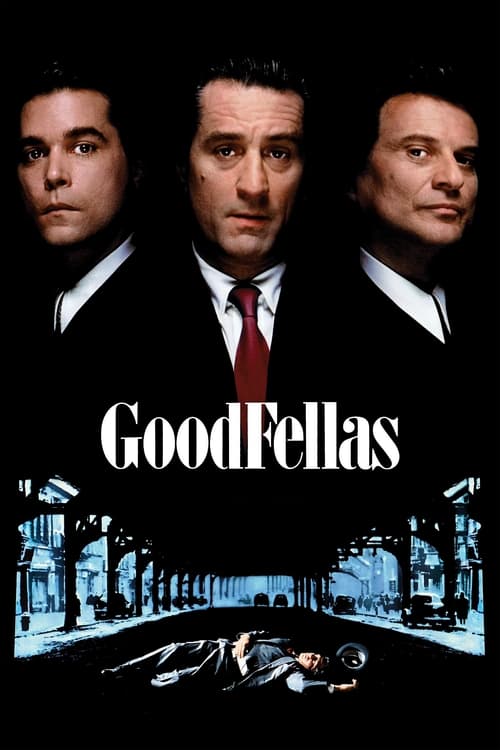
GoodFellas
1990 · Directed by Martin Scorsese
Woke Score
CriticCritic Score
Audience
Ultra Based
Critics rated this 88 points above its woke score. Among Ultra Based films, this critic score ranks #96 of 1469.
Representation Casting
Score: 15/100
The film features Italian American characters authentically cast, but this reflects period accuracy rather than deliberate diversification efforts. The cast is homogeneous by contemporary standards.
LGBTQ+ Themes
Score: 0/100
No LGBTQ+ themes, characters, or representation. The film is entirely heteronormative in its worldview and concerns.
Feminist Agenda
Score: 10/100
Female characters are marginalized and often depicted through a distinctly male perspective. Karen Hill's agency is limited, and women primarily serve supporting roles in the narrative.
Racial Consciousness
Score: 5/100
The film contains racial stereotypes and slurs common to 1990 cinema. There is no apparent consciousness of racial dynamics as a thematic concern, only as ambient backdrop to the crime world.
Climate Crusade
Score: 0/100
Climate concerns are entirely absent from the film's worldview and thematic preoccupations.
Eat the Rich
Score: 5/100
While the film depicts capitalism's corrosive effects, it does so through the lens of organized crime rather than systemic critique. The focus is on individual moral compromise, not structural analysis.
Body Positivity
Score: 0/100
The film contains no body positivity messaging or representation. Bodies are treated as vehicles for character rather than sites of cultural commentary.
Neurodivergence
Score: 0/100
No explicit representation of neurodivergence or any apparent cultural awareness of such concerns.
Revisionist History
Score: 20/100
The film adapts Henry Hill's memoir with some romanticization of the criminal lifestyle, though this is more artistic license than revisionist history in the contemporary sense.
Lecture Energy
Score: 5/100
Scorsese allows the narrative to unfold with minimal moral instruction. The film trusts the audience to draw conclusions, which is the opposite of contemporary lecture-oriented cinema.


Synopsis
The true story of Henry Hill, a half-Irish, half-Sicilian Brooklyn kid who is adopted by neighbourhood gangsters at an early age and climbs the ranks of a Mafia family under the guidance of Jimmy Conway.
Consciousness Assessment
GoodFellas stands as a monument to a time before cinema became burdened with the careful calibration of social consciousness. Scorsese's 1990 masterpiece concerns itself with the mechanics of organized crime, the seductive allure of violence, and the gravitational pull of American greed, not with the representation matrices that would come to dominate critical discourse decades later. The film is interested in the texture of its world, the specific rhythms of its characters, the way power operates within insular communities. Women exist in this film primarily as appendages to male desire and male consequence, but this reflects the actual social dynamics of the Mafia world being depicted rather than serving as a progressive statement about those dynamics. Lorraine Bracco's Karen is perhaps the sole voice of moral clarity, yet even her objections are ultimately secondary to the film's fascination with Henry Hill's trajectory.
What we encounter in GoodFellas is a film of genuine artistic merit that operates entirely outside the frameworks of contemporary social consciousness. The violence is neither condemned nor celebrated with moral instruction. The Italian American characters are rendered as fully realized human beings, but not through any deliberate calculus of representation. The film contains no climate advocacy, no lectures on systemic injustice, no neurodivergent representation deployed as narrative garnish. It is instead a work of pure storytelling ambition, concerned with rhythm, with music, with the documentary precision of how people actually behave when removed from conventional morality.
The film's apparent indifference to modern cultural sensibilities is precisely what makes it indigestible to contemporary critical frameworks. It treats its subject matter with a kind of amoral fascination that would be considered deeply suspect today. This is not a film that asks us to consider the ethics of its protagonist's choices in any systematic way. It simply shows us the intoxication of the life, the consequences that follow, and leaves interpretation to us. Such restraint, such refusal to guide the audience toward approved moral conclusions, marks GoodFellas as a relic of a different critical era.
Analysis generated by our Consciousness Algorithm
Critic Reviews
“All of the performances are first-rate; Pesci stands out, though, with his seemingly unscripted manner. GoodFellas is easily one of the year's best films. [21 September 1990, Friday, p.C]”
“Director Martin Scorsese's spectacular, irreverent picture.”
“Martin Scorsese scores again with his gritty, kinetic adaptation of Nicolas Pileggi's best-selling "Wiseguy."”
“Scorsese's style, fierce as it is, doesn't accomplish what he clearly expected of it. Often, in many arts, fresh treatment can redeem familiar subjects, but it doesn't happen here. [Oct 22, 1990]”
Consciousness Markers
The film features Italian American characters authentically cast, but this reflects period accuracy rather than deliberate diversification efforts. The cast is homogeneous by contemporary standards.
No LGBTQ+ themes, characters, or representation. The film is entirely heteronormative in its worldview and concerns.
Female characters are marginalized and often depicted through a distinctly male perspective. Karen Hill's agency is limited, and women primarily serve supporting roles in the narrative.
The film contains racial stereotypes and slurs common to 1990 cinema. There is no apparent consciousness of racial dynamics as a thematic concern, only as ambient backdrop to the crime world.
Climate concerns are entirely absent from the film's worldview and thematic preoccupations.
While the film depicts capitalism's corrosive effects, it does so through the lens of organized crime rather than systemic critique. The focus is on individual moral compromise, not structural analysis.
The film contains no body positivity messaging or representation. Bodies are treated as vehicles for character rather than sites of cultural commentary.
No explicit representation of neurodivergence or any apparent cultural awareness of such concerns.
The film adapts Henry Hill's memoir with some romanticization of the criminal lifestyle, though this is more artistic license than revisionist history in the contemporary sense.
Scorsese allows the narrative to unfold with minimal moral instruction. The film trusts the audience to draw conclusions, which is the opposite of contemporary lecture-oriented cinema.