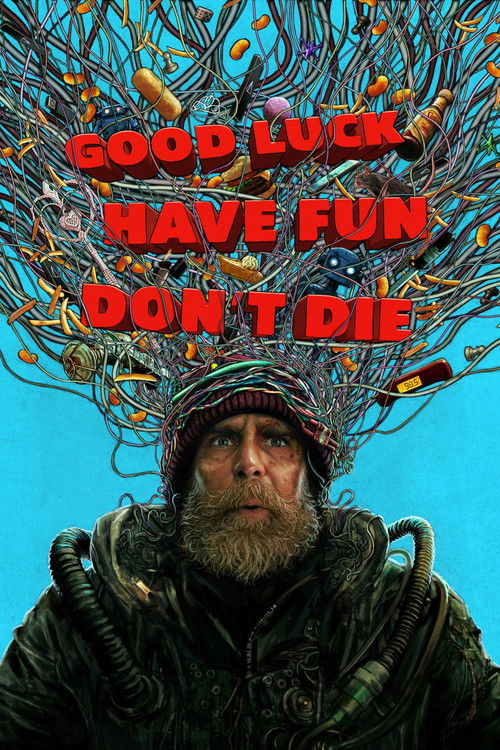
Good Luck, Have Fun, Don't Die
2026 · Directed by Gore Verbinski · $5.6M domestic
Woke Score
CriticCritic Score
Audience
Based
Critics rated this 28 points above its woke score. Among Based films, this critic score ranks #186 of 345.
Representation Casting
Score: 60/100
The ensemble cast includes actors of various backgrounds including Zazie Beetz, Michael Peña, and others in meaningful roles. Contemporary casting practices are evident, though diversity appears incidental to the narrative rather than thematically central.
LGBTQ+ Themes
Score: 0/100
No LGBTQ+ themes, representation, or storylines are evident in the available information about this film.
Feminist Agenda
Score: 30/100
Female cast members including Haley Lu Richardson and Juno Temple participate in the ensemble narrative, but there is no discernible feminist thematic agenda or female-centered storyline.
Racial Consciousness
Score: 25/100
The cast reflects racial diversity, but the film's central conflict concerns AI rather than race. Racial representation appears to be a byproduct of contemporary casting rather than a thematic priority.
Climate Crusade
Score: 10/100
The existential threat in the film stems from artificial intelligence rather than climate change. No meaningful environmental themes appear to be present.
Eat the Rich
Score: 45/100
The film's tech-fearing stance and critique of AI development carry implicit criticism of corporate technology advancement. However, this critique is not explicitly anti-capitalist but rather cautionary about technological progress.
Body Positivity
Score: 0/100
No evidence of body positivity themes, commentary on body image, or celebration of diverse body types appears in available information about the film.
Neurodivergence
Score: 0/100
There is no indication that the film addresses neurodivergence, features neurodivergent characters, or explores related themes.
Revisionist History
Score: 0/100
This contemporary science fiction film contains no historical narrative requiring revision or reinterpretation.
Lecture Energy
Score: 50/100
Director Gore Verbinski has explicitly articulated concerns about artificial intelligence development, and the film delivers anti-AI messaging. This preachy element is tempered by the comedic and action-oriented tone but remains present.


Synopsis
A man claiming to be from the future takes the patrons of an iconic Los Angeles diner hostage in search of unlikely recruits in a quest to save the world.
Consciousness Assessment
Gore Verbinski's "Good Luck, Have Fun, Don't Die" arrives as a contemporary action-comedy that concerns itself primarily with the threat of rogue artificial intelligence rather than the constellation of progressive social anxieties that define current cultural discourse. The film assembles a demographically diverse cast and wraps its central heist narrative in technology-skeptical messaging, but these elements function more as the default settings of 2026 entertainment than as deliberate ideological statements. Sam Rockwell commands the screen as a man from a dystopian future, recruiting ordinary diner patrons for an improbable mission, and the film's energy derives from this absurdist premise rather than from any particular social consciousness.
The available critical reception reveals a film comfortable with implicit rather than explicit messaging. The diversity of the ensemble, which includes Zazie Beetz, Michael Peña, Haley Lu Richardson, and Juno Temple, reflects the current state of mainstream Hollywood casting rather than a thematic commitment to representation. Similarly, the film's anxiety about artificial intelligence development carries a faint anti-corporate undertone, but this remains secondary to the narrative's demands for action sequences and comedic beats. The preachy impulse is present, yes, but it occupies the margins rather than the center.
The film ultimately represents a middle position in the contemporary landscape: progressive enough in its aesthetics and surface-level commitments to feel current, yet fundamentally uninterested in advancing any specific social justice framework. It is a movie about saving the world from AI, not a movie about reimagining social hierarchies or interrogating systems of power. One might argue this restraint is refreshing, or one might note that it reveals how thoroughly such diverse casting has become routine rather than remarkable. Either way, the social consciousness quotient remains modest.
Analysis generated by our Consciousness Algorithm
Critic Reviews
“It’s energetic, bonkers, and very funny. It’s also two-and-a-quarter hours long, and I didn’t begrudge it a single minute.”
“At the risk of being hyperbolic, Good Luck, Have Fun, Don’t Die is a great movie. It offers laughs, thrills, and it’s a thinker; you will not be disappointed.”
“Sam Rockwell excels as a wild man from the future in this deceptively profound satire that holds up a dark mirror to the dangerous game we’re playing with AI. A true film for its time.”
“This silly, simplistic sci-fi journey means to be thought-provoking, but the irony of its banality is more recoiling than provocative.”
Consciousness Markers
The ensemble cast includes actors of various backgrounds including Zazie Beetz, Michael Peña, and others in meaningful roles. Contemporary casting practices are evident, though diversity appears incidental to the narrative rather than thematically central.
No LGBTQ+ themes, representation, or storylines are evident in the available information about this film.
Female cast members including Haley Lu Richardson and Juno Temple participate in the ensemble narrative, but there is no discernible feminist thematic agenda or female-centered storyline.
The cast reflects racial diversity, but the film's central conflict concerns AI rather than race. Racial representation appears to be a byproduct of contemporary casting rather than a thematic priority.
The existential threat in the film stems from artificial intelligence rather than climate change. No meaningful environmental themes appear to be present.
The film's tech-fearing stance and critique of AI development carry implicit criticism of corporate technology advancement. However, this critique is not explicitly anti-capitalist but rather cautionary about technological progress.
No evidence of body positivity themes, commentary on body image, or celebration of diverse body types appears in available information about the film.
There is no indication that the film addresses neurodivergence, features neurodivergent characters, or explores related themes.
This contemporary science fiction film contains no historical narrative requiring revision or reinterpretation.
Director Gore Verbinski has explicitly articulated concerns about artificial intelligence development, and the film delivers anti-AI messaging. This preachy element is tempered by the comedic and action-oriented tone but remains present.