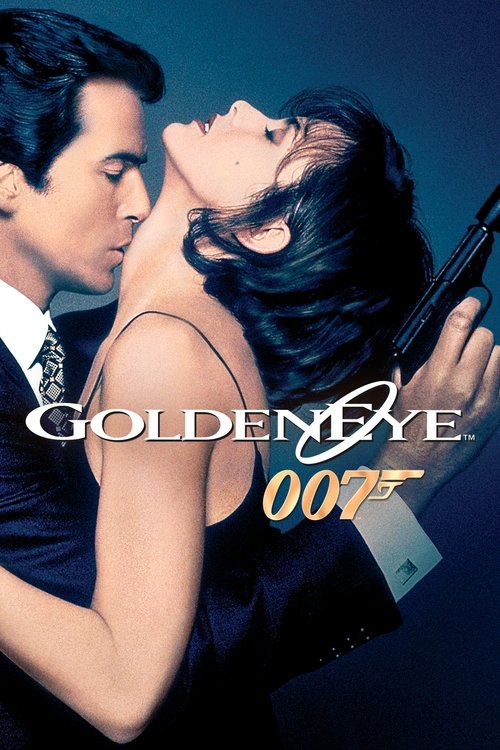
GoldenEye
1995 · Directed by Martin Campbell
Woke Score
CriticCritic Score
Audience
Ultra Based
Critics rated this 50 points above its woke score. Among Ultra Based films, this critic score ranks #775 of 1469.
Representation Casting
Score: 35/100
Judi Dench as M represents a shift toward female authority figures, and the cast includes diverse actors in supporting roles. However, the lead remains a white British man and female characters are limited in number and agency.
LGBTQ+ Themes
Score: 0/100
No meaningful LGBTQ+ themes or representation. Alan Cumming appears in a minor role but his character is not coded as queer in any significant way.
Feminist Agenda
Score: 15/100
Female characters exist but operate primarily within masculine frameworks of action cinema. Natalya requires rescue; Xenia's agency is pathologized. No critique of patriarchal systems or examination of gender dynamics.
Racial Consciousness
Score: 0/100
No meaningful engagement with racial themes or consciousness. The film reflects 1990s action cinema's default whiteness without interrogating it.
Climate Crusade
Score: 0/100
No climate consciousness whatsoever. Environmental themes are entirely absent from the narrative.
Eat the Rich
Score: 5/100
The villain's plot involves corporate and governmental corruption, but this is treated as individual villainy rather than systemic critique. No challenge to capitalist structures.
Body Positivity
Score: 0/100
Conventional action cinema aesthetics with no body diversity or positive representation of non-idealized bodies.
Neurodivergence
Score: 0/100
No representation of neurodivergent characters or themes related to neurodiversity.
Revisionist History
Score: 15/100
The film engages with post-Cold War geopolitics but does not fundamentally revise historical narratives. It reinforces conventional Western power dynamics rather than challenging them.
Lecture Energy
Score: 10/100
Minimal preachy intent. The film entertains rather than instructs, though M's occasional challenges to Bond's methods approach moralizing without achieving it.


Synopsis
When a powerful satellite system falls into the hands of Alec Trevelyan, AKA Agent 006, a former ally-turned-enemy, only James Bond can save the world from a dangerous space weapon that -- in one short pulse -- could destroy the earth! As Bond squares off against his former compatriot, he also battles Xenia Onatopp, an assassin who uses pleasure as her ultimate weapon.
Consciousness Assessment
GoldenEye arrives at an interesting historical moment, existing in that narrow window between the collapse of the Soviet Union and the full crystallization of modern progressive cultural sensibilities. The film attempts a few gestures toward contemporary consciousness without committing to any of them with particular conviction. Judi Dench's M represents a notable shift in the Bond franchise, replacing the paternal Bernard Lee character with a woman who demonstrates both authority and a willingness to challenge Bond's methods, though this remains primarily a cosmetic update to the organizational hierarchy rather than a fundamental reckoning with institutional power dynamics.
The female characters present a study in contradictions typical of 1990s action cinema. Natalya Onatopp, played by Izabella Scorupco, functions as a capable computer programmer and survivor of tragedy, yet the film cannot resist filtering her through Bond's romantic interest and repeatedly placing her in vulnerable positions requiring rescue. Xenia Onatopp, the villain portrayed by Famke Janssen, embodies a particular anxiety about female sexuality and agency: her pleasure in killing is coded as pathological transgression rather than as the logical inverse of Bond's own casual violence. The film treats her sexuality as her primary weapon and defining characteristic in ways that feel reductive even by 1995 standards. Neither character receives the dignity of complexity.
Beneath the surface, GoldenEye remains fundamentally a film about the reassertion of Western power in a post-Cold War landscape. Its villains are Russian, its hero British, and its moral universe operates according to conventional geopolitical hierarchies that the film neither questions nor examines. For all its minor adjustments to casting and character, it occupies the same ideological space as its predecessors, content to entertain rather than provoke. This is not a criticism so much as an observation: the film knows what it is, and makes no pretense otherwise.
Analysis generated by our Consciousness Algorithm
Critic Reviews
“Brosnan is excellent, wearing Bond more lightly than any of his predecessors. ”
“And yet, Goldeneye proves the character's viability as a pop icon: It isn't a great movie, but it's great, preposterous fun.”
“There's something a mite pathetic about our culture still clinging to 007, but it's hard to deny that this is one of the most entertaining entries in the Bond cycle, which started with "Dr. No" (1962).”
“How well do Bond's established conventions survive after a third of a century's hard use, the post-cold war deglamourization of espionage and the arrival of yet another actor in the central role? The short answer is, on wobbly knees.”
Consciousness Markers
Judi Dench as M represents a shift toward female authority figures, and the cast includes diverse actors in supporting roles. However, the lead remains a white British man and female characters are limited in number and agency.
No meaningful LGBTQ+ themes or representation. Alan Cumming appears in a minor role but his character is not coded as queer in any significant way.
Female characters exist but operate primarily within masculine frameworks of action cinema. Natalya requires rescue; Xenia's agency is pathologized. No critique of patriarchal systems or examination of gender dynamics.
No meaningful engagement with racial themes or consciousness. The film reflects 1990s action cinema's default whiteness without interrogating it.
No climate consciousness whatsoever. Environmental themes are entirely absent from the narrative.
The villain's plot involves corporate and governmental corruption, but this is treated as individual villainy rather than systemic critique. No challenge to capitalist structures.
Conventional action cinema aesthetics with no body diversity or positive representation of non-idealized bodies.
No representation of neurodivergent characters or themes related to neurodiversity.
The film engages with post-Cold War geopolitics but does not fundamentally revise historical narratives. It reinforces conventional Western power dynamics rather than challenging them.
Minimal preachy intent. The film entertains rather than instructs, though M's occasional challenges to Bond's methods approach moralizing without achieving it.