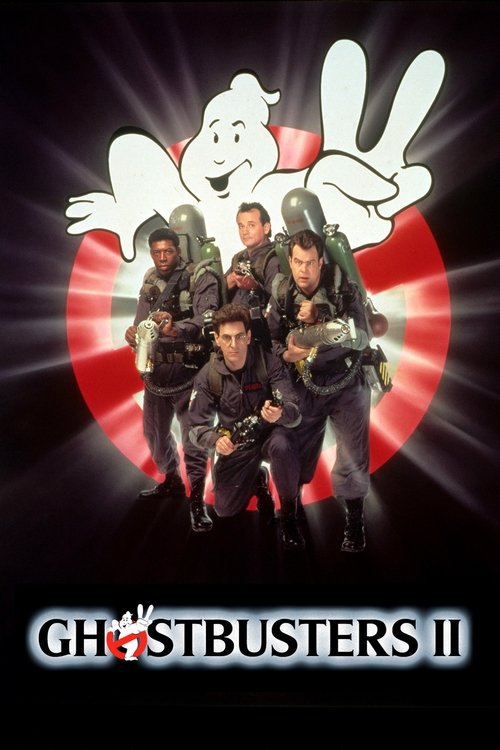
Ghostbusters II
1989 · Directed by Ivan Reitman
Woke Score
CriticCritic Score
Audience
Ultra Based
Critics rated this 52 points above its woke score. Among Ultra Based films, this critic score ranks #1032 of 1469.
Representation Casting
Score: 25/100
The film includes Sigourney Weaver and Annie Potts as female characters, and Ernie Hudson as a Black cast member, though all occupy peripheral roles with limited agency. This reflects 1989 baseline inclusion rather than any deliberate commitment to representation.
LGBTQ+ Themes
Score: 0/100
There are no LGBTQ+ characters, themes, or references in the film. The romantic subplot is entirely heterosexual and treated as standard narrative furniture.
Feminist Agenda
Score: 5/100
Sigourney Weaver's Dana Barrett is reduced to a romantic interest compared to her more active role in the original film. There is no feminist agenda, commentary, or narrative structure to speak of.
Racial Consciousness
Score: 10/100
Ernie Hudson's inclusion in the cast reflects basic diversity casting, but there is no examination of race, systemic racism, or racial experience. His character functions identically to how any fourth Ghostbuster would function.
Climate Crusade
Score: 0/100
The film makes no reference to environmental concerns, climate issues, or ecological consciousness. The river of ectoplasm is a supernatural plot device, not an environmental allegory.
Eat the Rich
Score: 5/100
The Ghostbusters are reviving their business as a capitalist enterprise, presented as a straightforward commercial venture. There is no critique of capitalism or examination of economic systems.
Body Positivity
Score: 0/100
The film does not engage with body image, body diversity, or body positivity themes. Physical appearance is treated as standard comedy fodder without any conscious framework.
Neurodivergence
Score: 0/100
There is no representation of neurodivergent characters or any exploration of neurodivergence as a theme. The film does not address mental health or cognitive difference.
Revisionist History
Score: 0/100
The film contains no historical revisionism or reframing of historical events. It is set in a contemporary supernatural present with no historical component.
Lecture Energy
Score: 0/100
The film maintains the comedic tone of a summer blockbuster with no preachy speeches, moral lectures, or pedagogical intent regarding social issues.


Synopsis
The discovery of a massive river of ectoplasm and a resurgence of spectral activity allows the staff of Ghostbusters to revive the business.
Consciousness Assessment
Ghostbusters II represents the comedic sensibilities of 1989 in their purest, most resistant form. The film concerns itself entirely with the mechanics of supernatural possession and the logistics of capturing ghosts, matters that demand no engagement with systemic inequality or cultural awareness. Sigourney Weaver returns, though her character Dana Barrett has been demoted from the first film's more active role into a romantic subplot, a regression that feels less like intentional commentary and more like the narrative indifference typical of late-80s sequels. The cast remains almost entirely composed of white men performing improvised banter, with Ernie Hudson's Winston Zeddemore occupying the familiar role of the fourth wheel, a structural choice that reflects the era's casual approach to inclusion rather than any deliberate commitment to it.
The film's single claim to minor representation credit lies in the presence of Sigourney Weaver and Annie Potts as female characters, though neither occupies a position of agency or centrality to the plot. There is no detectable interest in exploring feminist themes, racial consciousness, environmental politics, economic critique, or any of the markers that would constitute modern social consciousness. The villains are supernatural entities rather than structural systems. The humor derives from Bill Murray's affectation of world-weariness and Dan Aykroyd's pedantic technobabble, not from commentary on anything remotely approaching the social fabric.
This is genre entertainment from a moment when genre entertainment had not yet learned to perform cultural awareness, and it neither apologizes for nor attempts to retrofit itself with progressive sensibilities. One could view this as refreshing authenticity or as a historical artifact of a time before films began their contemporary dance with social consciousness. The assessment remains neutral: Ghostbusters II simply does not concern itself with the matters we are here to evaluate.
Analysis generated by our Consciousness Algorithm
Critic Reviews
“Even the special effects are more to the point of the comedy than they were in the first film. For some reason, this appears to leave more room for the sort of random funny business that Mr. Murray and his friends do best, or to which they react with most aplomb.”
“Ghostbusters II is babyboomer silliness. Kids will find the oozing slime and ghastly, ghostly apparitions to their liking and adults will enjoy the preposterously clever dialog.”
“Here, the comedy breathes, and the illusion that it's not a factory-assembled product (which it most certainly is) is a nifty one. For a major studio blockbuster, the thing is darned chummy, and above all, that rare, modest thing, a good show.”
“The best thing in the movie is Peter MacNicol as Dana's boss at the museum, a slippery character with an incomprehensible accent. [16 Jun 1989, p. E1]”
Consciousness Markers
The film includes Sigourney Weaver and Annie Potts as female characters, and Ernie Hudson as a Black cast member, though all occupy peripheral roles with limited agency. This reflects 1989 baseline inclusion rather than any deliberate commitment to representation.
There are no LGBTQ+ characters, themes, or references in the film. The romantic subplot is entirely heterosexual and treated as standard narrative furniture.
Sigourney Weaver's Dana Barrett is reduced to a romantic interest compared to her more active role in the original film. There is no feminist agenda, commentary, or narrative structure to speak of.
Ernie Hudson's inclusion in the cast reflects basic diversity casting, but there is no examination of race, systemic racism, or racial experience. His character functions identically to how any fourth Ghostbuster would function.
The film makes no reference to environmental concerns, climate issues, or ecological consciousness. The river of ectoplasm is a supernatural plot device, not an environmental allegory.
The Ghostbusters are reviving their business as a capitalist enterprise, presented as a straightforward commercial venture. There is no critique of capitalism or examination of economic systems.
The film does not engage with body image, body diversity, or body positivity themes. Physical appearance is treated as standard comedy fodder without any conscious framework.
There is no representation of neurodivergent characters or any exploration of neurodivergence as a theme. The film does not address mental health or cognitive difference.
The film contains no historical revisionism or reframing of historical events. It is set in a contemporary supernatural present with no historical component.
The film maintains the comedic tone of a summer blockbuster with no preachy speeches, moral lectures, or pedagogical intent regarding social issues.