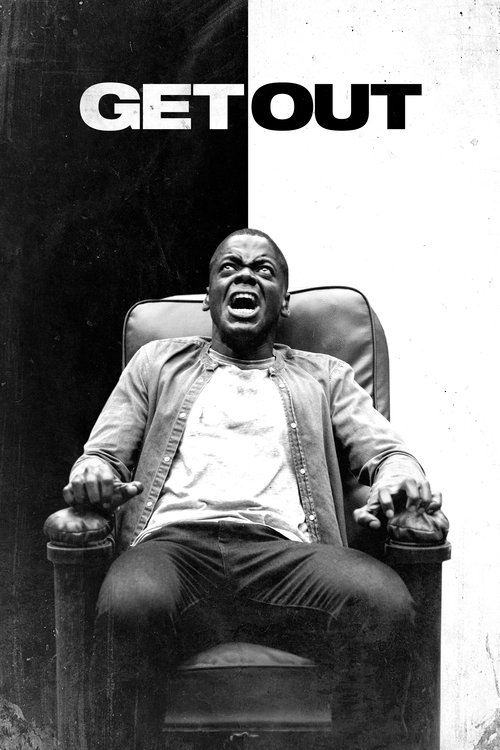
Get Out
2017 · Directed by Jordan Peele
Woke Score
Critic Score
Audience
Woke
Critics rated this 22 points above its woke score. Among Woke films, this critic score ranks #13 of 57.
Representation Casting
Score: 85/100
Black protagonist in a traditionally white genre space, with intentional casting of Black actors in roles that complicate white liberal narratives. The film centers Black experience without tokenism.
LGBTQ+ Themes
Score: 0/100
No LGBTQ+ themes present in the film. Sexual orientation and gender identity are not addressed as narrative elements.
Feminist Agenda
Score: 35/100
Rose functions as a deceptive villain, but the film does not engage with feminist critique or women's liberation themes. Her agency is presented as complicity rather than empowerment.
Racial Consciousness
Score: 90/100
The film's entire architecture rests on interrogating anti-Black violence, white liberal complicity, and the commodification of Black bodies. Racial paranoia is validated rather than pathologized.
Climate Crusade
Score: 0/100
No environmental themes or climate consciousness present. The film's concerns are entirely social and historical rather than ecological.
Eat the Rich
Score: 60/100
The conspiracy involves wealthy white people literally consuming Black bodies as commodities. Class exploitation and the commodification of human bodies underlies the horror, though this is not articulated as anti-capitalist critique.
Body Positivity
Score: 0/100
The film treats the body as a site of vulnerability and violation rather than celebration. Body positivity is not a thematic concern.
Neurodivergence
Score: 0/100
No neurodivergent characters or themes present. Mental state is discussed only in relation to hypnosis and manipulation.
Revisionist History
Score: 50/100
The film engages with actual historical patterns of Black bodily exploitation and medical racism, though it frames these through genre fiction rather than historical documentation.
Lecture Energy
Score: 40/100
The film trusts visual language and genre mechanics rather than explicit dialogue to communicate its themes. Characters do not explain the social dynamics to the audience; we must recognize them ourselves.


Synopsis
Chris and his girlfriend Rose go upstate to visit her parents for the weekend. At first, Chris reads the family's overly accommodating behavior as nervous attempts to deal with their daughter's interracial relationship, but as the weekend progresses, a series of increasingly disturbing discoveries lead him to a truth that he never could have imagined.
Consciousness Assessment
Get Out arrives as a masterclass in what we might call intentional cultural discourse, though whether one reads this as satire or sermon depends entirely on one's tolerance for the film's own self-awareness. Jordan Peele constructs a horror narrative around the specific anxieties of Black male bodies in white spaces, transforming the interracial relationship into a literal death trap where white liberal progressivism masks something far more sinister. The film's central conceit, that the white family's politeness and accommodation conceals predatory intent, functions as both genre mechanics and social commentary. What makes it ascend beyond mere allegory is that the horror is grounded in actual historical realities: the commodification of Black bodies, the violent appropriation of Black physicality, the way white desire can mask white violence.
The film deploys its racial consciousness with remarkable clarity and demonstrates genuine interest in the phenomenology of being Black in hostile spaces. Chris's experience of hypervigilance, his reading of social cues for danger, his sense that something is fundamentally wrong beneath the surface politeness, these are not invented for narrative convenience. They emerge from lived experience that the film treats as legitimate rather than paranoid. The supporting cast of Black characters, particularly LaKeith Stanfield's haunting performance as André, grounds the film's racial allegory in specific embodied suffering rather than abstraction. Yet the film does not lecture its audience with the bluntness one might expect from a thesis-driven work. Instead, it operates through genre conventions: jump scares, puzzle-box plotting, the accumulation of small wrongnesses.
Where Get Out begins to tip toward the cultural markers we track is in its relationship to representation and racial consciousness. The film functions partly as a corrective text, a refusal to allow white audiences to consume Black bodies without reckoning with what that consumption means. This operates at the level of form and content simultaneously. The choice to center a Black protagonist in a genre (the thriller) traditionally dominated by white leads, to make his survival the actual plot rather than a subplot, to treat his fear as rational rather than neurotic, these are deliberate interventions. However, the film stops short of the lecture-hall delivery that higher woke scores require. It trusts the audience to understand the stakes without spelling them out. This restraint, paradoxically, makes it more culturally potent than if it had been more didactic.
Analysis generated by our Consciousness Algorithm
Critic Reviews
“Blending race-savvy satire with horror to especially potent effect, this bombshell social critique from first-time director Jordan Peele proves positively fearless — which is not at all the same thing as scareless.”
“Get Out is fully surprising in both concept and craft, with the scares never coming just when you expect them and the secrets more audacious than you might be guessing.”
“Peele's perfectly tuned cast and deft camera work unleash his uproarious humor along with his political fury; with his first film, he's already an American Buñuel”
“Get Out is a ludicrous paranoid fantasy, but that doesn't mean it's not alive in the unconscious. Having it out there in so delightful a form helps us laugh at it together — and maybe later, when we've thought it over, shudder.”
“Peele succeeds where sometimes even more experienced filmmakers fail: He's made an agile entertainment whose social and cultural observations are woven so tightly into the fabric that you're laughing even as you're thinking, and vice-versa.”
“Retro horror and racial tension mix to surprisingly entertaining effect in Get Out.”
Consciousness Markers
Black protagonist in a traditionally white genre space, with intentional casting of Black actors in roles that complicate white liberal narratives. The film centers Black experience without tokenism.
No LGBTQ+ themes present in the film. Sexual orientation and gender identity are not addressed as narrative elements.
Rose functions as a deceptive villain, but the film does not engage with feminist critique or women's liberation themes. Her agency is presented as complicity rather than empowerment.
The film's entire architecture rests on interrogating anti-Black violence, white liberal complicity, and the commodification of Black bodies. Racial paranoia is validated rather than pathologized.
No environmental themes or climate consciousness present. The film's concerns are entirely social and historical rather than ecological.
The conspiracy involves wealthy white people literally consuming Black bodies as commodities. Class exploitation and the commodification of human bodies underlies the horror, though this is not articulated as anti-capitalist critique.
The film treats the body as a site of vulnerability and violation rather than celebration. Body positivity is not a thematic concern.
No neurodivergent characters or themes present. Mental state is discussed only in relation to hypnosis and manipulation.
The film engages with actual historical patterns of Black bodily exploitation and medical racism, though it frames these through genre fiction rather than historical documentation.
The film trusts visual language and genre mechanics rather than explicit dialogue to communicate its themes. Characters do not explain the social dynamics to the audience; we must recognize them ourselves.