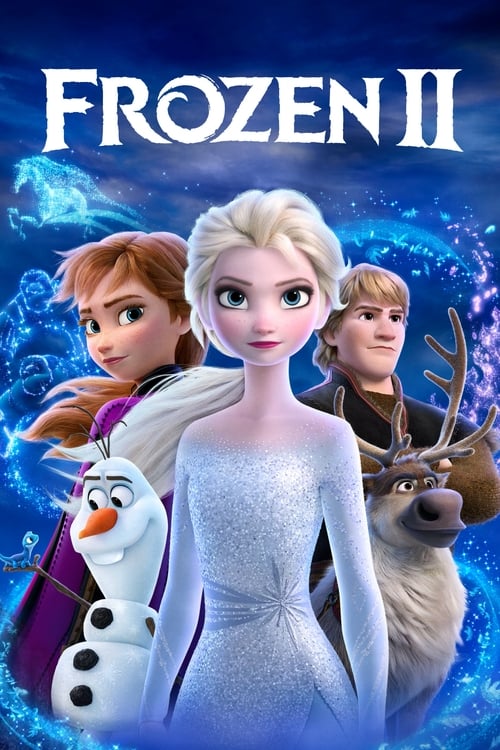
Frozen II
2019 · Directed by Jennifer Lee
Woke Score
CriticCritic Score
Audience
Woke
Critics rated this 2 points above its woke score. Among Woke films, this critic score ranks #70 of 88.
Representation Casting
Score: 65/100
Strong female leads and diverse casting including Sterling K. Brown, though the Northuldra are represented but not extensively developed as full characters with agency independent of the plot.
LGBTQ+ Themes
Score: 0/100
No explicit LGBTQ+ representation despite fan speculation about Elsa. The film remains firmly heteronormative in its romantic subplots and character relationships.
Feminist Agenda
Score: 75/100
The film centers female agency and decision-making. Anna and Elsa drive the narrative, make sacrifices, and lead the resolution without needing male rescue or validation.
Racial Consciousness
Score: 60/100
The Northuldra represent indigenous peoples and their historical displacement, with the film acknowledging colonial harm and environmental injustice tied to racial oppression, though representation remains somewhat superficial.
Climate Crusade
Score: 85/100
Climate justice and environmental restoration are central to the plot. The film explicitly connects human infrastructure projects to environmental damage and indigenous suffering, framing ecological crisis as a moral issue.
Eat the Rich
Score: 40/100
The film critiques the power structures of the monarchy and suggests that inherited privilege requires accountability, but ultimate solutions involve individual moral growth rather than systemic redistribution.
Body Positivity
Score: 15/100
Characters display conventional body types. Olaf's comic relief involves some physical comedy, but there is minimal engagement with body diversity or body-positive messaging.
Neurodivergence
Score: 10/100
Elsa's anxiety and trauma could be read as neurodivergent coding, but the film does not explicitly engage with disability or neurodivergence as meaningful categories of representation.
Revisionist History
Score: 70/100
The film rewrites the history of Arendelle to center indigenous displacement and colonial harm. It interrogates the previous film's narrative by revealing hidden truths about the kingdom's founding.
Lecture Energy
Score: 45/100
While thematic messaging is present and intentional, the film maintains Disney's preference for showing rather than telling. The political content is embedded in narrative rather than delivered as explicit moralizing.


Synopsis
Elsa, Anna, Kristoff and Olaf head far into the forest to learn the truth about an ancient mystery of their kingdom.
Consciousness Assessment
Frozen II operates as a peculiar artifact of late-2010s cultural consciousness, a Disney vehicle that genuinely grapples with environmental destruction, indigenous dispossession, and systemic injustice while maintaining the cheerful veneer of a children's musical. The film's central conflict hinges on a dam built by Arendelle's royal family to suppress the indigenous Northuldra people and their elemental magic, a narrative framework that requires the heroines to reckon with their ancestors' crimes and dismantle the apparatus of their own power. This is not subtle, nor is it pretending to be.
The female characters carry the narrative weight with agency and complexity. Elsa's journey toward self-actualization continues from the first film, but here she grapples with inherited guilt and responsibility rather than mere internal conflict. Anna demonstrates emotional intelligence and willingness to sacrifice her own desires for the greater good. Yet the film's progressive architecture exists in tension with its fantasy-adventure framework. The Northuldra are depicted with care and dignity, but they function primarily as a plot device requiring the white protagonists to enact redemption. The climate crisis itself, while present, gets resolved through magical intervention rather than systemic change, allowing audiences to feel virtuous about environmental consciousness without endorsing actual sacrifice.
The film's lecture energy remains restrained by Disney standards, though the messaging about inherited privilege and historical reckoning is unmistakable. There is no queer representation despite considerable fan speculation about Elsa's orientation. The body positivity markers are minimal, and there is no meaningful engagement with disability or neurodivergence. What results is a film that genuinely believes in progressive values while maintaining the fundamental conservative structure of its medium: problems are solved by individuals choosing to be better, not through collective action or structural transformation.
Analysis generated by our Consciousness Algorithm
Critic Reviews
“With Frozen II, Disney has done the impossible: It’s made a terrific animated-musical sequel.”
“Frozen II is funny, exciting, sad, romantic, and silly. It has great songs and a hilarious recap of the first movie, and then it is all of that all over again.”
“It plays like an animated musical built around forgettable tunes and impressive animated effects that were cooked up before the script was decided on.”
Consciousness Markers
Strong female leads and diverse casting including Sterling K. Brown, though the Northuldra are represented but not extensively developed as full characters with agency independent of the plot.
No explicit LGBTQ+ representation despite fan speculation about Elsa. The film remains firmly heteronormative in its romantic subplots and character relationships.
The film centers female agency and decision-making. Anna and Elsa drive the narrative, make sacrifices, and lead the resolution without needing male rescue or validation.
The Northuldra represent indigenous peoples and their historical displacement, with the film acknowledging colonial harm and environmental injustice tied to racial oppression, though representation remains somewhat superficial.
Climate justice and environmental restoration are central to the plot. The film explicitly connects human infrastructure projects to environmental damage and indigenous suffering, framing ecological crisis as a moral issue.
The film critiques the power structures of the monarchy and suggests that inherited privilege requires accountability, but ultimate solutions involve individual moral growth rather than systemic redistribution.
Characters display conventional body types. Olaf's comic relief involves some physical comedy, but there is minimal engagement with body diversity or body-positive messaging.
Elsa's anxiety and trauma could be read as neurodivergent coding, but the film does not explicitly engage with disability or neurodivergence as meaningful categories of representation.
The film rewrites the history of Arendelle to center indigenous displacement and colonial harm. It interrogates the previous film's narrative by revealing hidden truths about the kingdom's founding.
While thematic messaging is present and intentional, the film maintains Disney's preference for showing rather than telling. The political content is embedded in narrative rather than delivered as explicit moralizing.