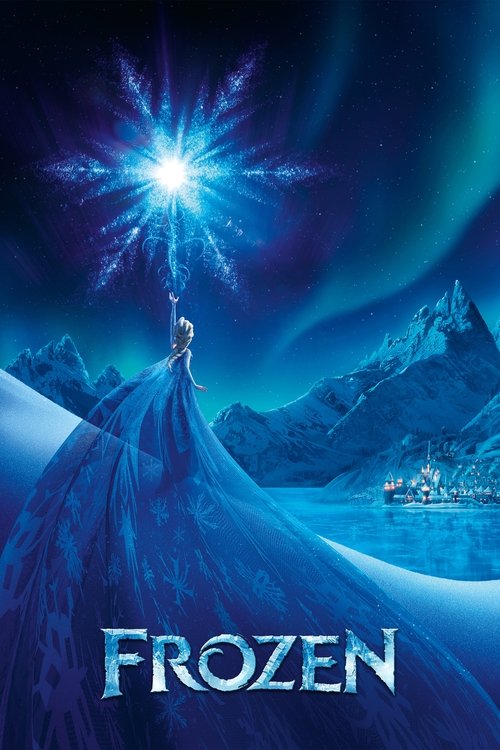
Frozen
2013 · Directed by Jennifer Lee
Woke Score
CriticCritic Score
Audience
Woke-Adjacent
Critics rated this 1 points above its woke score. Among Woke-Adjacent films, this critic score ranks #145 of 151.
Representation Casting
Score: 35/100
The film centers female protagonists and includes a female director, but the cast is predominantly white and ethnically homogeneous, reflecting early 2010s Disney standards rather than contemporary diversity expectations.
LGBTQ+ Themes
Score: 15/100
Elsa's character has generated substantial LGBTQ subtext analysis, but this reading is interpretive rather than explicit. The film contains no overt LGBTQ representation or themes.
Feminist Agenda
Score: 68/100
The film genuinely subverts romantic plot conventions by privileging sisterhood over marriage, rejecting the prince narrative, and centering female agency. However, this represents pre-2015 progressivism rather than 2020s-style feminist cultural critique.
Racial Consciousness
Score: 8/100
The film contains no racial consciousness, systemic analysis, or multicultural representation. The setting and characters are uniformly Scandinavian without acknowledgment or exploration of this monoculture.
Climate Crusade
Score: 5/100
The eternal winter serves as a plot device and emotional metaphor but contains no environmental messaging or climate consciousness. The crisis is magical and personal rather than ecological.
Eat the Rich
Score: 0/100
The film contains no anti-capitalist messaging, class consciousness, or critique of economic systems. The monarchy is presented as natural and benevolent.
Body Positivity
Score: 20/100
While the film avoids excessive sexualization of its female characters, there is no explicit body positivity messaging or representation of diverse body types.
Neurodivergence
Score: 10/100
Olaf displays some characteristics that could be read as neurodivergent (lack of emotional regulation, unusual behavior patterns), but this is incidental characterization rather than intentional representation or exploration.
Revisionist History
Score: 0/100
The film is a fantasy narrative with no historical elements to revise. It makes no claims about real history.
Lecture Energy
Score: 12/100
The film communicates its themes through narrative and character action rather than exposition or preachy dialogue. There is minimal explicit cultural commentary.


Synopsis
Young princess Anna of Arendelle dreams about finding true love at her sister Elsa's coronation. Fate takes her on a dangerous journey in an attempt to end the eternal winter that has fallen over the kingdom. She's accompanied by ice delivery man Kristoff, his reindeer Sven, and snowman Olaf. On an adventure where she will find out what friendship, courage, family, and true love really means.
Consciousness Assessment
Frozen presents a deliberate subversion of Disney's traditional romantic formula that predates the crystallization of contemporary progressive cultural markers by several years. The film's thesis, that female agency and familial bonds supersede romantic entanglement with men, was sufficiently novel for a major studio animation in 2013 to warrant critical celebration as proto-feminist cinema. Anna's characterization as clumsy and impulsive rather than graceful, combined with the revelation of the male romantic interest as a manipulative charlatan, represents a genuine commitment to female autonomy and the rejection of patriarchal romantic structures.
However, we must distinguish between what is progressive and what constitutes contemporary wokeness. Frozen contains no explicit discussion of systemic oppression, no racial consciousness as a thematic element, and no climate messaging. Its representation, while female-centric, is not particularly diverse by current standards; the kingdom is ethnically Scandinavian, and the supporting cast remains undifferentiated. The neurodivergence present in Olaf's character is incidental rather than intentional. Elsa's arc of self-acceptance and the coded subtext surrounding her powers have been extensively analyzed as manifestations of internalized shame, yet the film treats these elements as emotional rather than political.
The film's lecture energy is notably minimal. Frozen trusts the audience to understand its themes through narrative rather than exposition, with no scene in which characters explicitly discuss gender roles or the obsolescence of patriarchal systems. This restraint is both a strength and a limitation when evaluated against contemporary woke criteria. The film succeeds as a story about female agency; it does not attempt to function as a cultural intervention in the manner of 2020s progressive cinema.
Analysis generated by our Consciousness Algorithm
Critic Reviews
“The best kind of horror film, about innocent people plunged into mind-boggling circumstances beyond their control.”
“Frozen delivers enough thrills and gory chills to satisfy the horror film crowd, but is not written, directed or acted well enough to be a first-rate thriller.”
“A minimalist setup delivers maximum fright in Frozen, a nifty little chiller that balances its cold terrain with an unexpectedly warm heart.”
“Frozen is good for five minutes of "What would you do if?" games. Then it's just stiff as a board.”
Consciousness Markers
The film centers female protagonists and includes a female director, but the cast is predominantly white and ethnically homogeneous, reflecting early 2010s Disney standards rather than contemporary diversity expectations.
Elsa's character has generated substantial LGBTQ subtext analysis, but this reading is interpretive rather than explicit. The film contains no overt LGBTQ representation or themes.
The film genuinely subverts romantic plot conventions by privileging sisterhood over marriage, rejecting the prince narrative, and centering female agency. However, this represents pre-2015 progressivism rather than 2020s-style feminist cultural critique.
The film contains no racial consciousness, systemic analysis, or multicultural representation. The setting and characters are uniformly Scandinavian without acknowledgment or exploration of this monoculture.
The eternal winter serves as a plot device and emotional metaphor but contains no environmental messaging or climate consciousness. The crisis is magical and personal rather than ecological.
The film contains no anti-capitalist messaging, class consciousness, or critique of economic systems. The monarchy is presented as natural and benevolent.
While the film avoids excessive sexualization of its female characters, there is no explicit body positivity messaging or representation of diverse body types.
Olaf displays some characteristics that could be read as neurodivergent (lack of emotional regulation, unusual behavior patterns), but this is incidental characterization rather than intentional representation or exploration.
The film is a fantasy narrative with no historical elements to revise. It makes no claims about real history.
The film communicates its themes through narrative and character action rather than exposition or preachy dialogue. There is minimal explicit cultural commentary.