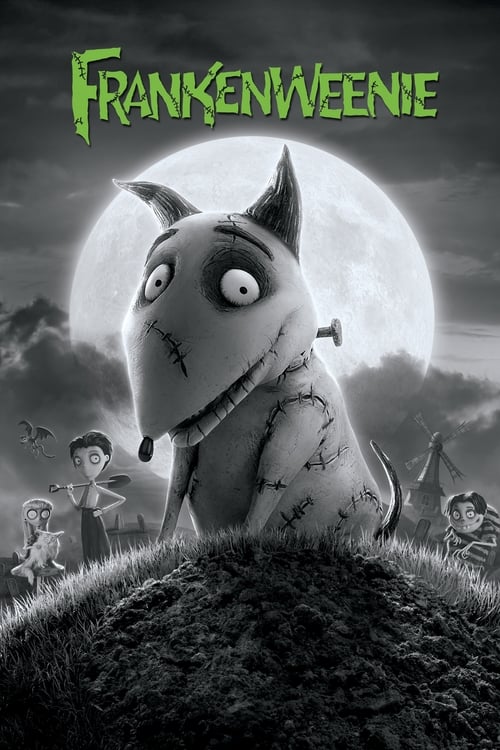
Frankenweenie
2012 · Directed by Tim Burton
Woke Score
CriticCritic Score
Audience
Ultra Based
Critics rated this 70 points above its woke score. Among Ultra Based films, this critic score ranks #498 of 1469.
Representation Casting
Score: 5/100
The cast includes a reasonable range of voice actors, but casting appears to follow standard industry practices with no apparent attention to representation. Winona Ryder and others are established performers hired for their talent and marquee value.
LGBTQ+ Themes
Score: 0/100
No LGBTQ+ themes, characters, or representation are present in the film. The narrative contains no reference to sexual orientation or gender identity.
Feminist Agenda
Score: 0/100
There is no feminist agenda or critique of gender dynamics. The film contains no commentary on women's roles, experiences, or empowerment.
Racial Consciousness
Score: 0/100
The film exhibits no racial consciousness or commentary. Race is not addressed thematically or narratively, and the cast appears overwhelmingly white.
Climate Crusade
Score: 0/100
No climate messaging or environmental themes are present in the film. Climate change and ecological concerns are entirely absent from the narrative.
Eat the Rich
Score: 0/100
There is no anti-capitalist sentiment or critique of wealth and economic systems. The film makes no commentary on capitalism or class dynamics.
Body Positivity
Score: 5/100
While Sparky's physical form after resurrection is unusual and grotesque by design, the film's central message celebrates acceptance of this unconventional appearance. However, this reads as timeless humanism rather than modern body positivity discourse.
Neurodivergence
Score: 0/100
Victor's scientific interests and social awkwardness could potentially be read as neurodivergence, but the film presents these as personality traits without any explicit commentary or framework related to neurodivergence.
Revisionist History
Score: 0/100
The film does not engage with historical reinterpretation or revisionist framing. It is a contemporary gothic comedy with no historical setting or commentary.
Lecture Energy
Score: 0/100
The film maintains a light, comedic tone throughout and does not lecture the audience about social issues or moral lessons. It tells its story without preachy intent.


Synopsis
When a car hits young Victor's pet dog Sparky, Victor decides to bring him back to life the only way he knows how. But when the bolt-necked "monster" wreaks havoc and terror in the hearts of Victor's neighbors, he has to convince them that Sparky's still the good, loyal friend he was.
Consciousness Assessment
Frankenweenie presents itself as a charmingly eccentric tale of a boy and his resurrected dog, executed with Tim Burton's characteristic gothic whimsy and stop-motion artistry. The film trades in Burton's familiar visual language of the macabre and the unusual, creating a world where oddness is presented as endearing rather than threatening. Yet beneath this aesthetic veneer lies a work almost entirely untouched by contemporary progressive sensibilities. The narrative's central theme of acceptance toward the unconventional is presented as a timeless humanist value rather than as any form of social critique. Victor's acceptance of his unusual nature and his neighbors' eventual embrace of the resurrected Sparky operate in the realm of universal values that predate modern cultural discourse by generations.
The film's cast, while competent, is assembled through standard industry casting practices with no apparent attention to representation beyond traditional hiring. The supporting characters of New Holland are drawn as eccentrics for comic effect, but their eccentricity serves the gothic aesthetic rather than functioning as commentary on neurodiversity, marginalization, or social difference. There is no engagement with LGBTQ+ themes, feminist critique, racial consciousness, climate concerns, or any form of anti-capitalist messaging. The film similarly eschews body positivity discourse, revisionist historical framing, or the hectoring tone associated with contemporary progressive cinema. It is, fundamentally, a family-friendly monster movie that has learned nothing from the past decade of cultural conversation and seems wholly uninterested in doing so.
Frankenweenie exists in a space outside cultural commentary altogether, content to recycle the resurrection narrative and the acceptance of the monstrous as applied to a boy and his dog. This is precisely the point of a Tim Burton family film in 2012, and such indifference to the cultural moment is itself notable. The film is a relic of pre-social-consciousness cinema, released at a moment when such indifference was becoming increasingly conspicuous. It is a technically accomplished and emotionally resonant work that remains stubbornly deaf to the progressive sensibilities that were already reshaping popular culture during its release.
Analysis generated by our Consciousness Algorithm
Critic Reviews
“The movie, a simple yet immensely pleasurable tale of a little boy and his undead dog, is good enough on its own. If you know the back story, it's even better.”
“It says something, then, that Burton's best, most enjoyable, and most emotionally resonate film in years is actually an adaptation of one of his very first projects: Frankenweenie.”
“Tim Burton's sense of playfulness feels forced throughout, and as the film progresses, any humor or inventiveness takes a backseat to tumultuous set pieces that reference Frankenstein.”
Consciousness Markers
The cast includes a reasonable range of voice actors, but casting appears to follow standard industry practices with no apparent attention to representation. Winona Ryder and others are established performers hired for their talent and marquee value.
No LGBTQ+ themes, characters, or representation are present in the film. The narrative contains no reference to sexual orientation or gender identity.
There is no feminist agenda or critique of gender dynamics. The film contains no commentary on women's roles, experiences, or empowerment.
The film exhibits no racial consciousness or commentary. Race is not addressed thematically or narratively, and the cast appears overwhelmingly white.
No climate messaging or environmental themes are present in the film. Climate change and ecological concerns are entirely absent from the narrative.
There is no anti-capitalist sentiment or critique of wealth and economic systems. The film makes no commentary on capitalism or class dynamics.
While Sparky's physical form after resurrection is unusual and grotesque by design, the film's central message celebrates acceptance of this unconventional appearance. However, this reads as timeless humanism rather than modern body positivity discourse.
Victor's scientific interests and social awkwardness could potentially be read as neurodivergence, but the film presents these as personality traits without any explicit commentary or framework related to neurodivergence.
The film does not engage with historical reinterpretation or revisionist framing. It is a contemporary gothic comedy with no historical setting or commentary.
The film maintains a light, comedic tone throughout and does not lecture the audience about social issues or moral lessons. It tells its story without preachy intent.