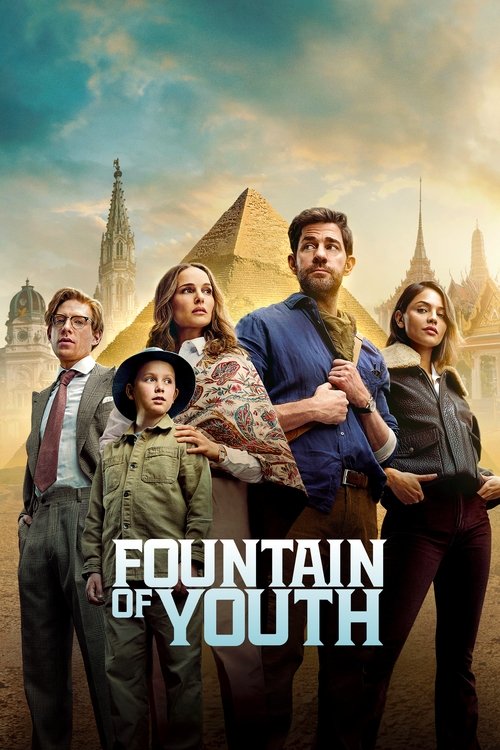
Fountain of Youth
2025 · Directed by Guy Ritchie
Woke Score
CriticCritic Score
Audience
Ultra Based
Critics rated this 33 points above its woke score. Among Ultra Based films, this critic score ranks #1319 of 1469.
Representation Casting
Score: 35/100
The ensemble cast includes actors of various racial and ethnic backgrounds (Eiza González, Laz Alonso, Carmen Ejogo), and Natalie Portman's character is positioned as the intellectual equal or superior to the male lead, though this appears functionally driven rather than thematically intentional.
LGBTQ+ Themes
Score: 0/100
No evidence of LGBTQ+ themes, characters, or subtext in the film's plot or marketing materials.
Feminist Agenda
Score: 25/100
Portman's character is framed as smarter and more strategically essential than Krasinski's, inverting typical adventure film hierarchies, but this appears to be plot mechanics rather than ideological positioning.
Racial Consciousness
Score: 0/100
No evidence the film engages with racial themes, systemic racism, or racial identity as thematic concerns.
Climate Crusade
Score: 0/100
No indication the film addresses environmental concerns or climate-related themes.
Eat the Rich
Score: 0/100
The film follows a treasure-hunting narrative that celebrates acquisition and wealth-seeking, with no apparent critique of capitalism or economic systems.
Body Positivity
Score: 0/100
No evidence of body positivity themes or non-conventional body representation in the film.
Neurodivergence
Score: 0/100
No indication the film addresses neurodivergence or includes neurodivergent characters or representation.
Revisionist History
Score: 0/100
While the film involves historical clues and artifacts, there is no evidence of revisionist historical framing or reinterpretation of historical events through progressive lenses.
Lecture Energy
Score: 0/100
The film is structured as pure adventure entertainment with no apparent preachy messaging or explicit moral instruction from the narrative.

Synopsis
A treasure-hunting mastermind assembles a team for a life-changing adventure. But to outwit and outrun threats at every turn, he'll need someone even smarter than he is: his estranged sister.
Consciousness Assessment
Fountain of Youth presents itself as a globe-trotting heist adventure in the vein of National Treasure, a comparison both the marketing and critical consensus have made with relentless consistency. Guy Ritchie directs with his customary kinetic energy, assembling a colorful ensemble cast across multiple continents in pursuit of a legendary mythical artifact. The film's primary concession to contemporary sensibilities lies in its narrative structure: a male protagonist who must defer to his intellectually superior sister, a curator of meticulous expertise, to succeed. Natalie Portman's Charlotte Purdue is positioned not as a supporting player but as the essential strategic mind, a construction that reads less like progressive storytelling and more like functional screenplay architecture.
The cast composition includes actors of various ethnic backgrounds, Eiza González and Laz Alonso and Carmen Ejogo among them, though their integration into the narrative appears to follow conventional ensemble heist film logic rather than any deliberate statement about representation. Ritchie's sensibility has never tilted toward social messaging or cultural critique, and this film adheres faithfully to that tradition. The adventure is purely adventure, the humor is purely humor, and the globe-trotting is purely spectacle. There is no discernible engagement with climate, capitalism, identity politics, or the constellation of contemporary progressive concerns that have become fixtures in mainstream cinema discourse.
What results is a film content to exist as entertainment, neither celebrating nor interrogating the world it depicts. This restraint, one might argue, represents its own form of cultural positioning in an era of relentless thematic elaboration. The mixed critical reception suggests audiences found it competent if unremarkable, a film that understands its genre obligations and executes them without particular innovation or social consciousness. For our purposes, this represents a score reflecting minimal engagement with the markers we track.
Analysis generated by our Consciousness Algorithm
Critic Reviews
“Portman acquits herself charmingly, as she usually does in her occasional slumming blockbuster role; maybe she and Krasinski should have swapped parts. The erstwhile Jim Halpert isn’t even all that terrible here; at least he makes his character’s smarmy-doofus quality work for his non-relationship with Esme. The real star, though, is Ritchie’s unflagging spirit, as if chasing after bigger blockbusters in the 2010s led him to his own rejuvenating fountain.”
“Occasionally muddled, mostly convoluted, and yet still broadly entertaining, it’s a shame this glossy and big budget affair (you really can’t fake Egyptian pyramids like these), will only exist as a streaming pick on Apple TV+.”
“It’s a movie designed as functional entertainment, and for lack of a better word it functions. ”
“Krasinski and González manage some light mid-brawl banter that hints at “chemistry” that the script doesn’t really provide. Portman soldiers through it, with Gleason at his least inspired and Ritchie helming his uncoolest clunker since his divorce from Madonna.”
Consciousness Markers
The ensemble cast includes actors of various racial and ethnic backgrounds (Eiza González, Laz Alonso, Carmen Ejogo), and Natalie Portman's character is positioned as the intellectual equal or superior to the male lead, though this appears functionally driven rather than thematically intentional.
No evidence of LGBTQ+ themes, characters, or subtext in the film's plot or marketing materials.
Portman's character is framed as smarter and more strategically essential than Krasinski's, inverting typical adventure film hierarchies, but this appears to be plot mechanics rather than ideological positioning.
No evidence the film engages with racial themes, systemic racism, or racial identity as thematic concerns.
No indication the film addresses environmental concerns or climate-related themes.
The film follows a treasure-hunting narrative that celebrates acquisition and wealth-seeking, with no apparent critique of capitalism or economic systems.
No evidence of body positivity themes or non-conventional body representation in the film.
No indication the film addresses neurodivergence or includes neurodivergent characters or representation.
While the film involves historical clues and artifacts, there is no evidence of revisionist historical framing or reinterpretation of historical events through progressive lenses.
The film is structured as pure adventure entertainment with no apparent preachy messaging or explicit moral instruction from the narrative.