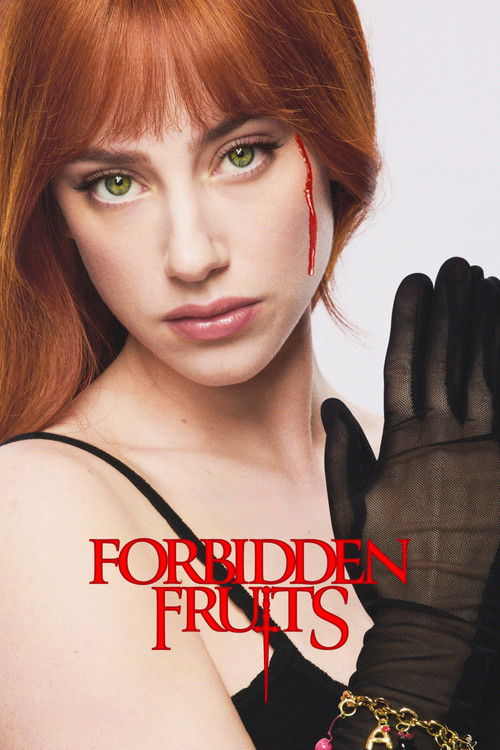
Forbidden Fruits
2026 · Directed by Meredith Alloway
Woke Score
CriticCritic Score
Audience
Woke
Critics rated this 22 points below its woke score. Among Woke films, this critic score ranks #79 of 88.
Representation Casting
Score: 72/100
The ensemble is assembled with the deliberateness of a diversity mood board: Lola Tung, Alexandra Shipp, and Gabrielle Union anchor a cast that checks multiple demographic boxes while the male characters exist primarily as peripheral set dressing. The film wears its inclusive headcount visibly.
LGBTQ+ Themes
Score: 48/100
A witchy all-female cult operating in secret beneath a retail store carries considerable queer-coded energy, and the film's framing of female intimacy and sisterhood-as-devotion gestures strongly in this direction. No explicitly confirmed LGBTQ+ plotlines have been documented, but the subtext is doing significant load-bearing work.
Feminist Agenda
Score: 88/100
The film is, by its own admission, a feminist horror-comedy satire adapted from a stage play titled 'Of the woman came the beginning of sin, and through her we all die.' Produced by Diablo Cody and centered on the deconstruction of 'performative sisterhood,' it is not so much a film with feminist themes as a feminist thesis with a film attached.
Racial Consciousness
Score: 35/100
The diverse ensemble and the film's interest in authenticity versus performance create some space for racial dynamics, but the primary lens is gender rather than race. No specific racial consciousness storylines have been identified in available criticism.
Climate Crusade
Score: 0/100
The film takes place in a mall basement and concerns itself entirely with the internal politics of a witchy femme cult. The climate is not consulted.
Eat the Rich
Score: 55/100
Setting a feminist uprising in the basement of a corporate retail store named 'Free Eden' is not an accidental choice. The mall as a site of female labor, consumption, and rebellion gives the film a low-grade anti-capitalist hum, even if it never fully commits to the critique.
Body Positivity
Score: 30/100
Body horror deployed in service of feminist themes necessarily engages with the female body as contested terrain, and the 'poisons' the women must face suggest some reckoning with bodily shame or societal pressure. The engagement is atmospheric rather than programmatic.
Neurodivergence
Score: 0/100
No neurodivergence themes, characters, or framing have been identified in any available material. The cult appears to be composed of neurotypical fruit-named employees.
Revisionist History
Score: 22/100
The film's 1990s aesthetic is deployed with a revisionist eye, critics noting that its version of mall culture 'never quite existed.' This is mild revisionism in service of satire rather than any sustained historical reinterpretation.
Lecture Energy
Score: 70/100
Critics specifically noted that the film 'bites off more than it can chew as an overwhelming feminist comedic-horror satire' and that its script is 'out of step with contemporary reality.' These are the precise symptoms of a film that cannot resist stopping to explain its own point. The lecture energy is high enough to have caused critical tonal instability.
Synopsis
Free Eden employee Apple secretly runs a witchy femme cult in the basement of the mall store after hours – with fellow fruits Cherry and Fig. But, when new hire Pumpkin challenges their performative sisterhood, the women are forced to face their own poisons or succumb to a bloody fate.
Consciousness Assessment
Forbidden Fruits arrives bearing the full weight of its own intentions, which is to say it arrives quite heavily. Adapted from a stage play whose title quotes Genesis to indict Eve, produced by Diablo Cody, and set in a corporate mall store called Free Eden, the film has done everything short of mailing the audience a syllabus. Director Meredith Alloway stages the story of Apple's underground witchy femme cult as a feminist horror-comedy satire, a genre designation that functions less as a description and more as a manifesto. The ensemble, assembled with the care of someone filling out a bingo card, is uniformly committed. The film's central tension, that performative sisterhood is its own kind of poison, is a genuinely interesting idea. It is also an idea the film explains to us at regular intervals in case we missed it.
The 1990s mall aesthetic is deployed with loving specificity, though critics noted the version of mall culture on screen never quite existed outside of cultural memory and mood boards. This is, perhaps, the point. The film is not interested in documenting the past so much as constructing a usable mythology from its wreckage, a feminist fever dream set in a retail purgatory where the patriarchy wears khakis and the revolution is held after hours in the basement. The body horror elements, when they arrive, carry genuine menace. The problem is that the film keeps pausing the menace to make sure we understand what the menace represents.
A more confident film would trust its own imagery. A witch cult in a mall basement named after the Garden of Eden does not require footnotes. But Forbidden Fruits, for all its considerable energy and a cast that includes Victoria Pedretti doing what Victoria Pedretti does best, cannot quite resist the temptation to sermonize. It is, in this sense, true to its source material. Eve, too, could not leave well enough alone.
Analysis generated by our Consciousness Algorithm
Critic Reviews
“It captures so well the insanity of the contradictions we–particularly women–have to live into daily.”
“The film is a witchy mall comedy that mostly keeps you under its spell.”
“That's what makes Forbidden Fruits feel both timely and timeless. We rarely leave the inside of the mall, giving the film a claustrophobic feel. The girls use cell phones – it'd be strange if they didn't – but any recognizable social media are absent. It feels like a distinctly modern take on female friendship, but one that owes a great deal to the films that have come before it. And it's lost the sort of optimism that those films often came with.”
“Though Reinhart and Pedretti chew through the scenery with dedication, the film, directed and written by Meredith Alloway, is a vibes-only pastiche that has little to add to the satirical queen-bee subgenre besides some updated slang.”
Consciousness Markers
The ensemble is assembled with the deliberateness of a diversity mood board: Lola Tung, Alexandra Shipp, and Gabrielle Union anchor a cast that checks multiple demographic boxes while the male characters exist primarily as peripheral set dressing. The film wears its inclusive headcount visibly.
A witchy all-female cult operating in secret beneath a retail store carries considerable queer-coded energy, and the film's framing of female intimacy and sisterhood-as-devotion gestures strongly in this direction. No explicitly confirmed LGBTQ+ plotlines have been documented, but the subtext is doing significant load-bearing work.
The film is, by its own admission, a feminist horror-comedy satire adapted from a stage play titled 'Of the woman came the beginning of sin, and through her we all die.' Produced by Diablo Cody and centered on the deconstruction of 'performative sisterhood,' it is not so much a film with feminist themes as a feminist thesis with a film attached.
The diverse ensemble and the film's interest in authenticity versus performance create some space for racial dynamics, but the primary lens is gender rather than race. No specific racial consciousness storylines have been identified in available criticism.
The film takes place in a mall basement and concerns itself entirely with the internal politics of a witchy femme cult. The climate is not consulted.
Setting a feminist uprising in the basement of a corporate retail store named 'Free Eden' is not an accidental choice. The mall as a site of female labor, consumption, and rebellion gives the film a low-grade anti-capitalist hum, even if it never fully commits to the critique.
Body horror deployed in service of feminist themes necessarily engages with the female body as contested terrain, and the 'poisons' the women must face suggest some reckoning with bodily shame or societal pressure. The engagement is atmospheric rather than programmatic.
No neurodivergence themes, characters, or framing have been identified in any available material. The cult appears to be composed of neurotypical fruit-named employees.
The film's 1990s aesthetic is deployed with a revisionist eye, critics noting that its version of mall culture 'never quite existed.' This is mild revisionism in service of satire rather than any sustained historical reinterpretation.
Critics specifically noted that the film 'bites off more than it can chew as an overwhelming feminist comedic-horror satire' and that its script is 'out of step with contemporary reality.' These are the precise symptoms of a film that cannot resist stopping to explain its own point. The lecture energy is high enough to have caused critical tonal instability.