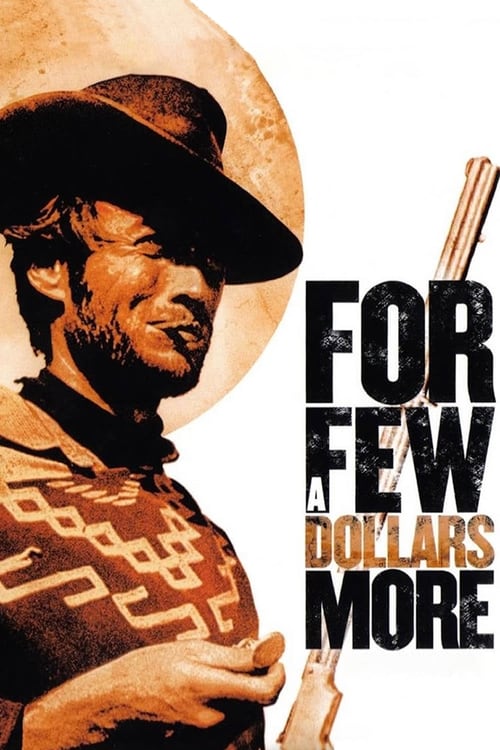
For a Few Dollars More
1965 · Directed by Sergio Leone
Woke Score
CriticCritic Score
Audience
Ultra Based
Critics rated this 70 points above its woke score. Among Ultra Based films, this critic score ranks #514 of 1469.
Representation Casting
Score: 0/100
The film contains only white European and American male leads with no attention to diverse representation. This is entirely consistent with 1965 film production norms and not a deliberate choice reflecting modern sensibilities.
LGBTQ+ Themes
Score: 0/100
No LGBTQ+ themes, characters, or subtext are present in the film. The narrative focuses exclusively on heterosexual male relationships and competition.
Feminist Agenda
Score: 0/100
No feminist themes are evident. Female characters are minimal and lack agency or development. The film centers entirely on male protagonists and male-centered conflict.
Racial Consciousness
Score: 0/100
The film contains no racial consciousness or exploration of racial themes in any modern sense. The title character El Indio is portrayed as a villain without any commentary on indigenous peoples or colonialism.
Climate Crusade
Score: 0/100
No climate messaging or environmental consciousness is present in the film. The narrative has no concern with ecological themes.
Eat the Rich
Score: 0/100
The entire plot is driven by capitalist incentive: bounty hunting for money. There is no critique of wealth acquisition or capitalism. The protagonists are motivated purely by financial reward.
Body Positivity
Score: 0/100
No body positivity messaging exists in the film. Bodies are presented through the lens of action and violence without commentary on appearance or acceptance.
Neurodivergence
Score: 0/100
No neurodivergent characters or representation is present. The film makes no attempt to portray or discuss neurodiversity.
Revisionist History
Score: 8/100
The film operates within spaghetti western conventions that stylize and fictionalize the American West, though this is not revisionism in the modern sense. The slight score reflects only the generic distance from historical fact inherent to the genre.
Lecture Energy
Score: 0/100
The film contains no preachy messaging or attempt to educate the audience about social issues. It is pure genre entertainment focused on plot and action.


Synopsis
Two bounty hunters both pursue the brutal and sadistic bandit, El Indio, who has a large bounty on his head.
Consciousness Assessment
Sergio Leone's 1965 spaghetti western sequel is a monument to pre-modern cinema, operating in a cultural moment when films were permitted to concern themselves primarily with plot, action, and aesthetic composition rather than social messaging. The narrative follows two morally flexible bounty hunters pursuing a vicious criminal across the Mexican landscape, motivated entirely by the financial reward on his head. The film's entire dramatic architecture rests on male competition, gunfighting skill, and economic self-interest. There are no substantial female characters, no racial consciousness, no environmental messaging, and no critique of the capitalist systems that drive the plot. Leone's direction emphasizes visual storytelling and the mythic dimensions of the western form over any engagement with contemporary social concerns. The film is what it is: a carefully constructed work of genre entertainment that predates by decades the cultural movements that would come to inform modern progressive cinema. To evaluate it by standards that did not exist when it was made would be a fundamental category error, akin to criticizing a medieval tapestry for failing to include proper OSHA compliance documentation. The film exhibits virtually no markers of contemporary progressive sensibility because it was made in 1965 and reflects the entertainment priorities of that era. Its violence is stylized rather than moralizing, its characters are pragmatists rather than ideologues, and its world contains no space for the social consciousness that would later become central to certain strains of filmmaking. This is simply what popular cinema looked like before the cultural movements of the 1990s and 2010s reshaped the medium's relationship to social themes.
Analysis generated by our Consciousness Algorithm
Critic Reviews
“The second film in Leone's Dollar trilogy finds the Italian director in better form than in A Fistful of Dollars. For a Few Dollars More has better writing, superior production values, and more characters who aptly complement Eastwood's stoic Man with No Name.”
“While it doesn’t have the lunatic fervor of The Good, The Bad’s climatic cemetery shootout, For A Few Dollars more feels like its successor’s equal, which is about as great a compliment as I can bestow.”
“A hard-hitting western with upper-case values out of the busy Italo stable, this is a topnotch action entry.”
“The fact that this film is constructed to endorse the exercise of murderers, to emphasize killer bravado and generate glee in frantic manifestations of death is, to my mind, a sharp indictment of it as so-called entertainment in this day.”
Consciousness Markers
The film contains only white European and American male leads with no attention to diverse representation. This is entirely consistent with 1965 film production norms and not a deliberate choice reflecting modern sensibilities.
No LGBTQ+ themes, characters, or subtext are present in the film. The narrative focuses exclusively on heterosexual male relationships and competition.
No feminist themes are evident. Female characters are minimal and lack agency or development. The film centers entirely on male protagonists and male-centered conflict.
The film contains no racial consciousness or exploration of racial themes in any modern sense. The title character El Indio is portrayed as a villain without any commentary on indigenous peoples or colonialism.
No climate messaging or environmental consciousness is present in the film. The narrative has no concern with ecological themes.
The entire plot is driven by capitalist incentive: bounty hunting for money. There is no critique of wealth acquisition or capitalism. The protagonists are motivated purely by financial reward.
No body positivity messaging exists in the film. Bodies are presented through the lens of action and violence without commentary on appearance or acceptance.
No neurodivergent characters or representation is present. The film makes no attempt to portray or discuss neurodiversity.
The film operates within spaghetti western conventions that stylize and fictionalize the American West, though this is not revisionism in the modern sense. The slight score reflects only the generic distance from historical fact inherent to the genre.
The film contains no preachy messaging or attempt to educate the audience about social issues. It is pure genre entertainment focused on plot and action.