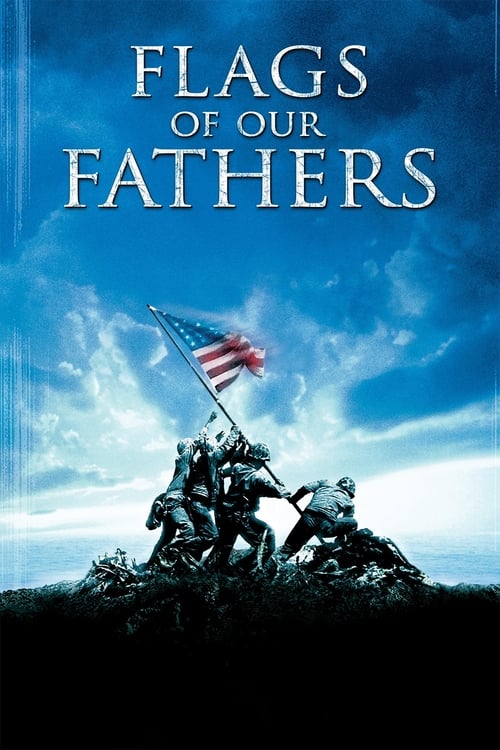
Flags of Our Fathers
2006 · Directed by Clint Eastwood
Woke Score
CriticCritic Score
Audience
Ultra Based
Critics rated this 71 points above its woke score. Among Ultra Based films, this critic score ranks #393 of 1469.
Representation Casting
Score: 25/100
Adam Beach plays Ira Hayes, a Pima Native American character. However, the representation is historically contextual rather than driven by contemporary casting consciousness, and Hayes' arc centers on tragedy and marginalization.
LGBTQ+ Themes
Score: 0/100
No LGBTQ+ themes or characters present in this military historical drama.
Feminist Agenda
Score: 0/100
The narrative is entirely male-centered with minimal female characters. No feminist themes or agenda evident.
Racial Consciousness
Score: 20/100
The film depicts Ira Hayes' experience with racism and his position as a Native American serviceman, but this emerges from historical accuracy rather than contemporary social justice framing.
Climate Crusade
Score: 0/100
No climate-related themes or messaging present in this war film.
Eat the Rich
Score: 0/100
No anti-capitalist critique or themes. The film addresses propaganda and institutional manipulation but not economic systems.
Body Positivity
Score: 0/100
No body positivity messaging or representation in this combat-focused war narrative.
Neurodivergence
Score: 0/100
No representation of or engagement with neurodivergence.
Revisionist History
Score: 5/100
The film actually resists simplistic revisionism, presenting the Iwo Jima flag-raising as complex rather than straightforwardly heroic or villainous. Minimal evidence of contemporary historical reframing.
Lecture Energy
Score: 0/100
Eastwood's directorial style is characteristically restrained and shows rather than tells. No preachy messaging or lecture-like tone present.


Synopsis
There were five Marines and one Navy Corpsman photographed raising the U.S. flag on Mt. Suribachi by Joe Rosenthal on February 23, 1945. This is the story of three of the six surviving servicemen - John 'Doc' Bradley, Pvt. Rene Gagnon and Pvt. Ira Hayes - who fought in the battle to take Iwo Jima from the Japanese.
Consciousness Assessment
Clint Eastwood's Flags of Our Fathers stands as a contemplative meditation on the gap between heroic myth and historical reality, a gap that proves both wider and more melancholy than most patriotic narratives care to acknowledge. The film follows three survivors of the Iwo Jima flag-raising through their subsequent lives, tracing how an iconic photograph becomes a propaganda tool for war bonds while the men who created it struggle with trauma, shame, and cultural displacement. Eastwood's restrained direction eschews the jingoistic sentiment one might expect, instead presenting the machinery of American mythology as something both necessary and corrosive.
The film's engagement with social consciousness remains firmly rooted in 1940s historical specificity rather than contemporary sensibilities. Adam Beach's portrayal of Ira Hayes, a Pima Native American serviceman, does acknowledge the racial dynamics of his era, depicting Hayes as a man caught between institutional racism and the burden of representation. Yet this treatment emerges from the historical record itself, not from a desire to retrofit modern progressive frameworks onto the past. The film shows Hayes' struggle with alcoholism and social alienation as tragic consequences of his position, but it does not mobilize these elements toward the kind of thematic emphasis that would signal contemporary cultural awareness.
The production remains fundamentally a war drama concerned with the psychology of trauma, the construction of national mythology, and the human cost of military service. Its seriousness about these matters should not be mistaken for the specific cultural markers we associate with 2020s progressive cinema. This is a film made by someone working in the classical Eastwood tradition of moral complexity without explicit preachiness, treating its historical subjects with dignity while resisting sentimentality. It is a better film for this restraint, even if that restraint necessarily limits its engagement with modern social consciousness.
Analysis generated by our Consciousness Algorithm
Critic Reviews
“Clint Eastwood's Flags of Our Fathers does a most difficult and brave thing and does it brilliantly. It is a movie about a concept. Not just any concept but the shop-worn and often wrong-headed idea of "heroism."”
“To an extent, Flags of Our Fathers is to the WWII movie what Eastwood's Unforgiven was to the western -- a stripping-away of mythology until only a harsher, uncomfortable reality remains.”
“What Flags of Our Fathers is not, however, is moving, evocative, or very unique.”
Consciousness Markers
Adam Beach plays Ira Hayes, a Pima Native American character. However, the representation is historically contextual rather than driven by contemporary casting consciousness, and Hayes' arc centers on tragedy and marginalization.
No LGBTQ+ themes or characters present in this military historical drama.
The narrative is entirely male-centered with minimal female characters. No feminist themes or agenda evident.
The film depicts Ira Hayes' experience with racism and his position as a Native American serviceman, but this emerges from historical accuracy rather than contemporary social justice framing.
No climate-related themes or messaging present in this war film.
No anti-capitalist critique or themes. The film addresses propaganda and institutional manipulation but not economic systems.
No body positivity messaging or representation in this combat-focused war narrative.
No representation of or engagement with neurodivergence.
The film actually resists simplistic revisionism, presenting the Iwo Jima flag-raising as complex rather than straightforwardly heroic or villainous. Minimal evidence of contemporary historical reframing.
Eastwood's directorial style is characteristically restrained and shows rather than tells. No preachy messaging or lecture-like tone present.