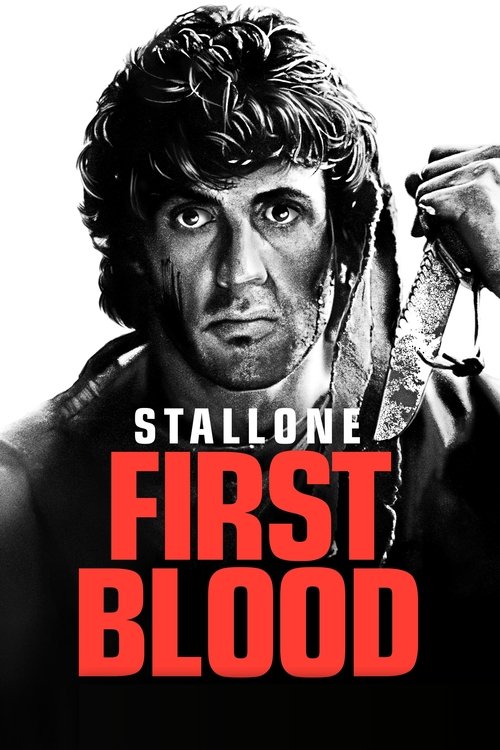
First Blood
1982 · Directed by Ted Kotcheff
Woke Score
CriticCritic Score
Audience
Ultra Based
Critics rated this 57 points above its woke score. Among Ultra Based films, this critic score ranks #881 of 1469.
Representation Casting
Score: 5/100
The cast is entirely white male-dominated with no meaningful female or minority representation. Stallone's casting reflects 1980s action hero conventions with no consciousness toward diverse representation.
LGBTQ+ Themes
Score: 0/100
No LGBTQ+ themes, characters, or references appear in the film. This is a straightforward action thriller with no engagement with queer representation.
Feminist Agenda
Score: 0/100
The film contains no female characters of significance and zero feminist themes or perspectives. Gender is entirely absent from the narrative.
Racial Consciousness
Score: 5/100
While the film critiques institutional violence and state power, it does not examine these systems through a racial lens. No racial consciousness or examination of systemic racism appears.
Climate Crusade
Score: 0/100
Climate change and environmental concerns are entirely absent from this film. The mountain setting exists only as a backdrop for the action narrative.
Eat the Rich
Score: 10/100
The film critiques institutional state power and bureaucratic indifference, but this critique operates through personal tragedy rather than systematic analysis of economic systems or class exploitation.
Body Positivity
Score: 0/100
Body positivity is not a consideration in this 1982 action film. The film celebrates Stallone's muscular physique as part of conventional action hero aesthetics.
Neurodivergence
Score: 25/100
The film treats PTSD and trauma as central to Rambo's character and sympathetically portrays his mental condition as a product of military service, though without modern frameworks for discussing neurodivergence.
Revisionist History
Score: 20/100
The film engages with Vietnam War trauma and its aftermath, presenting a critique of how America failed veterans. This represents an early engagement with war memory, though not framed through contemporary historical revisionism.
Lecture Energy
Score: 10/100
The film's ending features a brief emotional monologue where Rambo expresses his pain, but the narrative prioritizes action and emotion over preachy messaging or explicit social commentary.


Synopsis
When former Green Beret John Rambo is harassed by local law enforcement and arrested for vagrancy, he is forced to flee into the mountains and wage an escalating one-man war against his pursuers.
Consciousness Assessment
First Blood operates as a genuine exploration of post-Vietnam trauma and the state's indifference to returning soldiers, yet it pursues these themes through a lens fundamentally at odds with contemporary progressive sensibilities. The film treats Rambo's mental illness as a tragic condition born from military service, generating sympathy for a man destroyed by institutional violence. This is serious, humanist filmmaking. However, it lacks the specific markers we might expect from a work engaging with modern cultural consciousness. The narrative centers entirely on a white male protagonist whose victimhood derives from his status as a soldier rather than from any systematic oppression related to identity. The local sheriff, played with bureaucratic menace by Brian Dennehy, represents state overreach and class cruelty, but the film never theorizes this as part of broader systems of power or inequality.
The film's representation of law enforcement as corrupt and trigger-happy predates contemporary critiques of policing by decades, yet it does so without the deliberate consciousness-raising that would mark such content as culturally aware in the modern sense. Rambo himself is presented as a sympathetic victim of circumstance, not as a subject through which we might examine systemic injustice. No female characters exist with any significance. No queer themes emerge. No discussion of capitalism, imperialism, or historical revisionism occurs. The film simply depicts a broken man pushed too far by a system indifferent to his suffering. We might call this a humanist critique of institutional cruelty, but humanist critique is not the same as contemporary social consciousness.
What remains striking about First Blood is its restraint. Rambo does not become a fascist avenger in this installment. He remains a tragic figure, and the film's ending carries genuine melancholy. It is a film about the failure of institutions to care for damaged men, and that failure reads as moral indictment. Yet that indictment operates on a register entirely separate from the specific cultural markers we are tasked with identifying. First Blood is too early, too focused on individual psychology, and too committed to conventional narrative sympathy to register as engaged with contemporary progressive frameworks.
Analysis generated by our Consciousness Algorithm
Critic Reviews
“There's the fact that First Blood is a first-rate, taught action thriller.”
“First Blood is not the Rambo movie we initially think of when the character is mentioned. No, it’s much better than that.”
“Stallone is feral this film, physically powerful; he's muddy and bloody, but he's still pretty even in a tarpaulin. He's the wild child coming home. First Blood is good to the last drop, if you like that sort of thing. [22 Oct 1982, p.17]”
“First Blood is no more than a man-bites-town retread, in which Vietnam and its aftermath are merely the angle. [27 Oct 1982, p.B6]”
Consciousness Markers
The cast is entirely white male-dominated with no meaningful female or minority representation. Stallone's casting reflects 1980s action hero conventions with no consciousness toward diverse representation.
No LGBTQ+ themes, characters, or references appear in the film. This is a straightforward action thriller with no engagement with queer representation.
The film contains no female characters of significance and zero feminist themes or perspectives. Gender is entirely absent from the narrative.
While the film critiques institutional violence and state power, it does not examine these systems through a racial lens. No racial consciousness or examination of systemic racism appears.
Climate change and environmental concerns are entirely absent from this film. The mountain setting exists only as a backdrop for the action narrative.
The film critiques institutional state power and bureaucratic indifference, but this critique operates through personal tragedy rather than systematic analysis of economic systems or class exploitation.
Body positivity is not a consideration in this 1982 action film. The film celebrates Stallone's muscular physique as part of conventional action hero aesthetics.
The film treats PTSD and trauma as central to Rambo's character and sympathetically portrays his mental condition as a product of military service, though without modern frameworks for discussing neurodivergence.
The film engages with Vietnam War trauma and its aftermath, presenting a critique of how America failed veterans. This represents an early engagement with war memory, though not framed through contemporary historical revisionism.
The film's ending features a brief emotional monologue where Rambo expresses his pain, but the narrative prioritizes action and emotion over preachy messaging or explicit social commentary.