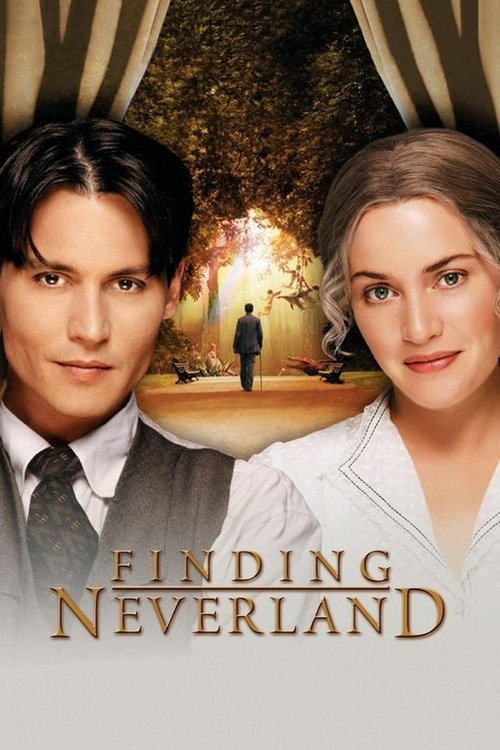
Finding Neverland
2004 · Directed by Marc Forster
Woke Score
CriticCritic Score
Audience
Ultra Based
Critics rated this 59 points above its woke score. Among Ultra Based films, this critic score ranks #711 of 1469.
Representation Casting
Score: 15/100
The film features Kate Winslet as a lead character with agency, but the narrative remains centered on the male playwright's genius, positioning her primarily as muse and inspiration rather than as her own subject.
LGBTQ+ Themes
Score: 20/100
Subtle subtext regarding Barrie's sexuality and emotional distance from conventional romance exists, but the film does not explicitly engage with or develop LGBTQ+ themes.
Feminist Agenda
Score: 25/100
While Winslet's character demonstrates intelligence and maternal strength, the narrative structure ultimately subordinates her to the role of inspiration for the male protagonist's creative work.
Racial Consciousness
Score: 0/100
The film features an entirely white cast set in Edwardian England with no engagement whatsoever with racial themes or diversity.
Climate Crusade
Score: 0/100
No environmental themes or climate-related content appears in the film.
Eat the Rich
Score: 0/100
While the film depicts artistic struggle, it does not critique capitalism, wealth inequality, or economic systems in any meaningful way.
Body Positivity
Score: 0/100
The film features conventionally attractive actors and contains no engagement with body diversity or body positivity themes.
Neurodivergence
Score: 0/100
There is no representation of neurodivergent characters or engagement with neurodivergence-related themes.
Revisionist History
Score: 5/100
The film takes creative liberties with historical facts about Barrie's life and relationships, though this represents artistic interpretation rather than progressive historical revisionism.
Lecture Energy
Score: 5/100
The film is a character-driven study that generally avoids preachy moralizing, though occasional moments of sentimentality about creativity and imagination border on the maudlin.


Synopsis
During a writing slump, playwright J.M. Barrie meets a widow and her four children, all young boys—who soon become an important part of Barrie's life and the inspiration that lead him to create his masterpiece. Peter Pan.
Consciousness Assessment
Finding Neverland presents itself as a whimsical meditation on artistic inspiration and the creative mind, yet it functions primarily as a vehicle for Johnny Depp's brooding eccentricity and the romanticization of a male artist's muse. The film constructs J.M. Barrie as a tortured genius whose interactions with a widow and her children unlock his creative potential, a narrative structure that subordinates Kate Winslet's character to the role of emotional catalyst. Her intelligence and resilience matter only insofar as they serve the advancement of Barrie's artistic vision.
The film's historical setting in Edwardian England provides convenient cover for its complete absence of demographic diversity. No attempt is made to interrogate the social hierarchies of the period or to complicate its presentation of class and gender relations. The narrative treats these realities as mere backdrop, neither endorsing nor critiquing them. The four boys exist primarily as props in Barrie's imaginative process rather than as fully realized characters with their own interiority.
Released in 2004, the film reflects the values and narrative assumptions of its era, which is to say it reflects none of the social consciousness markers that would later become defining features of the cultural conversation. The film is neither offensive nor particularly aware of its own limitations. It simply proceeds with the confidence of a work that believes its subject matter requires no broader social context.
Analysis generated by our Consciousness Algorithm
Critic Reviews
“Depp and Winslet in particular are, as you might expect, immaculate. I don't think there's another actor alive who can convey the intermingling of gentleness and passion with as much precision as Depp. ”
“It's a real pleasure to find a movie as calm, measured and dead-on in its impact as Finding Neverland.”
“Dismal and heavy, and the failure rests chiefly with Johnny Depp, who plays Barrie. ”
Consciousness Markers
The film features Kate Winslet as a lead character with agency, but the narrative remains centered on the male playwright's genius, positioning her primarily as muse and inspiration rather than as her own subject.
Subtle subtext regarding Barrie's sexuality and emotional distance from conventional romance exists, but the film does not explicitly engage with or develop LGBTQ+ themes.
While Winslet's character demonstrates intelligence and maternal strength, the narrative structure ultimately subordinates her to the role of inspiration for the male protagonist's creative work.
The film features an entirely white cast set in Edwardian England with no engagement whatsoever with racial themes or diversity.
No environmental themes or climate-related content appears in the film.
While the film depicts artistic struggle, it does not critique capitalism, wealth inequality, or economic systems in any meaningful way.
The film features conventionally attractive actors and contains no engagement with body diversity or body positivity themes.
There is no representation of neurodivergent characters or engagement with neurodivergence-related themes.
The film takes creative liberties with historical facts about Barrie's life and relationships, though this represents artistic interpretation rather than progressive historical revisionism.
The film is a character-driven study that generally avoids preachy moralizing, though occasional moments of sentimentality about creativity and imagination border on the maudlin.