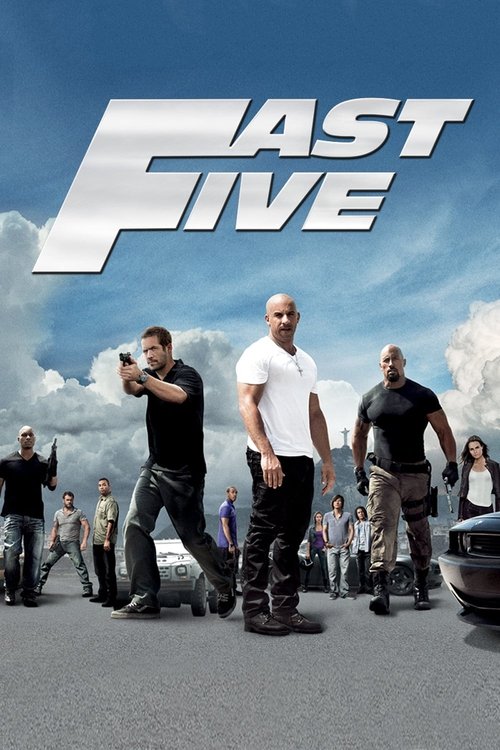
Fast Five
2011 · Directed by Justin Lin
Woke Score
CriticCritic Score
Audience
Based
Critics rated this 44 points above its woke score. Among Based films, this critic score ranks #194 of 345.
Representation Casting
Score: 62/100
Multiethnic cast with Latino, Brazilian, and Asian actors in substantial roles. Jordana Brewster's character participates actively in the action rather than serving as mere romantic interest, representing modest progress for female representation in the franchise.
LGBTQ+ Themes
Score: 0/100
No LGBTQ+ themes, characters, or representation present in the film. The narrative centers exclusively on heterosexual relationships and masculine bonding.
Feminist Agenda
Score: 15/100
Mia Toretto's role as an active participant in heists represents minimal feminist progress. The film remains fundamentally centered on male action heroes, with female characters occupying supporting positions.
Racial Consciousness
Score: 5/100
Despite the diverse cast, the film shows no interrogation of racial dynamics, colonial power structures, or systemic inequalities. Rio de Janeiro serves as an exotic backdrop rather than a setting whose social complexities are explored.
Climate Crusade
Score: 0/100
No environmental themes or climate consciousness present. The narrative celebrates high-performance vehicles and conspicuous consumption without any acknowledgment of ecological impact.
Eat the Rich
Score: 3/100
The film presents wealth accumulation and material consumption as unambiguous goods. The heist targets a corrupt businessman, but this provides only superficial moral justification without genuine critique of capitalist systems.
Body Positivity
Score: 0/100
No body positivity themes present. The film celebrates conventionally attractive, muscular male physiques as the standard ideal without diversity in body representation.
Neurodivergence
Score: 0/100
No representation of neurodivergent characters or themes. The narrative assumes neurotypical characters throughout.
Revisionist History
Score: 0/100
No historical revisionism present. The film is set in contemporary times and does not engage with historical narratives or reinterpretations.
Lecture Energy
Score: 10/100
The film avoids overt preachiness or moral lectures. Any thematic content remains implicit and underdeveloped, prioritizing action and spectacle over explicit social commentary.


Synopsis
Former cop Brian O'Conner partners with ex-con Dom Toretto on the opposite side of the law. Since Brian and Mia Toretto broke Dom out of custody, they've blown across many borders to elude authorities. Now backed into a corner in Rio de Janeiro, they must pull one last job in order to gain their freedom.
Consciousness Assessment
Fast Five represents a curious case study in the tension between demographic diversity and cultural consciousness. The film boasts a genuinely multiethnic cast, with Brazilian, Latino, and Asian actors sharing screen time in roles of varying substantiveness. Jordana Brewster's Mia operates as an action participant rather than a mere romantic attachment, a modest step forward for the franchise. Yet these elements of representation exist largely in a void of thematic engagement. The film shows us a diverse crew without interrogating the systems that render them criminals, the economic desperation that might motivate their heists, or the colonial dynamics at play in their Rio de Janeiro setting. This is representation as aesthetic seasoning rather than as a vehicle for social consciousness.
The narrative structure actively resists any reading that might complicate its celebration of masculine heroics and conspicuous consumption. Dwayne Johnson's entrance as Luke Hobbs introduces a federal agent antagonist, but the film frames law enforcement primarily as an obstacle to overcome rather than as an institution deserving critique. The heist itself, a theft of millions from a corrupt businessman, gestures vaguely toward some form of moral justification but never develops this into anything resembling a coherent political position. The fast cars, the expensive watches, the luxury penthouses - these symbols of wealth accumulation are presented as unambiguous goods, the rightful spoils of those clever enough to take them.
The result is a film that performs diversity without interrogating power, that includes minority characters while refusing to examine the structures that marginalize them, and that mistakes visual representation for substantive engagement with social questions. It is not hostile to progressive sensibilities so much as indifferent to them. The film simply does not care, and this indifference is perhaps the most honest thing about it.
Analysis generated by our Consciousness Algorithm
Critic Reviews
“Big crashes, lithe women and roiling testosterone, not to mention the addition of The Rock as a fire-and-brimstone federal agent – there's plenty to pull in the (mostly) young male audience. ”
“Fast Five boasts incredible action scenes that are all varied and equally exciting. The film is full of clean, well choreographed shots that are easy to watch and the cast works great as a whole unit, making the film's running time breeze by.”
“High-octane trash, but you will go "Ohhhhhh!" ”
“From unique to generic, it's a gear-shift that may prolong the franchise's life (a mid-credits coda confirms that a sixth installment is on its way), but, in the process, also renders it redundant.”
Consciousness Markers
Multiethnic cast with Latino, Brazilian, and Asian actors in substantial roles. Jordana Brewster's character participates actively in the action rather than serving as mere romantic interest, representing modest progress for female representation in the franchise.
No LGBTQ+ themes, characters, or representation present in the film. The narrative centers exclusively on heterosexual relationships and masculine bonding.
Mia Toretto's role as an active participant in heists represents minimal feminist progress. The film remains fundamentally centered on male action heroes, with female characters occupying supporting positions.
Despite the diverse cast, the film shows no interrogation of racial dynamics, colonial power structures, or systemic inequalities. Rio de Janeiro serves as an exotic backdrop rather than a setting whose social complexities are explored.
No environmental themes or climate consciousness present. The narrative celebrates high-performance vehicles and conspicuous consumption without any acknowledgment of ecological impact.
The film presents wealth accumulation and material consumption as unambiguous goods. The heist targets a corrupt businessman, but this provides only superficial moral justification without genuine critique of capitalist systems.
No body positivity themes present. The film celebrates conventionally attractive, muscular male physiques as the standard ideal without diversity in body representation.
No representation of neurodivergent characters or themes. The narrative assumes neurotypical characters throughout.
No historical revisionism present. The film is set in contemporary times and does not engage with historical narratives or reinterpretations.
The film avoids overt preachiness or moral lectures. Any thematic content remains implicit and underdeveloped, prioritizing action and spectacle over explicit social commentary.