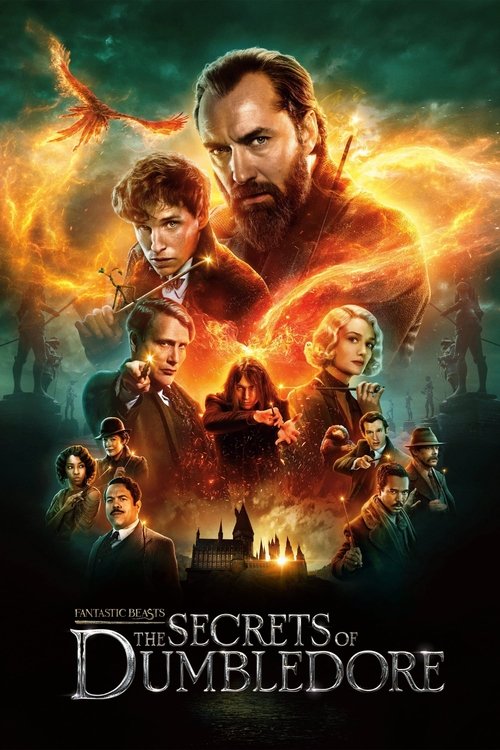
Fantastic Beasts: The Secrets of Dumbledore
2022 · Directed by David Yates
Woke Score
CriticCritic Score
Audience
Based
Critics rated this 25 points above its woke score. Among Based films, this critic score ranks #319 of 345.
Representation Casting
Score: 45/100
The cast includes performers of color like Jessica Williams in positions of authority, but they serve primarily functional roles in a narrative centered on white characters. Casting diversity is present but not structurally integrated into the story's moral or thematic core.
LGBTQ+ Themes
Score: 25/100
The canonical romantic relationship between Dumbledore and Grindelwald is acknowledged in the source material but rendered almost entirely as subtext in the film itself. The relationship receives minimal visual or emotional expression, falling short of genuine representation.
Feminist Agenda
Score: 20/100
Female characters exist in the narrative but lack agency or narrative significance. Katherine Waterston and Alison Sudol serve supporting roles without meaningful character arcs or influence on the central conflict.
Racial Consciousness
Score: 35/100
The film includes racially diverse casting and Jessica Williams appears as a capable magical professional, but the narrative never engages with systemic issues, historical injustice, or racial themes beyond surface-level representation.
Climate Crusade
Score: 0/100
No evidence of environmental themes or climate consciousness. The magical conflict and plot mechanics bear no relationship to environmental or ecological concerns.
Eat the Rich
Score: 0/100
The film presents no critique of economic systems, wealth inequality, or institutional power structures beyond the basic good-versus-evil magical conflict.
Body Positivity
Score: 0/100
No representation of diverse body types, disabilities, or body-positive messaging. The cast conforms to conventional Hollywood aesthetics without variation or commentary.
Neurodivergence
Score: 0/100
No portrayal of neurodivergent characters or exploration of neurodiversity themes. The narrative contains no disability representation or related thematic material.
Revisionist History
Score: 15/100
The film addresses a historical magical conflict but does not interrogate or reframe historical events in ways that challenge conventional narratives. It presents events as established canon rather than revisionist interpretation.
Lecture Energy
Score: 10/100
The film contains minimal preachy or expository dialogue about social themes. Characters do not articulate progressive values or engage in explicit moral instruction beyond standard fantasy good-versus-evil framing.


Synopsis
Professor Albus Dumbledore knows the powerful, dark wizard Gellert Grindelwald is moving to seize control of the wizarding world. Unable to stop him alone, he entrusts magizoologist Newt Scamander to lead an intrepid team of wizards and witches. They soon encounter an array of old and new beasts as they clash with Grindelwald's growing legion of followers.
Consciousness Assessment
The third installment in the Fantastic Beasts franchise arrives as a curious artifact of contemporary Hollywood's relationship with progressive sensibilities, neither fully committing to nor entirely avoiding them. The film features a diverse ensemble cast that includes performers of color in meaningful roles, particularly Jessica Williams in a position of magical authority, though the narrative structure ensures that none of these characters receive the narrative weight that might elevate their presence beyond functional diversity. The central relationship between Dumbledore and Grindelwald, confirmed by the author as romantic in canon, remains so thoroughly subtext that one might miss it entirely without external knowledge, presented through lingering looks and vague dialogue rather than any genuine expression of intimacy or consequence.
The production also carries the weight of its casting complications. Ezra Miller's presence in the film became deeply complicated by legal and behavioral controversies that emerged during the release period, creating an unintended subtext of institutional failure and the gap between casting diversity and genuine cultural reckoning. The film's treatment of its ensemble, while ostensibly progressive in composition, ultimately serves a narrative that remains fundamentally centered on a white male lead and his historical conflict with another white man. Body diversity, neurodivergent representation, and systemic critique remain entirely absent. The climate and anti-capitalist dimensions of the wizarding world, such as they exist in the source material, are similarly untouched.
What emerges most clearly is a film that has absorbed the vocabulary of contemporary social consciousness without the conviction to deploy it meaningfully. The cast reflects modern casting practices, but the story refuses the structural changes that would make that representation substantive. This is progressive aesthetics without progressive architecture, a distinction that matters considerably when assessing a film's relationship to cultural awareness. The result is something that acknowledges diversity without interrogating power, a posture that has become familiar enough to merit its own classification in the taxonomy of contemporary blockbuster cinema.
Analysis generated by our Consciousness Algorithm
Critic Reviews
“It can be said, with some certainty, that ‘Fantastic Beasts’ has finally found its footing. This latest entry is the most fun and most buoyant in the relatively young series. And it’s enough to make you actually look forward to a subsequent installment (should there be one) instead of actively dreading it.”
“The third installment of director David Yates’ “Harry Potter” period prequel series still is overstuffed with characters and subplots, yet polishes a few missteps from previous films. There’s a renewed emphasis on magical creatures and another decidedly political bent to the franchise as it digs into dark themes and offers a bewitching goofy side.”
“The Secrets of Dumbledore is hands down the best of the series.”
“Productions can go wrong. Certain elements can fail to ignite or cohere. Bad stuff happens all the time, especially in industrial enterprises of this magnitude, but usually there’s some good stuff to dilute the debacle. Not here, though.”
Consciousness Markers
The cast includes performers of color like Jessica Williams in positions of authority, but they serve primarily functional roles in a narrative centered on white characters. Casting diversity is present but not structurally integrated into the story's moral or thematic core.
The canonical romantic relationship between Dumbledore and Grindelwald is acknowledged in the source material but rendered almost entirely as subtext in the film itself. The relationship receives minimal visual or emotional expression, falling short of genuine representation.
Female characters exist in the narrative but lack agency or narrative significance. Katherine Waterston and Alison Sudol serve supporting roles without meaningful character arcs or influence on the central conflict.
The film includes racially diverse casting and Jessica Williams appears as a capable magical professional, but the narrative never engages with systemic issues, historical injustice, or racial themes beyond surface-level representation.
No evidence of environmental themes or climate consciousness. The magical conflict and plot mechanics bear no relationship to environmental or ecological concerns.
The film presents no critique of economic systems, wealth inequality, or institutional power structures beyond the basic good-versus-evil magical conflict.
No representation of diverse body types, disabilities, or body-positive messaging. The cast conforms to conventional Hollywood aesthetics without variation or commentary.
No portrayal of neurodivergent characters or exploration of neurodiversity themes. The narrative contains no disability representation or related thematic material.
The film addresses a historical magical conflict but does not interrogate or reframe historical events in ways that challenge conventional narratives. It presents events as established canon rather than revisionist interpretation.
The film contains minimal preachy or expository dialogue about social themes. Characters do not articulate progressive values or engage in explicit moral instruction beyond standard fantasy good-versus-evil framing.