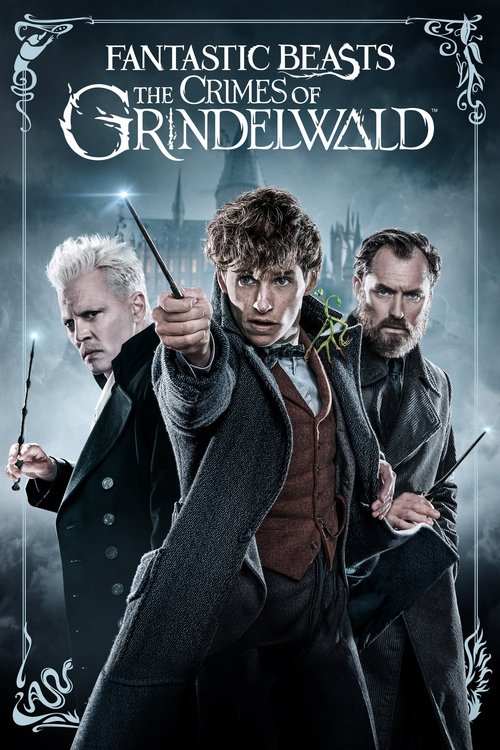
Fantastic Beasts: The Crimes of Grindelwald
2018 · Directed by David Yates
Woke Score
CriticCritic Score
Audience
Based
Critics rated this 30 points above its woke score. Among Based films, this critic score ranks #281 of 345.
Representation Casting
Score: 35/100
The ensemble includes actors of diverse ethnicities and backgrounds, including Zoë Kravitz and Claudia Kim, but their presence feels incidental rather than intentionally centered. Representation exists without particular consciousness.
LGBTQ+ Themes
Score: 15/100
The Dumbledore-Grindelwald relationship exists only as historical subtext and is not explored explicitly on screen. The film provides no meaningful LGBTQ representation or themes.
Feminist Agenda
Score: 25/100
Female characters like Katherine Waterston and Alison Sudol serve primarily as supporting roles without significant agency or thematic focus. Feminist consciousness is largely absent.
Racial Consciousness
Score: 20/100
While the cast includes people of color, the film demonstrates minimal racial consciousness. No meaningful exploration of racial dynamics or systemic issues occurs.
Climate Crusade
Score: 0/100
Climate change and environmental concerns are entirely absent from the narrative and thematic content.
Eat the Rich
Score: 10/100
While Grindelwald's ideology involves supremacy rather than economic critique, the film makes no genuine engagement with anti-capitalist themes or wealth inequality.
Body Positivity
Score: 0/100
No representation of body diversity or body positivity is present. The film features conventionally attractive actors in traditionally ideal physical forms.
Neurodivergence
Score: 5/100
Newt Scamander's character hints at neurodivergent traits through his awkwardness and social difficulty, though this is never explicitly addressed or celebrated.
Revisionist History
Score: 15/100
The film references historical events within the wizarding world but makes minimal effort to revise or reexamine historical narratives from a progressive perspective.
Lecture Energy
Score: 30/100
The film contains some expository dialogue about Grindelwald's ideology and its dangers, but it generally avoids preachy or preachy tone. The messaging remains relatively subtle.


Synopsis
Gellert Grindelwald has escaped imprisonment and has begun gathering followers to his cause, elevating wizards above all non-magical beings. The only one capable of putting a stop to him is the wizard he once called his closest friend, Albus Dumbledore. However, Dumbledore will need to seek help from the wizard who had thwarted Grindelwald once before, his former student Newt Scamander, who agrees to help, unaware of the dangers that lie ahead. Lines are drawn as love and loyalty are tested, even among the truest friends and family, in an increasingly divided wizarding world.
Consciousness Assessment
Fantastic Beasts: The Crimes of Grindelwald presents itself as a morality play about the dangers of authoritarianism, a premise that carries undeniable thematic weight. The narrative centers on a charismatic demagogue building a movement around the supremacy of one group over another, rhetoric that parallels real-world political discourse. Yet the film remains largely content to present this conflict as fantasy spectacle rather than cultural commentary. Grindelwald's ideology functions as a plot device, not as a lens through which to examine contemporary power structures or social hierarchies.
The ensemble cast includes actors of various ethnic backgrounds, though they are deployed as supporting characters rather than as expressions of intentional representational consciousness. Zoë Kravitz appears as a mixed-race character, and Claudia Kim brings an Asian presence to the ensemble, but the film makes no particular effort to center or examine these identities. The Dumbledore-Grindelwald relationship, which would later become a focal point for LGBTQ interpretation, exists here only as subtext and historical context. The film provides no explicit acknowledgment of this dimension, suggesting an uncomfortable distance between what the narrative hints at and what it is willing to explore on screen.
The film's commitment to social consciousness remains superficial at best. It lacks any genuine engagement with climate, economic justice, neurodivergence, or bodily diversity. The revisionist historical elements are minimal, and the film avoids the kind of preachy tone that might signal progressive intention. What we have instead is a well-funded fantasy adventure that acknowledges the concept of oppression without examining its mechanics or implications. The result is a film that satisfies neither those seeking pure entertainment nor those hoping for substantive cultural engagement.
Analysis generated by our Consciousness Algorithm
Critic Reviews
“Rowling’s universe just got bigger and more complex, but Yates never forgets to sprinkle stardust on top.”
“On the strength of this sequel – a dense yet deft return to the high standards Yates set with the Potter films – count this Muggle’s heart and mind all in.”
“Another strong entry in J.K. Rowling’s Wizarding World saga. Rowling has improved upon the first Fantastic Beasts film by fleshing out her characters in a way that’s engaging, though not everybody receives as much attention. Both Johnny Depp and Eddie Redmayne are - forgive the pun - fantastic in their perspective roles.”
“Congratulations to Fantastic Beasts: The Crimes of Grindelwald for being the first flat-out terrible product of the Harry Potter expanded universe. The first two movies were not good movies, but no matter how sludgy and overlong Chris Columbus made them, they were salvaged by the truly magical origin stories they told. ”
Consciousness Markers
The ensemble includes actors of diverse ethnicities and backgrounds, including Zoë Kravitz and Claudia Kim, but their presence feels incidental rather than intentionally centered. Representation exists without particular consciousness.
The Dumbledore-Grindelwald relationship exists only as historical subtext and is not explored explicitly on screen. The film provides no meaningful LGBTQ representation or themes.
Female characters like Katherine Waterston and Alison Sudol serve primarily as supporting roles without significant agency or thematic focus. Feminist consciousness is largely absent.
While the cast includes people of color, the film demonstrates minimal racial consciousness. No meaningful exploration of racial dynamics or systemic issues occurs.
Climate change and environmental concerns are entirely absent from the narrative and thematic content.
While Grindelwald's ideology involves supremacy rather than economic critique, the film makes no genuine engagement with anti-capitalist themes or wealth inequality.
No representation of body diversity or body positivity is present. The film features conventionally attractive actors in traditionally ideal physical forms.
Newt Scamander's character hints at neurodivergent traits through his awkwardness and social difficulty, though this is never explicitly addressed or celebrated.
The film references historical events within the wizarding world but makes minimal effort to revise or reexamine historical narratives from a progressive perspective.
The film contains some expository dialogue about Grindelwald's ideology and its dangers, but it generally avoids preachy or preachy tone. The messaging remains relatively subtle.