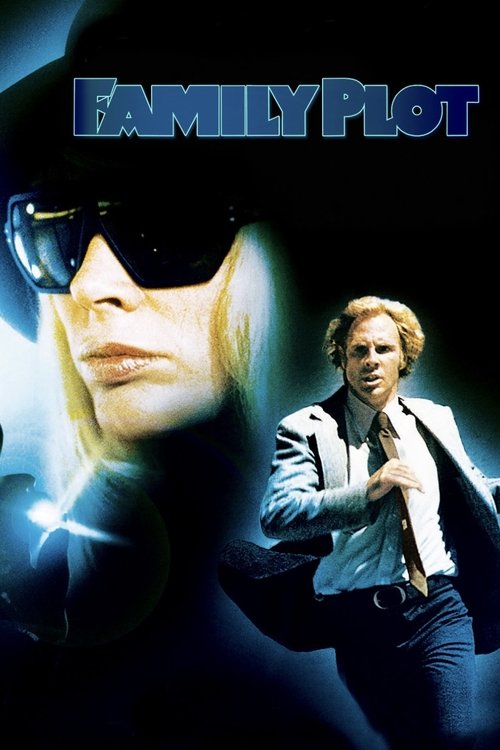
Family Plot
1976 · Directed by Alfred Hitchcock
Woke Score
CriticCritic Score
Audience
Ultra Based
Critics rated this 75 points above its woke score. Among Ultra Based films, this critic score ranks #400 of 1469.
Representation Casting
Score: 0/100
The cast is diverse only incidentally. No evidence of intentional representation casting or commentary on diversity.
LGBTQ+ Themes
Score: 0/100
No LGBTQ+ themes, characters, or representation present in the film.
Feminist Agenda
Score: 5/100
Barbara Harris's character Blanche is the active protagonist who drives much of the plot, though her agency serves comedic and criminal purposes rather than feminist commentary.
Racial Consciousness
Score: 0/100
The film contains no exploration of race, racial consciousness, or commentary on systemic racism.
Climate Crusade
Score: 0/100
No engagement whatsoever with environmental themes or climate consciousness.
Eat the Rich
Score: 5/100
The protagonists are con artists operating outside conventional economic systems, though this reflects plot mechanics rather than ideological critique of capitalism.
Body Positivity
Score: 0/100
No engagement with body positivity or non-normative representations of the body.
Neurodivergence
Score: 0/100
No representation of or commentary on neurodiversity.
Revisionist History
Score: 0/100
The film makes no attempt to revisit or reframe historical narratives.
Lecture Energy
Score: 0/100
The film prioritizes entertainment and plot mechanics. No moralizing or preachy social messaging present.


Synopsis
Spiritualist Blanche Tyler and her cab-driving boyfriend encounter a pair of serial kidnappers while trailing a missing heir in California.
Consciousness Assessment
Family Plot represents Alfred Hitchcock's final directorial effort, a film that treats comedy and criminality with the same meticulous precision he once reserved for psychological terror. The narrative follows Blanche Tyler, a spiritualist fraud, and her taxi-driving boyfriend as they stumble into genuine criminal enterprise while pursuing a missing heir. The spiritualist profession itself exists as a vehicle for con artistry and bumbling rather than as a serious engagement with non-conventional belief systems or marginalized perspectives. Hitchcock's approach to his female lead, while granting her agency as the film's primary protagonist, frames this agency entirely within the logic of petty crime and personal ambition, not as a statement about gender liberation or feminist consciousness. The film's treatment of class, criminality, and social hierarchies remains purely mechanical, existing only to serve the plot machinery.
The cast operates with admirable comic timing, but none of the performances are deployed to interrogate or illuminate social structures. Barbara Harris brings energy to Blanche, but her characterization exists as a comic archetype, the scheming woman of modest means, rather than as a meditation on female autonomy or economic precarity. The supporting cast, diverse only by accident of casting rather than conscious representation, performs their functions without comment on their racial or social positioning. There is no climate consciousness, no engagement with disability or neurodiversity, no revisionist historical impulse, and certainly no lecture energy masquerading as narrative. The film simply does not concern itself with the cultural markers that would eventually come to define social consciousness in cinema.
Family Plot is, in essence, a 1976 film that remains exactly that. It predates the specific cultural preoccupations we now scrutinize by decades, and it makes no attempt to accommodate them retroactively. Hitchcock's final work is an artifact of an earlier cinematic epoch, one in which social consciousness operated according to different parameters entirely. We observe it now as a historical document of a sensibility that has passed.
Analysis generated by our Consciousness Algorithm
Critic Reviews
“The performances are first-rate (finally free of the casting constraints, Hitchcock displayed--in 1972's Frenzy as well--a deliciously offbeat taste in performers) and the screenplay by Ernest Lehman (North By Northwest) is a witty model of construction. The humor is more obvious and subversive than any of Hitchcock's films since The Trouble With Harry. ”
“Beneath all the fun, there's a vision of humans as essentially greedy and dishonest, presented with a gorgeously amoral wink from Hitchcock, and performed to perfection by an excellent cast.”
“Its visual wit and spiritual resonance are truly inimitable even in this age of merchandised mimicry. [19 Apr 1976, p.64]”
“It’s enjoyable enough, and the acting is comparatively looser than most of what comes before it thanks to the allowed improvisations on set, a first for the director”
Consciousness Markers
The cast is diverse only incidentally. No evidence of intentional representation casting or commentary on diversity.
No LGBTQ+ themes, characters, or representation present in the film.
Barbara Harris's character Blanche is the active protagonist who drives much of the plot, though her agency serves comedic and criminal purposes rather than feminist commentary.
The film contains no exploration of race, racial consciousness, or commentary on systemic racism.
No engagement whatsoever with environmental themes or climate consciousness.
The protagonists are con artists operating outside conventional economic systems, though this reflects plot mechanics rather than ideological critique of capitalism.
No engagement with body positivity or non-normative representations of the body.
No representation of or commentary on neurodiversity.
The film makes no attempt to revisit or reframe historical narratives.
The film prioritizes entertainment and plot mechanics. No moralizing or preachy social messaging present.