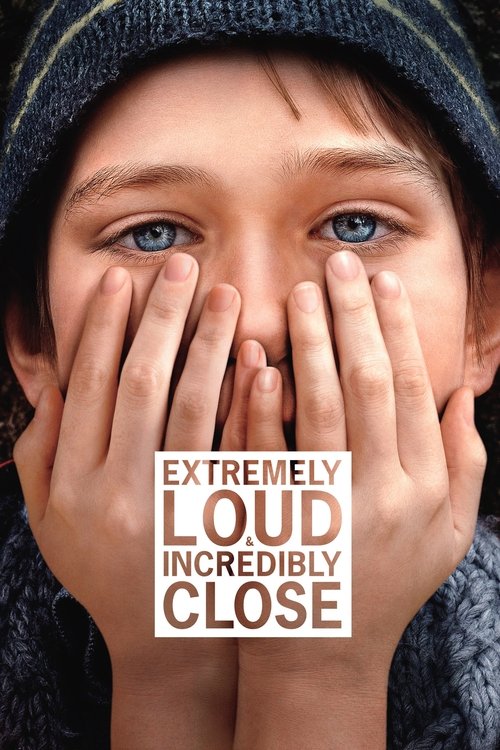
Extremely Loud & Incredibly Close
2011 · Directed by Stephen Daldry
Woke Score
CriticCritic Score
Based
Critics rated this 32 points above its woke score. Among Based films, this critic score ranks #278 of 345.
Representation Casting
Score: 42/100
The cast includes Viola Davis, Jeffrey Wright, and other actors of color in supporting roles, providing some demographic diversity, though the central narrative privileges white characters.
LGBTQ+ Themes
Score: 5/100
Max von Sydow's character carries some coded subtext from the source material, but the film does not explicitly engage with LGBTQ+ themes or representation.
Feminist Agenda
Score: 0/100
The film contains no discernible feminist agenda, critique of patriarchy, or gendered consciousness. Sandra Bullock's character exists as the grieving mother but without ideological framing.
Racial Consciousness
Score: 0/100
No evidence of racial consciousness, systemic critique, or engagement with racial dynamics as a thematic concern. Diverse casting exists without ideological commentary.
Climate Crusade
Score: 0/100
Climate themes are entirely absent from the narrative and visual language of the film.
Eat the Rich
Score: 0/100
No critique of capitalism, wealth, or economic systems appears in the film. The scavenger hunt narrative does not engage with class consciousness.
Body Positivity
Score: 0/100
Body positivity themes are not present. The film does not address body image, disability representation beyond neurodivergence, or physical diversity.
Neurodivergence
Score: 65/100
Oskar Schell exhibits clear traits of autism spectrum disorder, including selective mutism, sensory sensitivities, and obsessive behaviors. The film portrays these traits as central to his character without pathologizing them as problems requiring resolution.
Revisionist History
Score: 0/100
No attempt to reframe historical events or offer revisionist interpretation. The film engages with 9/11 as a personal tragedy rather than a historical narrative.
Lecture Energy
Score: 0/100
The film avoids preachy exposition or moral instruction. It trusts the audience to process emotional content without explicit ideological messaging.


Synopsis
A year after his father's death, Oskar, a troubled young boy, discovers a mysterious key he believes was left for him by his father and embarks on a scavenger hunt to find the matching lock.
Consciousness Assessment
Stephen Daldry's "Extremely Loud & Incredibly Close" represents a curious artifact of early-2010s prestige cinema, a film that stumbled into some markers of contemporary social consciousness without fully committing to them. The narrative centers on a young boy navigating grief and Manhattan after losing his father in the September 11th attacks, a framework that trades in genuine emotional devastation but resists the preachy impulses that would later come to define progressive filmmaking. What saves the film from complete indifference to neurodivergent representation is the portrayal of Oskar Schell, whose selective mutism, obsessive behavior patterns, and sensory sensitivities read as authentic expressions of autism spectrum traits. Thomas Horn's performance captures a protagonist whose internal world operates on rules distinct from neurotypical social convention, and the film permits this difference to exist without resolving it through a convenient arc of "acceptance" or "cure."
The supporting cast diversifies the frame without deploying diversity as a signifier of virtue. Viola Davis and Jeffrey Wright occupy meaningful roles within the narrative structure, neither reduced to mere demographic checkbox nor elevated to some pedagogical function about racial consciousness. The film's engagement with trauma exists in the register of personal loss rather than collective historical reckoning. Max von Sydow's character, The Renter, carries coded layers from the source material that the film largely declines to foreground or interrogate. In this sense, "Extremely Loud & Incredibly Close" functions as a pre-woke text that happened to include elements later absorbed into progressive filmmaking vocabulary, suggesting that representation without ideology, however incomplete, occupies a different register entirely.
The film ultimately earns its modest score through authentic neurodivergent characterization and a reasonably diverse ensemble cast, offset by its fundamental disinterest in systemic analysis, identity politics, or contemporary social consciousness as organizing principles. It remains a work of melodrama about individual suffering rather than a text invested in collective awakening or structural critique. This is not necessarily a failure on the film's part, but rather a reflection of its moment, when earnest emotional sincerity could coexist with demographic variety without requiring explicit acknowledgment or thematic elaboration.
Analysis generated by our Consciousness Algorithm
Critic Reviews
“If you can stick with the movie through to the end and if Daldry manages to win you over, then Extremely Loud and Incredibly Close will tug at every heartstring you have or will ever have.”
“Extremely Loud & Incredibly Close isn't a failure, though some critics are likely to tell you so, yet there have been very few films where so many fine performances added up to so very little cinematic satisfaction.”
“When you wear your heart on your sleeve, you risk the audience recognizing that it's as fake as the Tin Man's, and Loud goes so far in the wrong direction that it almost becomes a comedy.”
Consciousness Markers
The cast includes Viola Davis, Jeffrey Wright, and other actors of color in supporting roles, providing some demographic diversity, though the central narrative privileges white characters.
Max von Sydow's character carries some coded subtext from the source material, but the film does not explicitly engage with LGBTQ+ themes or representation.
The film contains no discernible feminist agenda, critique of patriarchy, or gendered consciousness. Sandra Bullock's character exists as the grieving mother but without ideological framing.
No evidence of racial consciousness, systemic critique, or engagement with racial dynamics as a thematic concern. Diverse casting exists without ideological commentary.
Climate themes are entirely absent from the narrative and visual language of the film.
No critique of capitalism, wealth, or economic systems appears in the film. The scavenger hunt narrative does not engage with class consciousness.
Body positivity themes are not present. The film does not address body image, disability representation beyond neurodivergence, or physical diversity.
Oskar Schell exhibits clear traits of autism spectrum disorder, including selective mutism, sensory sensitivities, and obsessive behaviors. The film portrays these traits as central to his character without pathologizing them as problems requiring resolution.
No attempt to reframe historical events or offer revisionist interpretation. The film engages with 9/11 as a personal tragedy rather than a historical narrative.
The film avoids preachy exposition or moral instruction. It trusts the audience to process emotional content without explicit ideological messaging.