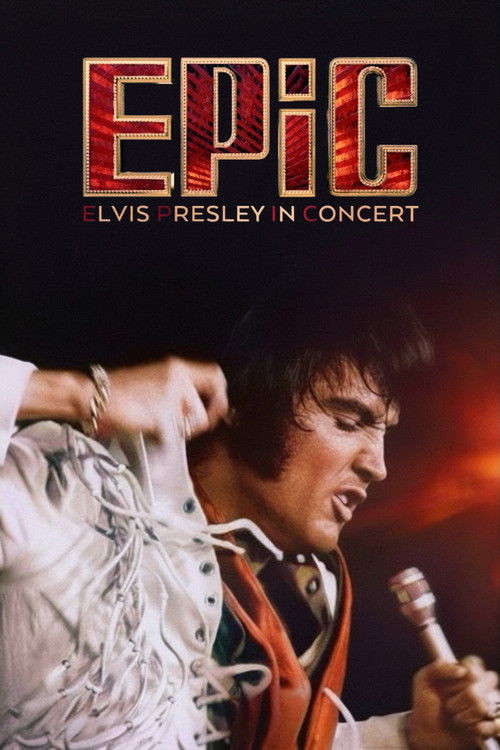
EPiC: Elvis Presley in Concert
2026 · Directed by Baz Luhrmann
Woke Score
CriticCritic Score
Audience
Ultra Based
Critics rated this 82 points above its woke score. Among Ultra Based films, this critic score ranks #211 of 1469.
Representation Casting
Score: 5/100
The film features Elvis and his band, with brief appearances by Bono and other celebrities as commentators. No deliberate casting for representation, though the archival nature makes this largely irrelevant. The ensemble is predominantly male and white, reflecting the era and context.
LGBTQ+ Themes
Score: 0/100
No LGBTQ+ themes, representation, or commentary present. The film is a straightforward concert documentary with no engagement with sexuality or gender identity.
Feminist Agenda
Score: 2/100
No feminist critique or agenda. The film celebrates a male performer in a male-dominated entertainment context without commentary on gender dynamics or the roles of women in Elvis's life and career.
Racial Consciousness
Score: 0/100
The film makes no effort to interrogate Elvis's appropriation of African American musical traditions or his complicated racial legacy. It presents him as a pure entertainer without historical or social context.
Climate Crusade
Score: 0/100
No environmental or climate themes whatsoever. The film is entirely focused on concert performance and archival footage with no contemporary ecological consciousness.
Eat the Rich
Score: 0/100
No critique of capitalism or wealth. The film celebrates Elvis's success and the spectacle of Las Vegas entertainment without questioning the economic systems or power structures involved.
Body Positivity
Score: 0/100
While the film does show Elvis's physical appearance in his later years, it does not engage with body positivity discourse or commentary. The focus is on performance, not on bodily representation or acceptance.
Neurodivergence
Score: 0/100
No representation of or commentary regarding neurodivergence, mental health, or psychological conditions. The film is purely focused on performance and archival documentation.
Revisionist History
Score: 2/100
The film presents archival footage without recontextualizing or reinterpreting history. It is presented as a historical document rather than a revisionist examination, though Luhrmann's stylistic choices add some contemporary framing.
Lecture Energy
Score: 5/100
The film includes voice-over recordings of Elvis discussing his own story, which provides some narrative explanation. However, this is Elvis's own voice rather than external commentary, so the preachy energy is moderate rather than pronounced.
Synopsis
Long-lost footage from Elvis Presely's legendary Las Vegas residency in the 1970s woven together with rare 16mm footage from Elvis on Tour, and 8mm from the Graceland archive, plus recordings of Elvis telling "his side of the story" rediscovered during Baz Luhrmann's research for his 2022 film, Elvis.
Consciousness Assessment
EPiC: Elvis Presley in Concert is an archival restoration project dressed up as cinema, which is to say it is an act of curatorial preservation rather than artistic statement. Baz Luhrmann has assembled decades-old concert footage and recordings into a 96-minute tribute to the King's Las Vegas years, a period when Elvis was, by most accounts, a bloated man in a rhinestone jumpsuit performing to tourists. The film makes no attempt at revisionist critique, no effort to interrogate Elvis's complicated relationship with African American music and culture, no moment of pause regarding his personal life or the power dynamics of his career. It is simply Elvis, presented as a phenomenon to be celebrated and marveled at, much as one might marvel at a particularly well-preserved dinosaur skeleton.
The film's cultural stance is essentially apolitical in the 2020s sense. It contains no representation agenda, no interrogation of gender or sexuality, no environmental commentary, no class consciousness. A brief appearance by Bono in the credits represents perhaps the film's only gesture toward contemporary relevance, though this serves merely as a celebrity testimonial rather than any kind of analytical framework. The archival material itself is from an era when such categories were not yet part of mainstream cultural discourse, and Luhrmann shows no interest in retrofitting them onto the source material. This is not a film about Elvis's place in history. It is a film that treats Elvis as history itself, as a fixed and unexamined icon.
The work presents itself as pure spectacle and nostalgia, executed with technical competence but no particular social consciousness. For those seeking progressive cultural analysis of Elvis and his legacy, this is not the destination. For those simply wishing to see rare footage of an aging rock star performing in a casino, this is a serviceable document. The film neither challenges nor reinforces contemporary progressive sensibilities. It exists in a space adjacent to them, humming along indifferently.
Analysis generated by our Consciousness Algorithm
Critic Reviews
“There’s a purity and natural-born dazzle to EPiC. What you see is what you get: Elvis in the raw, driven by the awareness that it doesn’t get any better than that.”
“The most beautiful thing about EPiC: Elvis Presley in Concert is that in connecting us so intimately to the man and showing him in all his complexity, Luhrmann cuts through the baggage we bring and gives us a fresh look at one of the most fascinating and accomplished musicians who has ever lived. ”
“Calling the movie an archival doc or concert film might be accurate but somehow seems almost reductive. Much more than that, it’s a transcendent theatrical experience, an exhilarating party, a giddying visual and sonic blitz that will be an elixir to the Elvis faithful and an unparalleled primer for those who have never quite grasped what all the hysteria was about.”
“EPiC: Elvis Presley In Concert is a kaleidoscopic mix of documentary and concert movie, replete with a behind-the-scenes peek at the rehearsal process, much of it narrated by Elvis himself. Forget talking heads: Luhrmann has described his tribute as a “tone poem”.”
Consciousness Markers
The film features Elvis and his band, with brief appearances by Bono and other celebrities as commentators. No deliberate casting for representation, though the archival nature makes this largely irrelevant. The ensemble is predominantly male and white, reflecting the era and context.
No LGBTQ+ themes, representation, or commentary present. The film is a straightforward concert documentary with no engagement with sexuality or gender identity.
No feminist critique or agenda. The film celebrates a male performer in a male-dominated entertainment context without commentary on gender dynamics or the roles of women in Elvis's life and career.
The film makes no effort to interrogate Elvis's appropriation of African American musical traditions or his complicated racial legacy. It presents him as a pure entertainer without historical or social context.
No environmental or climate themes whatsoever. The film is entirely focused on concert performance and archival footage with no contemporary ecological consciousness.
No critique of capitalism or wealth. The film celebrates Elvis's success and the spectacle of Las Vegas entertainment without questioning the economic systems or power structures involved.
While the film does show Elvis's physical appearance in his later years, it does not engage with body positivity discourse or commentary. The focus is on performance, not on bodily representation or acceptance.
No representation of or commentary regarding neurodivergence, mental health, or psychological conditions. The film is purely focused on performance and archival documentation.
The film presents archival footage without recontextualizing or reinterpreting history. It is presented as a historical document rather than a revisionist examination, though Luhrmann's stylistic choices add some contemporary framing.
The film includes voice-over recordings of Elvis discussing his own story, which provides some narrative explanation. However, this is Elvis's own voice rather than external commentary, so the preachy energy is moderate rather than pronounced.