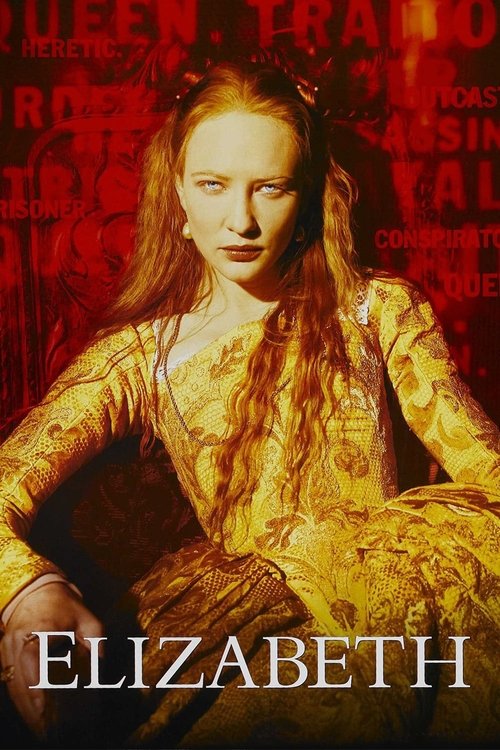
Elizabeth
1998 · Directed by Shekhar Kapur
Woke Score
CriticCritic Score
Audience
Based
Critics rated this 53 points above its woke score. Among Based films, this critic score ranks #120 of 345.
Representation Casting
Score: 0/100
The cast consists entirely of white British and European actors. No representation of minority groups is present, and the film makes no effort toward inclusive casting.
LGBTQ+ Themes
Score: 0/100
There are no LGBTQ+ themes, characters, or representation in the film. The romantic plot centers exclusively on heterosexual relationships.
Feminist Agenda
Score: 55/100
The film centers Elizabeth's power and explicitly thematizes her refusal of marriage and domesticity as sources of strength. Her agency and resistance to patriarchal constraint form the narrative core, reflecting a moderately feminist sensibility for 1998.
Racial Consciousness
Score: 0/100
The film contains no exploration of race, racial dynamics, or racial consciousness. It is entirely a product of its historical setting and production context.
Climate Crusade
Score: 0/100
There is no climate messaging or environmental consciousness in the film.
Eat the Rich
Score: 0/100
The film contains no anti-capitalist or class-conscious messaging. It is concerned with classical political power and succession.
Body Positivity
Score: 0/100
There is no body positivity messaging or content in the film.
Neurodivergence
Score: 0/100
No characters with neurodivergence are depicted, and the film contains no engagement with disability or neurodivergent representation.
Revisionist History
Score: 15/100
The film takes considerable liberties with historical accuracy, particularly regarding Elizabeth's sexuality and her relationships, but this is dramatization rather than revisionist history in the modern cultural sense.
Lecture Energy
Score: 10/100
While the film occasionally delivers expository dialogue, it is generally restrained. There is minimal preachy messaging compared to more overtly preachy contemporary films.


Synopsis
The story of the ascension to the throne and the early reign of Queen Elizabeth the First, the endless attempts by her council to marry her off, the Catholic hatred of her and her romance with Lord Robert Dudley.
Consciousness Assessment
Elizabeth presents itself as a feminist corrective to historical orthodoxy, centering a female ruler navigating a male-dominated political landscape and explicitly thematizing her resistance to marriage as a path to power. The film traffics in a recognizably modern sensibility about gender and authority, even if it wears the costume of 16th-century England. Cate Blanchett's Elizabeth is a protagonist defined by her refusal of patriarchal constraint, and the narrative suggests, with considerable contemporary inflection, that her greatest strength lies in transcending the domestic sphere. This registers as proto-feminist commentary, though one must acknowledge that such themes, while perhaps fresher in 1998, do not constitute the specific markers of modern progressive consciousness that would elevate the score significantly.
The film's other progressive dimensions prove thinner upon examination. The casting is entirely centered on white British actors, reflecting both the historical period and the production's insularity. There is no discernible racial consciousness, no LGBTQ+ content, no attention to disability or neurodivergence, and no climate or anti-capitalist messaging whatsoever. The film's concerns are purely political in the classical sense: power, succession, religious conflict, and personal ambition. Its historical revisionism consists primarily of dramatizing Elizabeth's agency and sexuality in ways that modern audiences might recognize as feminist, but this is not the same as the contemporary cultural markers one evaluates in this rubric.
What remains is a handsome, competent historical epic that engages with questions of female authority in ways that feel moderately contemporary for 1998, but which lack the comprehensive cultural consciousness that would push the score higher. The film is politically engaged on precisely one axis, and that axis, while present, does not constitute the full constellation of modern progressive sensibilities.
Analysis generated by our Consciousness Algorithm
Critic Reviews
“This historical epic about the "virgin queen" of England's early life moves with the crackling urgency of a contemporary political thriller.”
“The fabulous Elizabeth reinvents English Tudor history as gangster movie.”
“Superior historical soap opera that shrewdly sidesteps all the cliches of British costume drama with its bold, often modern approach.”
“All of the nutty editing and the loud score just grated on my nerves and failed the story.”
Consciousness Markers
The cast consists entirely of white British and European actors. No representation of minority groups is present, and the film makes no effort toward inclusive casting.
There are no LGBTQ+ themes, characters, or representation in the film. The romantic plot centers exclusively on heterosexual relationships.
The film centers Elizabeth's power and explicitly thematizes her refusal of marriage and domesticity as sources of strength. Her agency and resistance to patriarchal constraint form the narrative core, reflecting a moderately feminist sensibility for 1998.
The film contains no exploration of race, racial dynamics, or racial consciousness. It is entirely a product of its historical setting and production context.
There is no climate messaging or environmental consciousness in the film.
The film contains no anti-capitalist or class-conscious messaging. It is concerned with classical political power and succession.
There is no body positivity messaging or content in the film.
No characters with neurodivergence are depicted, and the film contains no engagement with disability or neurodivergent representation.
The film takes considerable liberties with historical accuracy, particularly regarding Elizabeth's sexuality and her relationships, but this is dramatization rather than revisionist history in the modern cultural sense.
While the film occasionally delivers expository dialogue, it is generally restrained. There is minimal preachy messaging compared to more overtly preachy contemporary films.