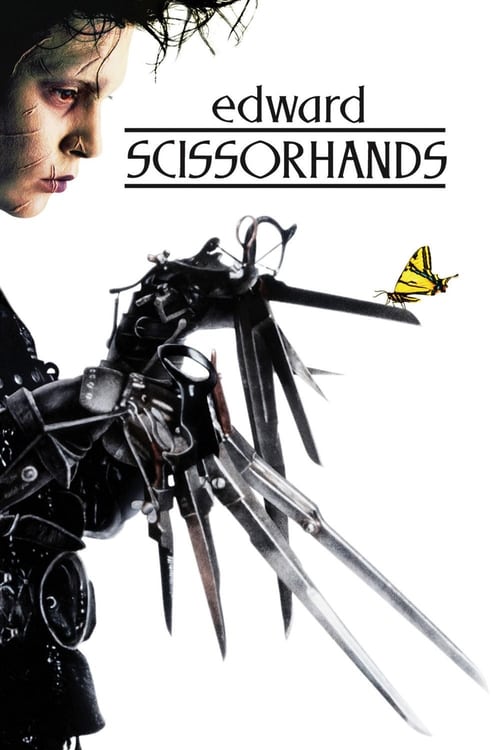
Edward Scissorhands
1990 · Directed by Tim Burton
Woke Score
CriticCritic Score
Audience
Ultra Based
Critics rated this 66 points above its woke score. Among Ultra Based films, this critic score ranks #511 of 1469.
Representation Casting
Score: 5/100
The cast is predominantly white and drawn from a narrow demographic. While the film does include some minor characters of color, they are not meaningfully developed and serve largely as background.
LGBTQ+ Themes
Score: 0/100
There are no LGBTQ+ themes, characters, or subtext present in the film. Romance is presented exclusively in heterosexual terms.
Feminist Agenda
Score: 10/100
Kim is positioned as a romantic object and emotional anchor rather than as an autonomous agent with her own arc. The narrative centers Edward's perspective and desires throughout.
Racial Consciousness
Score: 0/100
The film contains no examination of race, racial dynamics, or racial representation. Race is not addressed as a theme or concern.
Climate Crusade
Score: 0/100
There is no environmental consciousness or climate-related messaging in the film. The suburban setting is treated aesthetically rather than critically.
Eat the Rich
Score: 15/100
The film critiques suburban consumerism and conformity implicitly through its portrayal of a vapid, materialistic community, but this critique is aesthetic and atmospheric rather than systematic or ideological.
Body Positivity
Score: 5/100
Edward's physical form is presented as inherently tragic and limiting, not as a valid alternative embodiment. His difference is treated as deficit rather than diversity.
Neurodivergence
Score: 25/100
Edward displays traits consistent with neurodivergence and is treated with sympathy, but his condition is framed as tragedy and incompleteness rather than as neurodiversity worthy of acceptance and accommodation.
Revisionist History
Score: 0/100
The film contains no historical narrative or revisionist approach to historical events. It is set in a timeless suburban present.
Lecture Energy
Score: 5/100
The film conveys its social themes through mood and metaphor rather than explicit dialogue or preachy messaging. Burton trusts the viewer to extract meaning from the atmosphere.


Synopsis
A small suburban town receives a visit from a castaway unfinished science experiment named Edward.
Consciousness Assessment
Edward Scissorhands presents itself as a meditation on otherness and social exclusion, concepts that have aged into something resembling progressive concern without ever quite intending to be progressive. The film's central narrative, in which a gentle, neurodivergent outsider is simultaneously pitied and exploited by a conformist suburban community, operates as social critique, though one filtered through Burton's trademark gothic sentimentality rather than any systematic analysis of power structures. The female lead, Kim, exists primarily as the object of Edward's affection and as the moral compass of the narrative, a dynamic that reflects 1990s sensibilities more than contemporary feminist consciousness.
The film's treatment of disability and neurodivergence deserves acknowledgment, though it remains somewhat incidental to the story. Edward's inability to perform basic human functions due to his physical form generates pathos rather than interrogation. The community's cruelty toward him is presented as inevitable rather than examined as a structural problem, and his ultimate isolation functions as tragedy rather than indictment. There is no attempt at systemic reform, no suggestion that the problem lies with society's failure to accommodate difference. Instead, Edward is consoled by romantic love and eventually removed from the community entirely.
In terms of contemporary progressive markers, the film offers very little. There are no meaningful discussions of racial or sexual politics, no environmental consciousness, no critique of capitalism beyond vague unease with suburban consumerism. The cast is predominantly white. Gender roles, while not aggressively traditional, are not interrogated. What remains is a film about outsiders made by an outsider artist, one that treats alienation as poetic rather than political. This is not a moral failing, but it places the film firmly in the pre-woke era, where empathy and aesthetic sensitivity could substitute for actual engagement with social structures.
Analysis generated by our Consciousness Algorithm
Critic Reviews
“A classic... Edward Scissorhands is a sharp salute to the oddball in all of us.”
“Simple, funny, gorgeous, sad, and sweet, perfect for playing over and over.”
“Perhaps the most original movie fantasy creation of the year: an icon of tenderness and artistic alienation that clings, stickum-like, to your mind's eye and the softest, most woundable parts of your mass-culture heart. [7 Dec 1990, Calendar, p.F-1]”
“Great to look at but not much fun to watch… An emotionally uncommitted picture that's smirky and mawkish, by turns, and at heart, empty. [14 Dec 1990, Daily Datebook, p.E1]”
Consciousness Markers
The cast is predominantly white and drawn from a narrow demographic. While the film does include some minor characters of color, they are not meaningfully developed and serve largely as background.
There are no LGBTQ+ themes, characters, or subtext present in the film. Romance is presented exclusively in heterosexual terms.
Kim is positioned as a romantic object and emotional anchor rather than as an autonomous agent with her own arc. The narrative centers Edward's perspective and desires throughout.
The film contains no examination of race, racial dynamics, or racial representation. Race is not addressed as a theme or concern.
There is no environmental consciousness or climate-related messaging in the film. The suburban setting is treated aesthetically rather than critically.
The film critiques suburban consumerism and conformity implicitly through its portrayal of a vapid, materialistic community, but this critique is aesthetic and atmospheric rather than systematic or ideological.
Edward's physical form is presented as inherently tragic and limiting, not as a valid alternative embodiment. His difference is treated as deficit rather than diversity.
Edward displays traits consistent with neurodivergence and is treated with sympathy, but his condition is framed as tragedy and incompleteness rather than as neurodiversity worthy of acceptance and accommodation.
The film contains no historical narrative or revisionist approach to historical events. It is set in a timeless suburban present.
The film conveys its social themes through mood and metaphor rather than explicit dialogue or preachy messaging. Burton trusts the viewer to extract meaning from the atmosphere.