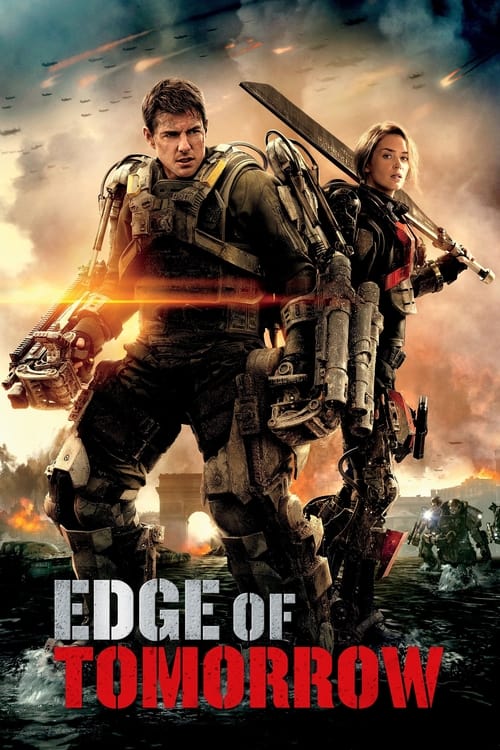
Edge of Tomorrow
2014 · Directed by Doug Liman
Woke Score
CriticCritic Score
Audience
Ultra Based
Critics rated this 63 points above its woke score. Among Ultra Based films, this critic score ranks #588 of 1469.
Representation Casting
Score: 35/100
Emily Blunt's character is portrayed as the superior soldier and mentor, inverting traditional gender hierarchies in military action films. However, this remains a casting choice within a conventional action narrative rather than an explicit statement about representation.
LGBTQ+ Themes
Score: 0/100
No LGBTQ+ themes, characters, or representation present in the film.
Feminist Agenda
Score: 32/100
The female lead is competent and authoritative, but the film's narrative ultimately centers on the male protagonist's redemption arc. The gender dynamics, while refreshing for 2014, do not constitute a coherent feminist agenda.
Racial Consciousness
Score: 0/100
No explicit racial consciousness or commentary on race relations. The cast is diverse but characters exist without racial dimension or thematic relevance.
Climate Crusade
Score: 0/100
No climate-related themes or environmental consciousness present in the film.
Eat the Rich
Score: 0/100
No anti-capitalist themes or critique of economic systems. The film operates within a military-industrial framework without ideological interrogation.
Body Positivity
Score: 0/100
No body positivity themes or commentary on body standards. The film does not engage with these concerns.
Neurodivergence
Score: 0/100
No representation of neurodivergence or neurodivergent themes in the film.
Revisionist History
Score: 0/100
The film contains no revisionist history. It is set in a fictional future with no engagement with actual historical narratives.
Lecture Energy
Score: 0/100
The film does not pause to deliver preachy speeches about social issues or progressive values. Its tone remains focused on action and plot mechanics.


Synopsis
Major Bill Cage is an officer who has never seen a day of combat when he is unceremoniously demoted and dropped into combat. Cage is killed within minutes, managing to take an alpha alien down with him. He awakens back at the beginning of the same day and is forced to fight and die again... and again - as physical contact with the alien has thrown him into a time loop.
Consciousness Assessment
Edge of Tomorrow represents a 2014 action blockbuster that predates the cultural preoccupations now associated with contemporary progressive filmmaking. The film's most notable progressive element is its portrayal of Emily Blunt's character as the combat-hardened superior, the one she must teach and guide Tom Cruise's protagonist through repeated cycles of warfare and death. She is the alpha, the architect of strategy, the veteran. Cruise's character begins as a coward, a public relations officer drafted into a war he never signed up for, and his journey involves him becoming worthy of standing beside her. This inversion of traditional gender hierarchy in the military action genre warranted critical attention, though some observers noted it ultimately serves the familiar narrative of the male hero's redemption and ascension.
The film's thematic concerns are entirely absorbed by its central mechanic: the time loop as a video game-like structure for learning and self-improvement. There is no interrogation of military institution, capitalism, or systemic power. The aliens are simply aliens, not metaphors for anything contemporary. The soldiers are soldiers without ideological complexity. The narrative operates in a space of pure functionality, where the goal is survival and victory, and every other concern is subordinated to those objectives. Blunt's character exists as a fully realized military professional, yes, but not as a statement about representation or systemic barriers. She is simply the better soldier.
By the standards of 2020s progressive sensibility, the film registers as largely neutral. It contains no explicit lecture energy, no ideological foregrounding of identity categories, no climate consciousness, no anti-capitalist sentiment, and no revisionist history. What it does possess is a female character who is competent, authoritative, and uncompromised by romance or maternal instinct. This was enough to distinguish it in 2014. It is not enough to register meaningfully on contemporary cultural metrics.
Analysis generated by our Consciousness Algorithm
Critic Reviews
“Edge of Tomorrow is the ultimate metaphor about Tom Cruise’s career. You can’t kill this guy. He’ll just keep coming. And he remains arguably the biggest movie star in the world for a reason. He brings it.”
“A mix of forward-looking sci-fi, classic themes, deft plotting and superb writing and direction, Edge of Tomorrow may be the pure-pleasure blockbuster to beat this Summer.”
“The reason the film works is because it throws everything into the blender and comes up with something new, something that has a great lively sense of wit and humor to it, and it takes the time to fully explore its wild premise fully.”
“It is basically deadly serious, and after some moderate knockaboutfun, settles into something pretty dull. Where's the edge?”
Consciousness Markers
Emily Blunt's character is portrayed as the superior soldier and mentor, inverting traditional gender hierarchies in military action films. However, this remains a casting choice within a conventional action narrative rather than an explicit statement about representation.
No LGBTQ+ themes, characters, or representation present in the film.
The female lead is competent and authoritative, but the film's narrative ultimately centers on the male protagonist's redemption arc. The gender dynamics, while refreshing for 2014, do not constitute a coherent feminist agenda.
No explicit racial consciousness or commentary on race relations. The cast is diverse but characters exist without racial dimension or thematic relevance.
No climate-related themes or environmental consciousness present in the film.
No anti-capitalist themes or critique of economic systems. The film operates within a military-industrial framework without ideological interrogation.
No body positivity themes or commentary on body standards. The film does not engage with these concerns.
No representation of neurodivergence or neurodivergent themes in the film.
The film contains no revisionist history. It is set in a fictional future with no engagement with actual historical narratives.
The film does not pause to deliver preachy speeches about social issues or progressive values. Its tone remains focused on action and plot mechanics.