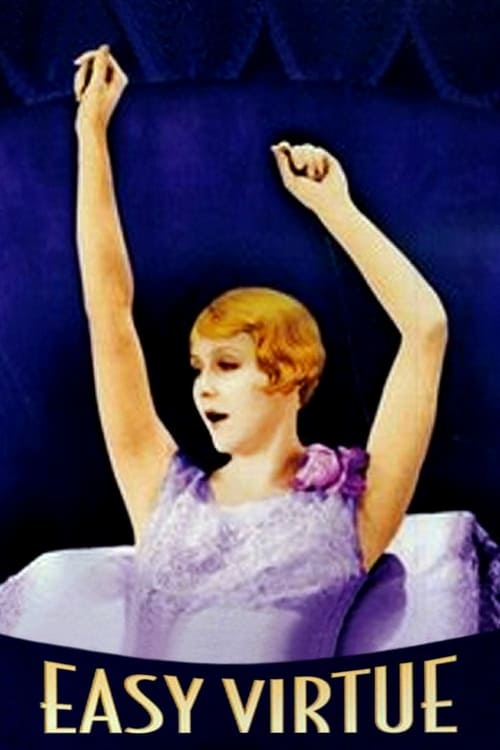
Easy Virtue
1928 · Directed by Alfred Hitchcock
Woke Score
CriticCritic Score
Audience
Ultra Based
Critics rated this 54 points above its woke score. Among Ultra Based films, this critic score ranks #978 of 1469.
Representation Casting
Score: 0/100
No evidence of deliberate casting choices designed to enhance representation or foreground diversity. Cast is entirely white and drawn from British theatrical tradition.
LGBTQ+ Themes
Score: 0/100
No LGBTQ+ themes or characters present. The narrative focuses exclusively on heterosexual romance and social scandal.
Feminist Agenda
Score: 5/100
The film sympathizes with a female protagonist victimized by gender double standards and social judgment, but this emerges from character empathy rather than explicit feminist ideology or systematic critique of patriarchal institutions.
Racial Consciousness
Score: 0/100
No racial themes, racial consciousness, or engagement with racial issues. The film is set entirely within white British society.
Climate Crusade
Score: 0/100
No environmental or climate-related themes or messaging present in the narrative.
Eat the Rich
Score: 0/100
No critique of capitalism or class structures. The film depicts upper-class social hierarchies without interrogating them through an anti-capitalist lens.
Body Positivity
Score: 0/100
No body positivity themes or commentary on body standards. The film does not engage with contemporary concerns about body image or acceptance.
Neurodivergence
Score: 0/100
No representation of neurodivergent characters or engagement with neurodiversity issues.
Revisionist History
Score: 0/100
The film adapts a contemporary 1920s play without reframing historical narratives or challenging established historical interpretations.
Lecture Energy
Score: 0/100
The film maintains narrative momentum and dramatic tension without preachy exposition or characters delivering ideological speeches about social issues.


Synopsis
Unjustly accused of adultery in a scandalous divorce, Larita Filton flees to the French Riviera. She soon falls in love with a young Englishman, John Whittaker, and begins anew under an assumed name. But when John brings her home to his disapproving family, Larita's past begins to resurface.
Consciousness Assessment
Easy Virtue stands as a curious artifact of early Hitchcock, a 1928 adaptation of Noel Coward's stage comedy that concerns itself with the social persecution of a woman deemed sexually compromised by divorce and infidelity. The film presents its female protagonist, Larita, with a degree of sympathy unusual for the era, positioning her not as a moral cautionary tale but as a victim of a rigidly judgmental society. The narrative's implicit critique of class hypocrisy and sexual double standards suggests some consciousness of gender injustice, though this consciousness operates within pre-modern frameworks and lacks any contemporary inflection. The film's progressive elements are those of 1920s theatrical modernism, not of twenty-first century social consciousness.
What prevents this film from scoring higher is the absence of any systematic engagement with the specific markers of contemporary progressive sensibility. There are no explicit discussions of systemic inequality, no deliberate casting choices designed to foreground representation, no examination of institutional power structures through a modern lens. The film's sympathy for its female lead emerges from humanist storytelling rather than from ideological commitment. Coward's wit and Hitchcock's visual sophistication operate in service of character and plot, not social critique. The film remains fundamentally a romantic melodrama of the 1920s, concerned with personal scandal rather than structural injustice.
The modest score reflects the film's historical distance from contemporary progressive frameworks. A film depicting a woman navigating social condemnation possesses a certain thematic resonance with modern concerns about female agency, yet lacks any articulation of those concerns in recognizably modern terms. We are scoring not the film's moral seriousness but its alignment with specific contemporary cultural markers, a distinction that leaves Easy Virtue classified as a period piece of minor progressive interest rather than an artifact of genuine social consciousness.
Analysis generated by our Consciousness Algorithm
Critic Reviews
“Jessica Biel has great fun with the American adventuress, while Kristin Scott Thomas is truly scary as her nemesis and mother-in-law.”
“An effervescent entertainment that marks a welcome return for "Adventures of Priscilla, Queen of the Desert" director Stephan Elliott after a nine-year absence.”
“Quick! Noël Coward--sage or supercilious bitch? No matter where you stand, Stephan Elliott's deliciously cheeky screen adaptation of one of the satirist's lesser-known jabs at the British upper crust will charm your pants off.”
“Easy Virtue may be a bauble, as Larita's described at one point, but Coward's examination of hypocrisy demands real skill. The style should suggest "whipped cream with knives," as Stephen Sondheim once described "A Little Night Music." Elliott's film is more like curdled milk with a spork.”
Consciousness Markers
No evidence of deliberate casting choices designed to enhance representation or foreground diversity. Cast is entirely white and drawn from British theatrical tradition.
No LGBTQ+ themes or characters present. The narrative focuses exclusively on heterosexual romance and social scandal.
The film sympathizes with a female protagonist victimized by gender double standards and social judgment, but this emerges from character empathy rather than explicit feminist ideology or systematic critique of patriarchal institutions.
No racial themes, racial consciousness, or engagement with racial issues. The film is set entirely within white British society.
No environmental or climate-related themes or messaging present in the narrative.
No critique of capitalism or class structures. The film depicts upper-class social hierarchies without interrogating them through an anti-capitalist lens.
No body positivity themes or commentary on body standards. The film does not engage with contemporary concerns about body image or acceptance.
No representation of neurodivergent characters or engagement with neurodiversity issues.
The film adapts a contemporary 1920s play without reframing historical narratives or challenging established historical interpretations.
The film maintains narrative momentum and dramatic tension without preachy exposition or characters delivering ideological speeches about social issues.