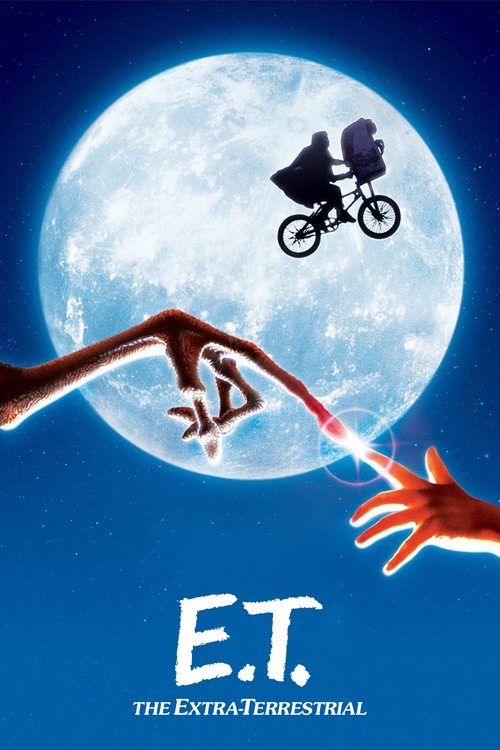
E.T. the Extra-Terrestrial
1982 · Directed by Steven Spielberg
Woke Score
CriticCritic Score
Audience
Ultra Based
Critics rated this 88 points above its woke score. Among Ultra Based films, this critic score ranks #99 of 1469.
Representation Casting
Score: 5/100
The cast is predominantly white with no meaningful ethnic or racial diversity. Drew Barrymore is present as a female child character, but there is no proactive representation beyond this baseline.
LGBTQ+ Themes
Score: 0/100
No LGBTQ+ themes, characters, or representation of any kind in the film.
Feminist Agenda
Score: 10/100
Elliott's sister Gertie is a female character who participates in the adventure, though the narrative remains primarily male-centered with Elliott as the clear protagonist.
Racial Consciousness
Score: 0/100
The film contains no examination of race, racial identity, or racial dynamics whatsoever. The subject simply does not arise.
Climate Crusade
Score: 0/100
No climate-related themes, messaging, or environmental consciousness in the narrative.
Eat the Rich
Score: 5/100
Government and military figures are portrayed as antagonistic in their pursuit of the alien, suggesting a mild skepticism of institutional authority, though this is not framed in explicitly anti-capitalist terms.
Body Positivity
Score: 0/100
The film contains no body positivity messaging or commentary on physical appearance and acceptance.
Neurodivergence
Score: 0/100
No representation of neurodivergence, disability, or neurodivergent characters in the film.
Revisionist History
Score: 0/100
The film is a fantasy adventure with no historical content and therefore no historical revisionism of any kind.
Lecture Energy
Score: 0/100
E.T. does not lecture the audience on social or political matters. It tells a straightforward story of childhood wonder and emotional connection.


Synopsis
An alien is left behind on Earth and saved by the 10-year-old Elliott who decides to keep him hidden in his home. While a task force hunts for the extra-terrestrial, Elliott, his brother, and his little sister Gertie form an emotional bond with their new friend, and try to help him find his way home.
Consciousness Assessment
E.T. the Extra-Terrestrial is a 1982 family adventure that occupies a curious position in the cultural landscape. Released four decades before the modern progressive sensibilities codified in the 2020s, it operates entirely outside the framework of contemporary social consciousness. The film presents a nearly all-white cast of children and adults, with no apparent consideration given to questions of representation or demographic diversity. The alien itself is a benign figure of difference, but this difference is framed as adorable rather than as an opportunity for commentary on otherness or belonging.
The narrative centers on children protecting a vulnerable creature from governmental authority, which could be read as an anti-authoritarian impulse. However, this reading imports contemporary political meaning into what is essentially a straightforward adventure premise. The film contains no discernible engagement with any of the markers we use to measure modern progressive consciousness. There is no LGBTQ+ content, no feminist agenda, no racial consciousness, no climate messaging, no anti-capitalist critique, no body positivity, no neurodivergence representation, no historical revisionism, and no lecturing energy.
To score this film on modern woke metrics is somewhat akin to rating a medieval tapestry by its Instagram engagement. We do so anyway, out of professional obligation, and the result is appropriately minimal. E.T. remains a masterwork of sentiment and technical filmmaking, but it is entirely innocent of the cultural preoccupations that define contemporary progressive cinema.
Analysis generated by our Consciousness Algorithm
Critic Reviews
“Seeing E.T. again reminds us of how much we've remained the same, how gratified we still are by a film that connects so beautifully to our sense of wonder and joy. [2002 re-release]”
“We now have the distance to see just how close to a flawless and utterly timeless a film Steven Spielberg and his collaborators crafted – one that transcended genres (sci-fi and kids’ movies) to become of one of the greatest and most durable of American movies. [2002 re-release]”
“Spielberg has always demonstrated extraordinary aptitude for filmmaking, but "E.T." is far and away his most satisfying work to date. He knows how to transform the raw material of his childhood into an appealing popular fable. There are sequences that touch you to the quick in mysteriously casual ways”
“E.T. is a dog movie. Genre-wise, I mean. It's about a boy meeting a dog, naming it, taming it, learning from it, and growing up. Of course, the genre is superficially disguised as science fiction, as was the fashion at the time. [2002 re-release]”
Consciousness Markers
The cast is predominantly white with no meaningful ethnic or racial diversity. Drew Barrymore is present as a female child character, but there is no proactive representation beyond this baseline.
No LGBTQ+ themes, characters, or representation of any kind in the film.
Elliott's sister Gertie is a female character who participates in the adventure, though the narrative remains primarily male-centered with Elliott as the clear protagonist.
The film contains no examination of race, racial identity, or racial dynamics whatsoever. The subject simply does not arise.
No climate-related themes, messaging, or environmental consciousness in the narrative.
Government and military figures are portrayed as antagonistic in their pursuit of the alien, suggesting a mild skepticism of institutional authority, though this is not framed in explicitly anti-capitalist terms.
The film contains no body positivity messaging or commentary on physical appearance and acceptance.
No representation of neurodivergence, disability, or neurodivergent characters in the film.
The film is a fantasy adventure with no historical content and therefore no historical revisionism of any kind.
E.T. does not lecture the audience on social or political matters. It tells a straightforward story of childhood wonder and emotional connection.