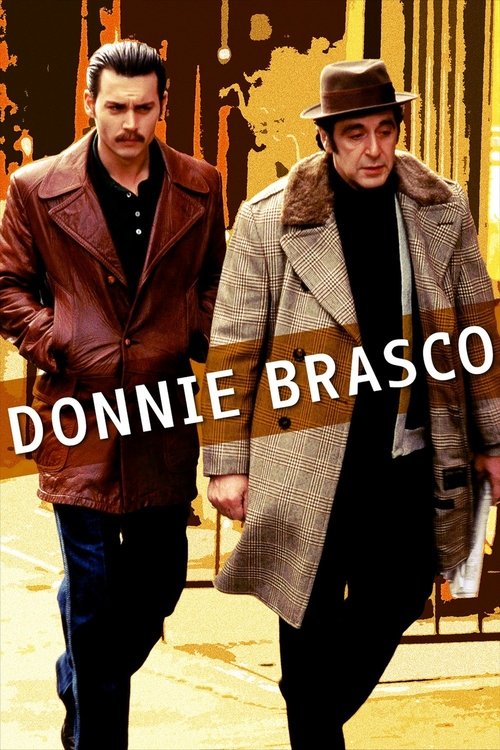
Donnie Brasco
1997 · Directed by Mike Newell
Woke Score
CriticCritic Score
Audience
Ultra Based
Critics rated this 73 points above its woke score. Among Ultra Based films, this critic score ranks #438 of 1469.
Representation Casting
Score: 2/100
The cast is predominantly white and male, reflecting 1990s crime cinema conventions. Anne Heche appears in a minor supporting role as a wife character, but there is no deliberate effort toward diverse representation.
LGBTQ+ Themes
Score: 0/100
No LGBTQ+ themes, characters, or representation are present in the film.
Feminist Agenda
Score: 0/100
The film contains no feminist agenda or commentary. Female characters are peripheral to the male-centered narrative.
Racial Consciousness
Score: 0/100
The film does not engage with racial themes or consciousness. Its focus is on organized crime and undercover work within a specific ethnic subculture, presented without commentary on race or systemic racism.
Climate Crusade
Score: 0/100
Climate change or environmental concerns are entirely absent from the film.
Eat the Rich
Score: 3/100
While the mob operates outside legal capitalism, the film presents organized crime as morally compromising rather than as a critique of capitalism itself. The narrative does not promote anti-capitalist ideology.
Body Positivity
Score: 0/100
The film contains no body positivity messaging or related themes.
Neurodivergence
Score: 0/100
Neurodivergence is not addressed or represented in the film.
Revisionist History
Score: 0/100
The film does not revise historical narratives or present alternative histories. It is based on real events but does not reinterpret them through a contemporary progressive lens.
Lecture Energy
Score: 5/100
The film occasionally comments on loyalty and betrayal through dialogue, but does not lecture the audience about social issues or contemporary moral positions.


Synopsis
An FBI undercover agent infiltrates the mob and identifies more with the mafia life at the expense of his regular one.
Consciousness Assessment
Donnie Brasco arrives from the pre-woke cinema of the 1990s, when filmmakers could still make crime dramas about Italian-American mobsters without fretting over representation matrices or the optics of masculine moral compromise. The film concerns itself with the psychological toll of undercover work and the peculiar intimacy that develops between an FBI agent (Johnny Depp) and his mob mentor (Al Pacino), a pairing that generates genuine tension through performance rather than social messaging. It is a character study that happens to involve organized crime, not a platform for contemporary cultural consciousness.
The cast is overwhelmingly white and male, which reflects neither deliberate exclusion nor progressive intention but simply the demographic reality of 1990s crime cinema and its mob-adjacent subject matter. There are no speeches about systemic injustice, no carefully balanced diversity checkboxes, no characters whose primary function is to educate the audience about their marginalization. Anne Heche appears in a supporting role as Donnie's wife, though her character remains largely a plot device rather than a fully realized person with her own arc.
The film makes no claims about progress, inclusion, or the moral arc of history. It simply tells its story about men in an insular subculture, asking nothing of the viewer except attention to the psychological deterioration at its center. In the context of contemporary cinema, this restraint reads almost as radical.
Analysis generated by our Consciousness Algorithm
Critic Reviews
“There are moments here that are so distinct in emotional timber it's as if they were directed by someone who'd skipped the last two decades of American genre film and opted to get back to basics -- like character, and the ways in which two actors can sit in a smoke-filled car and turn an everyday conversation into art.”
“The true soul of the New York mob is portrayed in Donnie Brasco, a first-class Mafia thriller that is also in its way a love story -- perhaps director Mike Newell's best.”
“It's hard to think of another American film with this range of moods: satirical, sometimes hilarious, yet suffused with a sense of loss and riddled with the kind of violence that makes you recoil and lean forward simultaneously.”
“Unfortunately, the story isn't inventive and Newell's methodical approach to it verges on monotony.”
Consciousness Markers
The cast is predominantly white and male, reflecting 1990s crime cinema conventions. Anne Heche appears in a minor supporting role as a wife character, but there is no deliberate effort toward diverse representation.
No LGBTQ+ themes, characters, or representation are present in the film.
The film contains no feminist agenda or commentary. Female characters are peripheral to the male-centered narrative.
The film does not engage with racial themes or consciousness. Its focus is on organized crime and undercover work within a specific ethnic subculture, presented without commentary on race or systemic racism.
Climate change or environmental concerns are entirely absent from the film.
While the mob operates outside legal capitalism, the film presents organized crime as morally compromising rather than as a critique of capitalism itself. The narrative does not promote anti-capitalist ideology.
The film contains no body positivity messaging or related themes.
Neurodivergence is not addressed or represented in the film.
The film does not revise historical narratives or present alternative histories. It is based on real events but does not reinterpret them through a contemporary progressive lens.
The film occasionally comments on loyalty and betrayal through dialogue, but does not lecture the audience about social issues or contemporary moral positions.