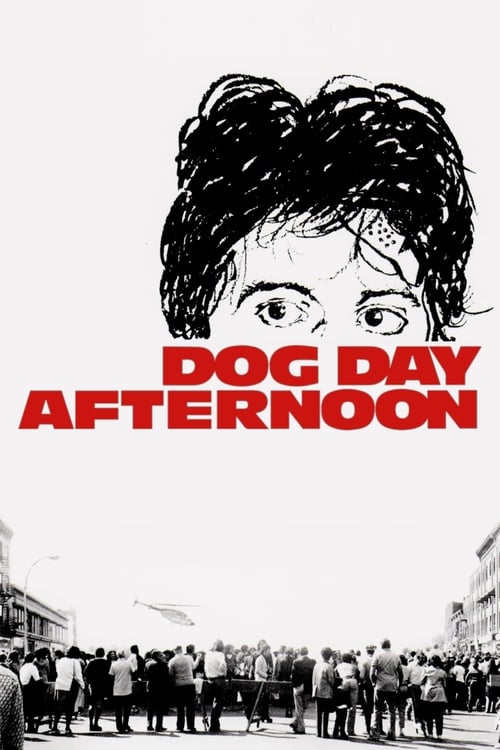
Dog Day Afternoon
1975 · Directed by Sidney Lumet
Woke Score
CriticCritic Score
Audience
Woke
Critics rated this 24 points above its woke score. Among Woke films, this critic score ranks #16 of 88.
Representation Casting
Score: 45/100
The cast includes women and diverse working-class characters, but female roles are marginal and defined by their relationships to men. Representation exists but lacks agency.
LGBTQ+ Themes
Score: 78/100
The entire narrative hinges on Sonny's love for his transgender partner and her need for medical transition. This is treated with dignity and centrality for 1975, though without explicit contemporary language of gender identity.
Feminist Agenda
Score: 30/100
Women appear in the film but occupy passive roles. The transgender woman at the heart of the narrative is not given voice or agency within the film itself.
Racial Consciousness
Score: 25/100
The film is set in Brooklyn with working-class characters of various ethnicities, but race is not examined as a structural issue. Representation is incidental rather than intentional.
Climate Crusade
Score: 0/100
No climate themes present in this 1970s crime drama.
Eat the Rich
Score: 50/100
The film depicts institutional power (police, media, banks) with skepticism. The robbery itself is motivated by economic desperation, suggesting systemic inequality, though this is not explicitly theorized.
Body Positivity
Score: 35/100
The film does not shame Sonny or Sal's bodies, but neither does it celebrate bodily diversity. The central motivation involves medical transition, treated as a legitimate need rather than a lifestyle choice.
Neurodivergence
Score: 0/100
No neurodivergence themes are present in the narrative.
Revisionist History
Score: 15/100
The film adapts a true story from recent history with general fidelity. It does not reinterpret historical events through a contemporary lens.
Lecture Energy
Score: 10/100
Lumet's direction is observational and naturalistic. The film trusts the audience to draw conclusions without preachy exposition or explicit moral instruction.


Synopsis
Based on the true story of would-be Brooklyn bank robbers John Wojtowicz and Salvatore Naturile. Sonny and Sal attempt a bank heist which quickly turns sour and escalates into a hostage situation and stand-off with the police. As Sonny's motives for the robbery are slowly revealed and things become more complicated, the heist turns into a media circus.
Consciousness Assessment
Dog Day Afternoon occupies a peculiar position in the cultural record: a 1975 film that stumbled into progressive sensibilities almost by accident, or perhaps with the kind of humanistic integrity that predates the contemporary formalization of social consciousness. Sidney Lumet's film derives its power not from preachy messaging but from the specificity of its true story. John Wojtowicz robbed a bank to finance his transgender partner's medical transition, a fact the film treats with remarkable matter-of-factness. The script neither celebrates nor condemns this motivation; it simply presents it as the human truth underneath the crime. This restraint, paradoxically, gives the film more cultural weight than a more explicit contemporary treatment might achieve.
The film's intersectional complexity emerges not through explicit advocacy but through the texture of its portrait. Sonny is a working-class man motivated by love and desperation. Sal is a closeted man trapped in a suffocating marriage. The police and media circus surrounding the robbery is portrayed with Lumet's characteristic skepticism toward institutional power and spectacle. Yet the film is not primarily a statement about gender identity or sexual orientation. It is a portrait of ordinary people under extraordinary pressure, and it happens to center on a transgender woman's need for resources to live authentically. That the film permits this to be the emotional core of its narrative, without apology or explanation, marks it as genuinely ahead of its era in terms of cultural awareness.
The limitations of the film's progressive credentials are also worth noting. There is no genuine representation of women in positions of agency or complexity. The female characters exist primarily in relation to male protagonists. The film does not interrogate class or systemic inequality with the rigor a more contemporary work might employ. These absences prevent Dog Day Afternoon from achieving a higher score, despite its genuine innovation in centering a transgender woman's humanity without fetishization or condescension.
Analysis generated by our Consciousness Algorithm
Critic Reviews
“Pacino simmers in this daring and brilliantly constructed treatise on the many facets of a crime.”
“Dog Day Afternoon is a frank social melodrama that’s also a celebration of quotidian bravery. The camera might linger on guns and barely restrained violence, but it also dwells upon the love and the support that’s extended in the weirdest and most unexpected of places. ”
“A masterly reconstruction of a Brooklyn bank siege on August 22, 1972, built around arguably Al Pacino's finest screen performance.”
“Enjoyable and even exciting at the start, Dog Day Afternoon degenerates into frustration and tedium toward nightfall—an experience no less painful for the audience than for the actors. ”
Consciousness Markers
The cast includes women and diverse working-class characters, but female roles are marginal and defined by their relationships to men. Representation exists but lacks agency.
The entire narrative hinges on Sonny's love for his transgender partner and her need for medical transition. This is treated with dignity and centrality for 1975, though without explicit contemporary language of gender identity.
Women appear in the film but occupy passive roles. The transgender woman at the heart of the narrative is not given voice or agency within the film itself.
The film is set in Brooklyn with working-class characters of various ethnicities, but race is not examined as a structural issue. Representation is incidental rather than intentional.
No climate themes present in this 1970s crime drama.
The film depicts institutional power (police, media, banks) with skepticism. The robbery itself is motivated by economic desperation, suggesting systemic inequality, though this is not explicitly theorized.
The film does not shame Sonny or Sal's bodies, but neither does it celebrate bodily diversity. The central motivation involves medical transition, treated as a legitimate need rather than a lifestyle choice.
No neurodivergence themes are present in the narrative.
The film adapts a true story from recent history with general fidelity. It does not reinterpret historical events through a contemporary lens.
Lumet's direction is observational and naturalistic. The film trusts the audience to draw conclusions without preachy exposition or explicit moral instruction.