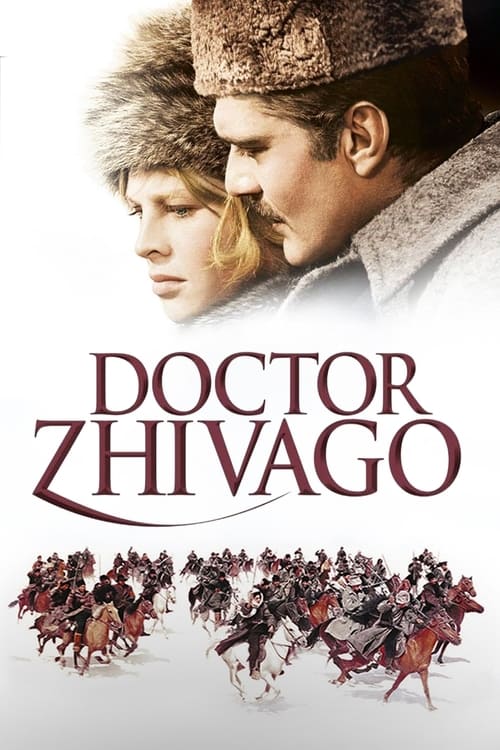
Doctor Zhivago
1965 · Directed by David Lean
Woke Score
CriticCritic Score
Audience
Ultra Based
Critics rated this 65 points above its woke score. Among Ultra Based films, this critic score ranks #664 of 1469.
Representation Casting
Score: 5/100
The cast is predominantly white and British, reflecting 1960s Hollywood conventions. Minority actors appear in minor roles without substantive characterization.
LGBTQ+ Themes
Score: 0/100
The film contains no LGBTQ+ themes, representation, or subtext. Romance is entirely heterosexual and conventionally structured.
Feminist Agenda
Score: 2/100
Female characters exist as romantic objects within a male-centered narrative. Women lack agency and interiority. No examination of gender inequality or feminist themes.
Racial Consciousness
Score: 0/100
The film shows no engagement with racial themes or consciousness. The setting and cast reflect default assumptions of 1960s cinema.
Climate Crusade
Score: 0/100
Climate concerns are entirely absent from the narrative and thematic preoccupations.
Eat the Rich
Score: 15/100
While the film contains anti-revolutionary sentiment, it positions capitalism and personal property as preferable to communist ideology. This is anti-communist, not anti-capitalist.
Body Positivity
Score: 0/100
The film shows no engagement with body positivity or body acceptance themes.
Neurodivergence
Score: 0/100
Neurodivergence is not represented or addressed in the narrative.
Revisionist History
Score: 25/100
The film presents the Russian Revolution as destructive chaos rather than historical transformation, centering Western liberal perspective. This is ideological framing rather than progressive revisionism.
Lecture Energy
Score: 5/100
The film relies on its narrative and cinematography to convey meaning rather than explicit preachiness. There is minimal direct address of social themes.


Synopsis
The life of a Russian physician and poet who, although married to another, falls in love with a political activist's wife and experiences hardship during World War I and then the October Revolution.
Consciousness Assessment
David Lean's Doctor Zhivago stands as a monument to a particular species of Cold War cinema: the three-hour meditation on personal integrity crushed beneath the wheel of historical forces, filtered through the sensibilities of a British director working with a Hollywood studio. The film presents the October Revolution as a catastrophic interruption of private life rather than a transformative historical event, positioning the protagonist's affair and artistic pursuits as more morally significant than the ideological upheaval reshaping an entire civilization. This is not progressive filmmaking, nor does it pretend to be.
The representation of women in the film reflects the mid-1960s cinema conventions without aspiration toward anything more. Julie Christie's Lara functions primarily as the object of competing masculine desire, her status as a political activist's wife treated more as a romantic complication than as evidence of her own agency or convictions. The female characters exist in the narrative to be loved, betrayed, or sacrificed, their interiority subordinated to the male protagonist's emotional journey. There are no attempts at centering female experience or consciousness.
The film's ideological content is decidedly pre-modern in its orientation. The revolution is depicted as dehumanizing machinery operated by ideological fanatics, while the hero's commitment to poetry and personal love is framed as the true expression of human dignity. This is thoroughly classical liberalism, not contemporary progressivism. The production contains no markers of 2020s social consciousness whatsoever. It is instead a period artifact of Western anti-communism dressed in the language of universal humanism.
Analysis generated by our Consciousness Algorithm
Critic Reviews
“It’s impossible not to be swept along and caught by the details: the pompous army officer falling into the barrel, the anarchist (played by a young Klaus Kinski) watching an old couple affectionately cuddling on the train, Zhivago himself suddenly shocked at his own haggard reflection in the mirror. Lean was hunting big game, and catching it.”
“Doctor Zhivago is more than a masterful motion picture; it is a life experience.”
“The sweep and scope of the Russian revolution, as reflected in the personalities of those who either adapted or were crushed, has been captured by David Lean in Doctor Zhivago, frequently with soaring dramatic intensity. Director has accomplished one of the most meticulously designed and executed films--superior in several visual respects to his "Lawrence of Arabia."”
“Neither the contemplative Zhivago nor the flux of events is intelligible, and what is worse, they seem unrelated to each other...It's stately, respectable, and dead.”
Consciousness Markers
The cast is predominantly white and British, reflecting 1960s Hollywood conventions. Minority actors appear in minor roles without substantive characterization.
The film contains no LGBTQ+ themes, representation, or subtext. Romance is entirely heterosexual and conventionally structured.
Female characters exist as romantic objects within a male-centered narrative. Women lack agency and interiority. No examination of gender inequality or feminist themes.
The film shows no engagement with racial themes or consciousness. The setting and cast reflect default assumptions of 1960s cinema.
Climate concerns are entirely absent from the narrative and thematic preoccupations.
While the film contains anti-revolutionary sentiment, it positions capitalism and personal property as preferable to communist ideology. This is anti-communist, not anti-capitalist.
The film shows no engagement with body positivity or body acceptance themes.
Neurodivergence is not represented or addressed in the narrative.
The film presents the Russian Revolution as destructive chaos rather than historical transformation, centering Western liberal perspective. This is ideological framing rather than progressive revisionism.
The film relies on its narrative and cinematography to convey meaning rather than explicit preachiness. There is minimal direct address of social themes.