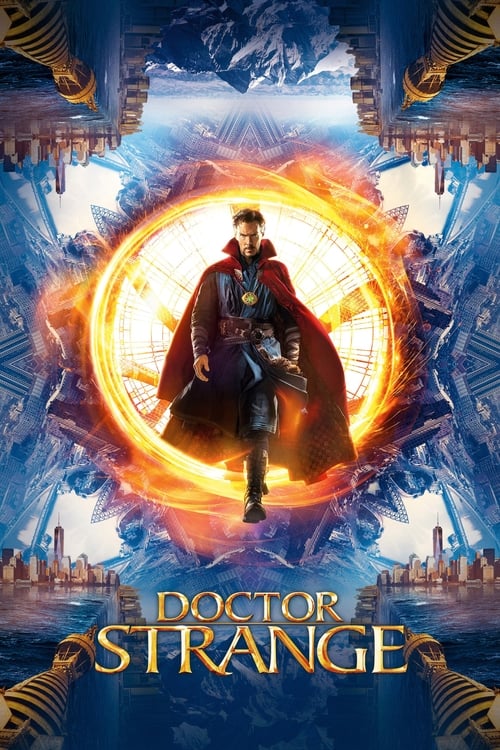
Doctor Strange
2016 · Directed by Scott Derrickson
Woke Score
CriticCritic Score
Audience
Ultra Based
Critics rated this 64 points above its woke score. Among Ultra Based films, this critic score ranks #555 of 1469.
Representation Casting
Score: 25/100
Diverse supporting cast including Chiwetel Ejiofor and Benedict Wong, but significantly undermined by the whitewashing of the Ancient One character from Tibetan to Scottish.
LGBTQ+ Themes
Score: 0/100
No LGBTQ+ themes, representation, or subtext present in the film.
Feminist Agenda
Score: 0/100
No feminist agenda or gendered social commentary. Female characters exist but are not examined through a feminist lens.
Racial Consciousness
Score: 15/100
While supporting cast includes actors of color, the Ancient One casting controversy demonstrates a fundamental lack of racial consciousness in decision-making.
Climate Crusade
Score: 0/100
No climate change messaging, environmental themes, or ecological consciousness present.
Eat the Rich
Score: 0/100
No critique of capitalism or wealth systems. The protagonist's arrogance is personal rather than systemic.
Body Positivity
Score: 0/100
No body positivity themes, disability representation, or commentary on physical appearance standards.
Neurodivergence
Score: 0/100
No representation of neurodivergent characters or exploration of neurodiversity.
Revisionist History
Score: 0/100
No revisionist historical narratives or reframing of historical events.
Lecture Energy
Score: 5/100
Minimal preachy messaging. The film prioritizes spectacle over social lessons, though spiritual themes about ego and humility carry modest moralizing weight.


Synopsis
After his career is destroyed, a brilliant but arrogant surgeon gets a new lease on life when a sorcerer takes him under her wing and trains him to defend the world against evil.
Consciousness Assessment
Doctor Strange arrives as a masterpiece of spectacular indifference to contemporary social consciousness. The film assembles a reasonably diverse ensemble cast, with Chiwetel Ejiofor and Benedict Wong occupying significant supporting roles, suggesting at least a surface commitment to representation. However, this goodwill evaporates upon examination of the Ancient One casting controversy, wherein the filmmakers transformed a Tibetan character from the source material into a white Scottish mystic played by Tilda Swinton. The decision functioned as a comprehensive tutorial in how not to demonstrate racial consciousness, though one must acknowledge the production made this choice with apparent deliberation rather than accident.
The narrative itself operates in a fundamentally apolitical space, concerned primarily with the protagonist's personal journey from surgical arrogance to mystical humility. Benedict Cumberbatch's Dr. Stephen Strange undergoes a transformation rooted in spiritual rather than social awakening, learning that his intellect and ego cannot solve all problems. The film contains no LGBTQ+ themes, no feminist agenda, no climate messaging, no anti-capitalist critique, and no particular interest in identity politics. Rachel McAdams functions as a competent colleague rather than a subject of feminist examination. The spiritual elements present in the narrative operate independently of progressive social consciousness.
What emerges is a film primarily concerned with visual effects innovation and the mechanics of magical worldbuilding. Doctor Strange opened with $85.1 million domestically in its November 2016 release weekend, claiming the top position at the box office through sheer spectacle and Marvel brand momentum. The film succeeded commercially because audiences wanted to experience its dimensional rifts and astral projection sequences, not because it engaged with any particular social or political framework. It represents the early-stage MCU approach to representation, where diverse casting functioned as a checkbox rather than as evidence of genuine cultural reckoning.
Analysis generated by our Consciousness Algorithm
Critic Reviews
“Doctor Strange doesn’t always make sense — but so what? It’s a mind-blowing special-effects extravaganza, and the most exciting comic-book flick since “Deadpool.””
“The action climaxes with a truly impressive finale, one that employs time going in multiple directions that’s like nothing I’ve ever seen in a movie before. The effects shots here aren’t just visually impressive; they actually let the narrative go to places it couldn’t without this level of, you’ll pardon the expression, wizardry.”
“You know you’re in a top-drawer Marvel Comics adaptation when even the Stan Lee cameo is clever. ”
“People who ask nothing more for their money than a lot of nerve-scrambling computerized special effects might get through Doctor Strange, another in a long line of lengthy, stupid and unbearable Marvel Studios comic books on film, with minimal brain damage.”
Consciousness Markers
Diverse supporting cast including Chiwetel Ejiofor and Benedict Wong, but significantly undermined by the whitewashing of the Ancient One character from Tibetan to Scottish.
No LGBTQ+ themes, representation, or subtext present in the film.
No feminist agenda or gendered social commentary. Female characters exist but are not examined through a feminist lens.
While supporting cast includes actors of color, the Ancient One casting controversy demonstrates a fundamental lack of racial consciousness in decision-making.
No climate change messaging, environmental themes, or ecological consciousness present.
No critique of capitalism or wealth systems. The protagonist's arrogance is personal rather than systemic.
No body positivity themes, disability representation, or commentary on physical appearance standards.
No representation of neurodivergent characters or exploration of neurodiversity.
No revisionist historical narratives or reframing of historical events.
Minimal preachy messaging. The film prioritizes spectacle over social lessons, though spiritual themes about ego and humility carry modest moralizing weight.