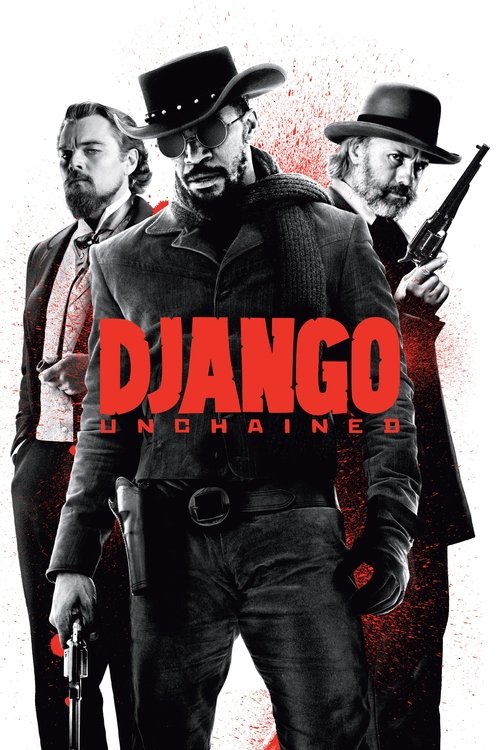
Django Unchained
2012 · Directed by Quentin Tarantino
Woke Score
CriticCritic Score
Audience
Woke-Adjacent
Critics rated this 39 points above its woke score. Among Woke-Adjacent films, this critic score ranks #34 of 151.
Representation Casting
Score: 65/100
Features Jamie Foxx as the protagonist with a diverse ensemble cast, though many characters remain underdeveloped. Represents a notable effort for 2012, though Kerry Washington's character lacks agency.
LGBTQ+ Themes
Score: 0/100
No LGBTQ+ themes or representation present in the film.
Feminist Agenda
Score: 25/100
Broomhilda is primarily a rescue object rather than an agent of her own story. Kerry Washington's role is passive, existing mainly to motivate the male protagonist's actions.
Racial Consciousness
Score: 55/100
Engages with slavery and racial violence as subject matter, but treats it as backdrop for revenge fantasy rather than genuine historical reckoning. Selective in its engagement with systemic oppression.
Climate Crusade
Score: 0/100
No climate or environmental themes present in this historical western.
Eat the Rich
Score: 20/100
The protagonist's ultimate triumph is framed through material acquisition and capitalist success (wealth, property, freedom). No critique of capitalism or wealth disparity is offered.
Body Positivity
Score: 0/100
No explicit body positivity messaging or representation of diverse body types as a thematic concern.
Neurodivergence
Score: 0/100
No representation of neurodivergence or exploration of neurological diversity.
Revisionist History
Score: 60/100
Presents a fantasy version of slavery's history where individual violent resistance leads to triumph. Rewrites historical outcomes to satisfy genre expectations rather than historical accuracy.
Lecture Energy
Score: 35/100
Tarantino's dialogue-heavy approach includes monologues about racial pseudoscience and plantation economics that feel designed to provoke rather than educate. Some expository weight but not preachy in intent.


Synopsis
With the help of a German bounty hunter, a freed slave sets out to rescue his wife from a brutal Mississippi plantation owner.
Consciousness Assessment
Django Unchained presents itself as a reckoning with American slavery through the lens of the Western genre, yet the execution reveals a film more interested in stylistic flourish than sustained social consciousness. Tarantino's approach to racial violence operates with characteristic excess, treating the brutality of the plantation as a backdrop for entertaining revenge fantasy rather than historical reckoning. The film's central conceit, a Black protagonist achieving agency and triumph through gunplay and material acquisition, sits uneasily alongside its surface-level engagement with the systemic horrors it depicts.
The casting of Jamie Foxx as Django does signal an attempt at representation, and the film's refusal to erase slavery's reality carries some weight. However, Kerry Washington's Broomhilda remains largely a plot device, rescued rather than developed, which undermines any genuine feminist aspirations. The supporting cast of villains, particularly Leonardo DiCaprio's Calvin Candie, are rendered with more complexity and screen time than the enslaved characters we ostensibly care about. Tarantino's trademark dialogue-heavy approach works against the material here, as lengthy monologues about racial pseudoscience and plantation economics feel designed to provoke rather than illuminate.
The film's relationship to historical accuracy is selective at best. While it doesn't shy away from depicting slavery's violence, its ultimate fantasy of individual triumph through violence rather than collective liberation or historical transformation represents a fundamentally conservative resolution to radical subject matter. We are left with a western that uses slavery as set dressing for a genre exercise, achieving the aesthetic of racial consciousness without the substance. It is a film that wants credit for addressing difficult material while avoiding any genuine challenge to viewer comfort or ideological assumptions.
Analysis generated by our Consciousness Algorithm
Critic Reviews
“A sharp shock of a film in an Awards season very full of movies so noble they become immobile. It's wildly unlikely to get much love from the Academy, and that's fine-bluntly, it's too good for them. With its bloody stew of history and hysteria, action taken from movies and atrocities taken from fact, Django isn't just a movie only America could make-it's also a movie only America needs to.”
“An immensely satisfying taste of antebellum empowerment packaged as spaghetti-Western homage... A bloody hilarious (and hilariously bloody) Christmas counter-programmer.”
“Django Unchained also has the pure, almost meaningless excitement which I found sorely lacking in Tarantino's previous film, Inglourious Basterds, with its misfiring spaghetti-Nazi trope and boring plot. I can only say Django delivers, wholesale, that particular narcotic and delirious pleasure that Tarantino still knows how to confect in the cinema, something to do with the manipulation of surfaces. It's as unwholesome, deplorable and delicious as a forbidden cigarette.”
“It's not particularly funny or moving and it's terribly self-indulgent. Flamboyance and cartoonishness rule, there's hardly a moment of genuine emotion, and most overtures in that direction are superficial. As a picture ostensibly about love, revenge and the ugliness of slavery, Django Unchained has almost zero subtext and is a largely soulless bloodbath, in which the history of pain and retribution is coupled carelessly with a cool soundtrack and some verbose dialogue. Though it might just entertain the sh.t out of the less discerning.”
Consciousness Markers
Features Jamie Foxx as the protagonist with a diverse ensemble cast, though many characters remain underdeveloped. Represents a notable effort for 2012, though Kerry Washington's character lacks agency.
No LGBTQ+ themes or representation present in the film.
Broomhilda is primarily a rescue object rather than an agent of her own story. Kerry Washington's role is passive, existing mainly to motivate the male protagonist's actions.
Engages with slavery and racial violence as subject matter, but treats it as backdrop for revenge fantasy rather than genuine historical reckoning. Selective in its engagement with systemic oppression.
No climate or environmental themes present in this historical western.
The protagonist's ultimate triumph is framed through material acquisition and capitalist success (wealth, property, freedom). No critique of capitalism or wealth disparity is offered.
No explicit body positivity messaging or representation of diverse body types as a thematic concern.
No representation of neurodivergence or exploration of neurological diversity.
Presents a fantasy version of slavery's history where individual violent resistance leads to triumph. Rewrites historical outcomes to satisfy genre expectations rather than historical accuracy.
Tarantino's dialogue-heavy approach includes monologues about racial pseudoscience and plantation economics that feel designed to provoke rather than educate. Some expository weight but not preachy in intent.