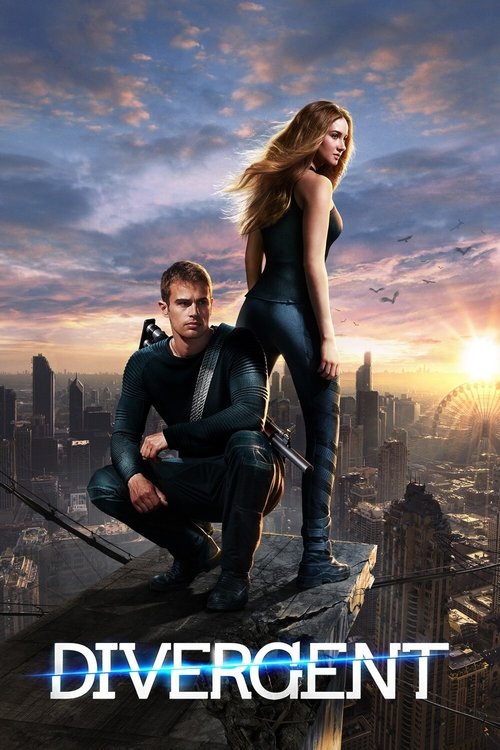
Divergent
2014 · Directed by Neil Burger
Woke Score
CriticCritic Score
Audience
Ultra Based
Critics rated this 30 points above its woke score. Among Ultra Based films, this critic score ranks #1197 of 1469.
Representation Casting
Score: 35/100
The ensemble includes Zoë Kravitz as Christina and Kate Winslet in supporting roles, providing some gender and racial diversity, but the lead protagonist remains white and the casting does not reflect deliberate progressive representation efforts.
LGBTQ+ Themes
Score: 0/100
The film contains no LGBTQ+ representation, themes, or subtext. No characters are coded as queer, and the romantic subplot centers entirely on heterosexual relationships.
Feminist Agenda
Score: 25/100
While the protagonist Tris is female and physically capable, the film does not engage with feminist ideology or critique patriarchal systems. The female lead is treated as a generic action hero rather than an intentional subversion of gender norms, and star Shailene Woodley publicly rejected feminism during this period.
Racial Consciousness
Score: 15/100
The film features minority characters in the cast but does not center racial identity or systemic racism. Zoë Kravitz's character is well-developed, but her race is narratively irrelevant to the story, indicating passive rather than active racial consciousness.
Climate Crusade
Score: 0/100
Climate change or environmental concerns are entirely absent from the narrative. The dystopia is driven by personality-based faction conflict, not ecological collapse.
Eat the Rich
Score: 20/100
The faction system itself critiques rigid social stratification and control, which contains vaguely anti-hierarchical elements, but the film does not engage with capitalism, wealth inequality, or class struggle in any explicit or sustained manner.
Body Positivity
Score: 0/100
The film contains no body positivity messaging. Physical appearance standards are not addressed or challenged, and the narrative does not engage with body image issues.
Neurodivergence
Score: 0/100
Neurodivergence is not represented or referenced in the film. The Divergent condition is a metaphorical plot device, not a portrayal of actual neurodiversity.
Revisionist History
Score: 0/100
The film is set in a fictional dystopian future with no alternate historical interpretation or revisionist framing of real-world events.
Lecture Energy
Score: 15/100
The film occasionally explains the faction system through exposition, but it does not lecture audiences about social justice or contemporary progressive values. The worldbuilding serves plot rather than preachy messaging.


Synopsis
In a world divided into factions based on personality types, Tris learns that she's been classified as Divergent and won't fit in. When she discovers a plot to destroy Divergents, Tris and the mysterious Four must find out what makes Divergents dangerous before it's too late.
Consciousness Assessment
Divergent arrives as a thoroughly conventional young adult adaptation, a film content to execute the mechanics of its source material without imposing any particular cultural ideology upon the proceedings. The story of a girl who refuses faction categorization might lend itself to commentary on social conformity, but the film treats this premise as scaffolding for action sequences and romantic tension rather than as an opportunity for sustained social critique. Shailene Woodley carries the film with competent physicality, and the supporting cast includes Zoë Kravitz and Kate Winslet, yet these casting choices read as practical decisions rather than deliberate efforts at progressive representation.
The film's worldbuilding, centered on a rigid class system masquerading as personality typology, contains the faint echo of an anti-hierarchical argument, but it never develops this potential. The dystopia exists to create conflict and danger, not to interrogate systems of power or inequality. The faction framework itself remains largely unexamined. Why must society be divided this way. What alternatives exist. These questions do not trouble the narrative. The film is fundamentally apolitical, which is to say it accepts the world it depicts as simply the way things are, a stage upon which individuals must navigate personal survival and romantic attachment.
What emerges is a film that could have been made in any era, a property-driven vehicle that happens to star a young woman but does not meaningfully engage with gender politics, racial justice, environmental consciousness, or any contemporary progressive concern. It is a perfectly serviceable entertainment, which is precisely its limitation. The film asks nothing of its audience except to follow the plot. We are meant to suspend disbelief about faction selection and enjoy the spectacle. In this, it succeeds without controversy or edge, a film so thoroughly committed to neutrality that it becomes invisible to scrutiny.
Analysis generated by our Consciousness Algorithm
Critic Reviews
“The strength of Burger’s movie is the fact that a non-reader of Roth’s work can enjoy Divergent and not be confused by any aspect of the storyline.”
“Woodley, through the delicate power of her acting, does something compelling: She shows you what a prickly, fearful, yet daring personality looks like when it's nestled deep within the kind of modest, bookish girl who shouldn't even like gym class.”
“While Burger, Daughtery and Taylor skimp on the characters’ interior lives, they do make some surprising improvements on the book.”
“In all candor, and with all the amity I can muster, Divergent is as dauntingly dumb as it is dauntingly long.”
Consciousness Markers
The ensemble includes Zoë Kravitz as Christina and Kate Winslet in supporting roles, providing some gender and racial diversity, but the lead protagonist remains white and the casting does not reflect deliberate progressive representation efforts.
The film contains no LGBTQ+ representation, themes, or subtext. No characters are coded as queer, and the romantic subplot centers entirely on heterosexual relationships.
While the protagonist Tris is female and physically capable, the film does not engage with feminist ideology or critique patriarchal systems. The female lead is treated as a generic action hero rather than an intentional subversion of gender norms, and star Shailene Woodley publicly rejected feminism during this period.
The film features minority characters in the cast but does not center racial identity or systemic racism. Zoë Kravitz's character is well-developed, but her race is narratively irrelevant to the story, indicating passive rather than active racial consciousness.
Climate change or environmental concerns are entirely absent from the narrative. The dystopia is driven by personality-based faction conflict, not ecological collapse.
The faction system itself critiques rigid social stratification and control, which contains vaguely anti-hierarchical elements, but the film does not engage with capitalism, wealth inequality, or class struggle in any explicit or sustained manner.
The film contains no body positivity messaging. Physical appearance standards are not addressed or challenged, and the narrative does not engage with body image issues.
Neurodivergence is not represented or referenced in the film. The Divergent condition is a metaphorical plot device, not a portrayal of actual neurodiversity.
The film is set in a fictional dystopian future with no alternate historical interpretation or revisionist framing of real-world events.
The film occasionally explains the faction system through exposition, but it does not lecture audiences about social justice or contemporary progressive values. The worldbuilding serves plot rather than preachy messaging.