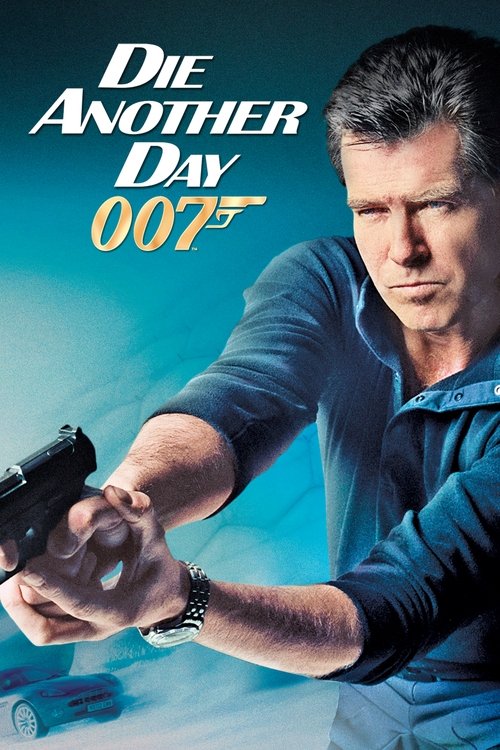
Die Another Day
2002 · Directed by Lee Tamahori
Woke Score
CriticCritic Score
Audience
Ultra Based
Critics rated this 41 points above its woke score. Among Ultra Based films, this critic score ranks #1027 of 1469.
Representation Casting
Score: 42/100
Halle Berry's casting as Jinx marked a significant moment for Black representation in the Bond franchise, though her character operates within traditional action hero tropes without addressing representation itself.
LGBTQ+ Themes
Score: 0/100
No meaningful LGBTQ+ themes or characters present. The film remains firmly heteronormative in its romantic and sexual dynamics.
Feminist Agenda
Score: 18/100
Female characters are competent and action-capable, yet the film never interrogates gender dynamics or power structures. This represents surface-level inclusion rather than feminist critique.
Racial Consciousness
Score: 22/100
Diverse casting exists, but the film shows no critical consciousness about race, colonialism, or geopolitics. Asian and other minority characters exist without thematic exploration of identity.
Climate Crusade
Score: 0/100
No engagement with climate or environmental themes whatsoever.
Eat the Rich
Score: 8/100
The antagonist is a capitalist villain, but this follows standard Bond formula rather than any coherent critique of capitalism or wealth inequality.
Body Positivity
Score: 2/100
The film adheres strictly to conventional action film aesthetics with no engagement with body diversity or body positivity principles.
Neurodivergence
Score: 0/100
No representation of neurodivergence or mental health considerations.
Revisionist History
Score: 15/100
The film presents North Korea as a straightforward villain without historical context or nuanced geopolitical analysis, though this is standard for the Bond genre.
Lecture Energy
Score: 8/100
The film maintains the Bond franchise's light tone and avoids preachy messaging, though its treatment of geopolitics and representation remains incurious rather than deliberately preachy.


Synopsis
James Bond is sent to investigate the connection between a North Korean terrorist and a diamond mogul, who is funding the development of an international space weapon.
Consciousness Assessment
Die Another Day arrives as a curious artifact of early 2000s action filmmaking, notable primarily for casting Halle Berry in a lead role alongside Pierce Brosnan. For 2002, this represented a modest step forward for the Bond franchise, though the film remains largely indifferent to questions of representation or social consciousness. Berry's character Jinx functions as a capable action hero, yet the film never interrogates the power dynamics at play or the implications of its casting choices. The narrative treats North Korean antagonism as mere plot machinery, devoid of any geopolitical nuance or critical examination of American militarism.
The film's gender politics operate at the level of surface-level competence. Female characters are allowed to be skilled and assertive within the traditional Bond formula, but this hardly constitutes progressive sensibility. The script offers no meaningful engagement with feminist critique or questions of gender hierarchy in espionage work. Similarly, the inclusion of diverse cast members functions as window dressing rather than genuine representation rooted in meaningful storytelling. We see Asian characters, Black characters, and women in positions of authority, yet the film treats these facts as unremarkable additions to its spy-thriller machinery.
The result is a thoroughly conventional action film that happens to feature a more diverse cast than previous Bond entries. This represents progress within the narrow confines of the franchise itself, but not progress toward any broader cultural consciousness. The film's geopolitical framing, its treatment of technology and capitalism, and its philosophical posture all remain firmly within mainstream action cinema orthodoxy. Die Another Day is neither hostile to progressive values nor genuinely engaged with them. It simply exists as entertainment, indifferent to the questions that would later define cultural discourse around representation and social responsibility in media.
Analysis generated by our Consciousness Algorithm
Critic Reviews
“The savviest and most exciting Bond adventure in years, and that's because there's actually something at stake in it.”
“As strong on action as it is weak on the interpersonal stuff. If Bond can get a new car for each episode, how about some new pickup lines?”
“All told, this first Bond of the new millennium may be far from the best of the series, but it's assured, wonderfully respectful of its past and thrilling enough to make it abundantly clear that this movie phenomenon has once again reinvented itself for a new generation, and is very likely to outlive us all.”
“Dissing a Bond movie is quite like calling a dog stupid, but when it has the temerity to run over two hours, you feel like winding up with a kick.”
Consciousness Markers
Halle Berry's casting as Jinx marked a significant moment for Black representation in the Bond franchise, though her character operates within traditional action hero tropes without addressing representation itself.
No meaningful LGBTQ+ themes or characters present. The film remains firmly heteronormative in its romantic and sexual dynamics.
Female characters are competent and action-capable, yet the film never interrogates gender dynamics or power structures. This represents surface-level inclusion rather than feminist critique.
Diverse casting exists, but the film shows no critical consciousness about race, colonialism, or geopolitics. Asian and other minority characters exist without thematic exploration of identity.
No engagement with climate or environmental themes whatsoever.
The antagonist is a capitalist villain, but this follows standard Bond formula rather than any coherent critique of capitalism or wealth inequality.
The film adheres strictly to conventional action film aesthetics with no engagement with body diversity or body positivity principles.
No representation of neurodivergence or mental health considerations.
The film presents North Korea as a straightforward villain without historical context or nuanced geopolitical analysis, though this is standard for the Bond genre.
The film maintains the Bond franchise's light tone and avoids preachy messaging, though its treatment of geopolitics and representation remains incurious rather than deliberately preachy.