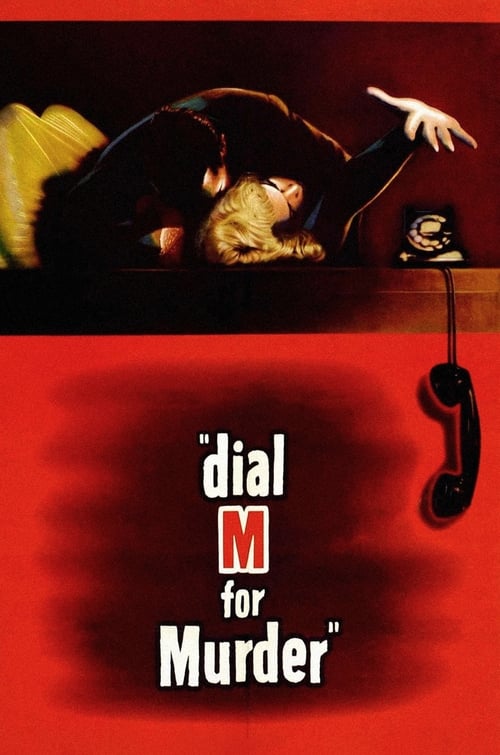
Dial M for Murder
1954 · Directed by Alfred Hitchcock
Woke Score
CriticCritic Score
Audience
Ultra Based
Critics rated this 71 points above its woke score. Among Ultra Based films, this critic score ranks #493 of 1469.
Representation Casting
Score: 0/100
The cast reflects 1950s British and American cinema conventions with no deliberate effort toward diverse representation. All roles are filled by white actors in a narrative that makes no comment on or acknowledgment of casting choices.
LGBTQ+ Themes
Score: 0/100
There are no LGBTQ themes, characters, or subtext in the film. The narrative is entirely centered on heterosexual desire and marital conflict.
Feminist Agenda
Score: 0/100
The film presents women as objects of male desire and violence rather than agents with autonomous goals. Margot's infidelity is framed as a moral failing deserving punishment, and the narrative privileges male agency throughout.
Racial Consciousness
Score: 0/100
The film contains no racial consciousness or commentary. It is set in a white, wealthy British milieu presented without any engagement with racial dynamics or representation.
Climate Crusade
Score: 0/100
There is no climate-related content or environmental consciousness in the film. The narrative is entirely confined to interpersonal plotting.
Eat the Rich
Score: 0/100
While the plot involves inheritance and wealth, there is no critique of capitalism or class systems. The wealthy characters' status is simply accepted as the natural order.
Body Positivity
Score: 0/100
The film contains no body positivity messaging or commentary on physical appearance. Characters are presented according to conventional 1950s beauty standards without reflection.
Neurodivergence
Score: 0/100
There is no representation of neurodivergent characters or engagement with neurodiversity as a theme.
Revisionist History
Score: 0/100
The film makes no attempt to reframe historical events or challenge conventional narratives. It is a contemporary thriller with no historical subject matter.
Lecture Energy
Score: 2/100
The film contains minimal preachy messaging, though the police inspector's deductions occasionally veer toward explaining plot mechanics to the audience in ways that feel slightly expository rather than purely organic to character interaction.


Synopsis
When her American lover visits London, a wealthy woman's jealous husband hatches a plan to murder her and inherit her fortune.
Consciousness Assessment
Dial M for Murder stands as a masterwork of mechanical suspense, a clockwork thriller so precisely engineered that one can practically hear the gears clicking into place. Hitchcock orchestrates his plot with the detached efficiency of a Swiss watchmaker, turning the marriage between Tony and Margot Wendice into a locked-room puzzle where the female protagonist serves primarily as the object around which male characters scheme and maneuver. Grace Kelly's Margot is attractive, wealthy, and ultimately passive, a prize to be won, lost, or eliminated according to the calculations of the men surrounding her. The film's moral universe is fundamentally conservative, rooted in 1950s assumptions about gender, class, and marital propriety that require no interrogation or contemporary reframing. The hired killer, the cuckolded husband, the American lover, the Scotland Yard inspector, all pursue their objectives within a world entirely unmarked by the social consciousness that would later become reflexive in cinema. There is simply no attempt to grapple with the gendered violence at the film's core as anything other than a plot mechanism. Margot's infidelity is treated as a transgression deserving of violent consequences, a moral calculus that the film presents without irony or critique. This is not a film ahead of its time, nor does it pretend to be. It is a product of its moment, content to rest upon the bedrock assumptions of mid-century respectability.
Analysis generated by our Consciousness Algorithm
Critic Reviews
“The thrills come in following a succession of dawnings in people's minds.But Mr. Hitchcock has presented this mental material on the screen with remarkable visual definition of developing intrigue and mood. ”
“If the things here are homelier and less loved than, say, Marnie's neon yellow purse or Cary Grant's glowing glass of milk, and the film itself no one's idea of major Hitch, it remains a fascinating investigation of a stillborn process from one of cinema's most dedicated inquisitors of structure. ”
“The result is a rather stagey film whose back projections look quaint, with 3D apparently used to foreground items of furniture, such as table-lamps, giving rise to some eccentric camera-angles. But the set-up is ingenious and the "kill" scene genuinely thrilling. [2013 3D Release]”
“There are a number of basic weaknesses in the setup that keep the picture from being a good suspense show for any but the most gullible. Via the performances and several suspense tricks expected of Hitchcock, the weaknesses are glossed over but not enough to rate the film a cinch winner.”
Consciousness Markers
The cast reflects 1950s British and American cinema conventions with no deliberate effort toward diverse representation. All roles are filled by white actors in a narrative that makes no comment on or acknowledgment of casting choices.
There are no LGBTQ themes, characters, or subtext in the film. The narrative is entirely centered on heterosexual desire and marital conflict.
The film presents women as objects of male desire and violence rather than agents with autonomous goals. Margot's infidelity is framed as a moral failing deserving punishment, and the narrative privileges male agency throughout.
The film contains no racial consciousness or commentary. It is set in a white, wealthy British milieu presented without any engagement with racial dynamics or representation.
There is no climate-related content or environmental consciousness in the film. The narrative is entirely confined to interpersonal plotting.
While the plot involves inheritance and wealth, there is no critique of capitalism or class systems. The wealthy characters' status is simply accepted as the natural order.
The film contains no body positivity messaging or commentary on physical appearance. Characters are presented according to conventional 1950s beauty standards without reflection.
There is no representation of neurodivergent characters or engagement with neurodiversity as a theme.
The film makes no attempt to reframe historical events or challenge conventional narratives. It is a contemporary thriller with no historical subject matter.
The film contains minimal preachy messaging, though the police inspector's deductions occasionally veer toward explaining plot mechanics to the audience in ways that feel slightly expository rather than purely organic to character interaction.