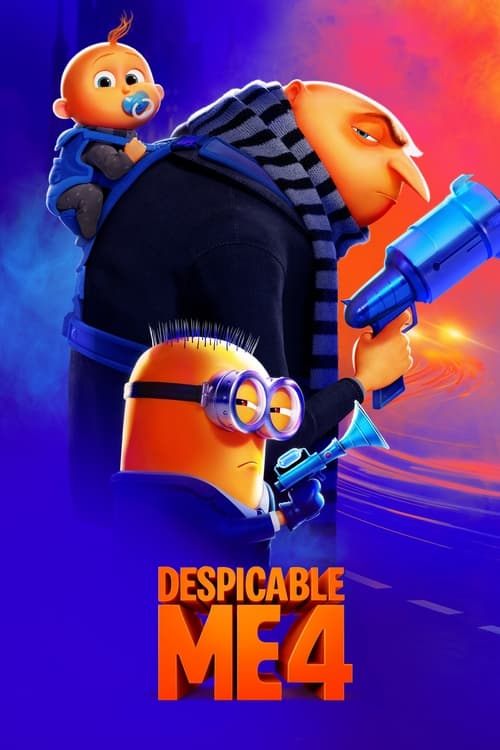
Despicable Me 4
2024 · Directed by Chris Renaud
Woke Score
CriticCritic Score
Audience
Ultra Based
Critics rated this 37 points above its woke score. Among Ultra Based films, this critic score ranks #1100 of 1469.
Representation Casting
Score: 52/100
The cast includes Sofía Vergara and Miranda Cosgrove among others, providing ethnic diversity. However, this diversity is largely incidental to the plot rather than thematically central to the narrative.
LGBTQ+ Themes
Score: 0/100
No LGBTQ+ themes, characters, or subtext are evident in the available plot information. The film remains firmly heteronormative in its family and romantic structures.
Feminist Agenda
Score: 35/100
Lucy functions as a co-lead and co-parent with agency and competence, though she is not positioned as the narrative's primary focus. The film does not advance any particular feminist agenda or commentary.
Racial Consciousness
Score: 15/100
While the cast is ethnically diverse, there is no indication that the film engages with racial themes or racial consciousness. Diversity appears cosmetic rather than thematic.
Climate Crusade
Score: 0/100
No climate-related themes are present in the plot synopsis. The film shows no engagement with environmental concerns or climate activism.
Eat the Rich
Score: 10/100
Gru's character is a reformed villain who now operates on the side of good, but this arc is not rooted in anti-capitalist ideology. The film does not critique wealth, corporate structures, or economic systems.
Body Positivity
Score: 15/100
The animation style presents characters with varied body types, though this appears to be a stylistic choice rather than a deliberate body positivity statement. No narrative focus on body acceptance is evident.
Neurodivergence
Score: 0/100
No characters are coded as neurodivergent, and no themes related to neurodivergence appear in the available information about the film.
Revisionist History
Score: 0/100
The film is a contemporary fictional comedy with no historical setting or historical claims that would require revision or reframing.
Lecture Energy
Score: 5/100
As a children's comedy, the film prioritizes entertainment and humor over preachy messaging. No heavy-handed social lessons or lectures are apparent from the plot description.


Synopsis
Gru and Lucy and their girls—Margo, Edith and Agnes—welcome a new member to the Gru family, Gru Jr., who is intent on tormenting his dad. Gru also faces a new nemesis in Maxime Le Mal and his femme fatale girlfriend Valentina, forcing the family to go on the run.
Consciousness Assessment
Despicable Me 4 arrives as a cheerful, apolitical artifact of contemporary family entertainment, content to coast on the franchise's established goodwill without advancing any particular social consciousness. The film presents a blended family unit with Lucy and Gru as co-parents to three adopted daughters alongside their biological son, an arrangement that has become sufficiently normalized in mainstream media that its very presence requires no commentary or special acknowledgment. This is the film's actual strength: it treats the family configuration as simply the family, neither celebrated as progressive nor questioned as unconventional.
The supporting cast includes Sofía Vergara in a villainous role, which represents the franchise's typical approach to diversity through casting rather than through any meaningful engagement with cultural or identity-based storytelling. The film's humor remains rooted in physical comedy, absurdist scenarios involving minions, and the central conceit of Gru's paternal inadequacy, none of which intersect with contemporary social justice frameworks. There are no lectures disguised as dialogue, no villains who explicitly embody capitalist excess or environmental neglect, and no particular effort to position any character's identity as the basis for their narrative arc.
This analysis yields a film that occupies the lower-to-middle range of the progressive spectrum simply by virtue of existing in 2024 with a diverse cast and a non-traditional family structure, not because it engages with those elements in any pointed or self-conscious manner. It represents the new normal without fanfare, which may be exactly what a children's comedy should aspire to be.
Analysis generated by our Consciousness Algorithm
Critic Reviews
“Returning director Chris Renaud, co-director of parts one and two, knows his way around the characters, and he knows what his audience wants: cartoon mayhem, mild naughtiness from the Minions, social awkwardness from Gru. ”
“It’s a dizzyingly efficient blitzkrieg of family fun, crammed with barely connected haunted house, martial arts, 007, country club and superhero-spoofing vignettes. ”
“It’s cheap pandering to fans, but I really couldn’t stay mad at a movie that uses Culture Club’s “Karma Chameleon” as a point of contention and has two shout-outs to one of the best movies of 1985, “Real Genius.””
“Despicable Me 4 loses focus like a golden retriever in a Petco plushie aisle, splitting characters into bottled subplots that can only be addressed in single-file order.”
Consciousness Markers
The cast includes Sofía Vergara and Miranda Cosgrove among others, providing ethnic diversity. However, this diversity is largely incidental to the plot rather than thematically central to the narrative.
No LGBTQ+ themes, characters, or subtext are evident in the available plot information. The film remains firmly heteronormative in its family and romantic structures.
Lucy functions as a co-lead and co-parent with agency and competence, though she is not positioned as the narrative's primary focus. The film does not advance any particular feminist agenda or commentary.
While the cast is ethnically diverse, there is no indication that the film engages with racial themes or racial consciousness. Diversity appears cosmetic rather than thematic.
No climate-related themes are present in the plot synopsis. The film shows no engagement with environmental concerns or climate activism.
Gru's character is a reformed villain who now operates on the side of good, but this arc is not rooted in anti-capitalist ideology. The film does not critique wealth, corporate structures, or economic systems.
The animation style presents characters with varied body types, though this appears to be a stylistic choice rather than a deliberate body positivity statement. No narrative focus on body acceptance is evident.
No characters are coded as neurodivergent, and no themes related to neurodivergence appear in the available information about the film.
The film is a contemporary fictional comedy with no historical setting or historical claims that would require revision or reframing.
As a children's comedy, the film prioritizes entertainment and humor over preachy messaging. No heavy-handed social lessons or lectures are apparent from the plot description.