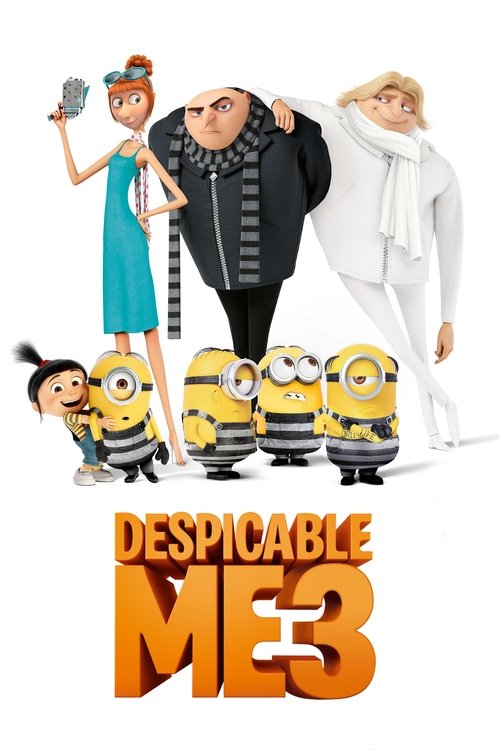
Despicable Me 3
2017 · Directed by Kyle Balda
Woke Score
CriticCritic Score
Audience
Ultra Based
Critics rated this 41 points above its woke score. Among Ultra Based films, this critic score ranks #1179 of 1469.
Representation Casting
Score: 28/100
Kristen Wiig provides female representation in a supporting role, but she functions more as romantic partner than developed character. The cast includes some vocal diversity, though meaningful representation in a family film franchise is limited.
LGBTQ+ Themes
Score: 0/100
No LGBTQ+ themes, representation, or subtext are present in the film. The narrative concerns itself exclusively with heterosexual family dynamics.
Feminist Agenda
Score: 12/100
Lucy is a female character, but the film offers no feminist agenda or commentary. She exists primarily as a supporting role in her husband's narrative and lacks agency or distinct character arc.
Racial Consciousness
Score: 8/100
The cast includes actors of various backgrounds, but there is no engagement with racial themes, consciousness, or commentary. Representation appears incidental rather than intentional.
Climate Crusade
Score: 0/100
No climate-related themes or environmental consciousness appear in the film. The narrative ignores ecological concerns entirely.
Eat the Rich
Score: 5/100
The film features villains engaged in world domination schemes, but this is treated as comic entertainment rather than social critique. No meaningful commentary on capitalism or economic systems exists.
Body Positivity
Score: 3/100
The film presents no commentary on body image or body positivity. Character designs are stylized and exaggerated, but without intentional messaging about acceptance or diversity.
Neurodivergence
Score: 0/100
No representation of or engagement with neurodivergence appears in the film. Characters exhibit no neurodiverse traits or perspectives.
Revisionist History
Score: 0/100
The film contains no historical revisionism or recontextualization of historical narratives. It is set in a fictional universe untethered from real history.
Lecture Energy
Score: 15/100
The film touches superficially on themes of family and identity but offers no preachy messaging or moral lectures. It prioritizes entertainment over any pedagogical intent, though scattered moments gesture toward character growth.


Synopsis
Gru and his wife Lucy must stop former '80s child star Balthazar Bratt from achieving world domination.
Consciousness Assessment
Despicable Me 3 arrives as a monument to creative bankruptcy dressed in minion costumes. The film operates with the cultural awareness of a quarterly earnings report, which is to say, none whatsoever. Its sole concession to contemporary sensibilities is the presence of Kristen Wiig as Lucy, a female character who exists in the narrative without meaningful dimension or purpose beyond marital companionship. She is not a character; she is a checkbox, and a poorly filled one at that.
The film's relationship to social consciousness can be charted precisely at zero degrees. There are no themes of substance here, no engagement with systemic issues, no attempt at representation beyond what casting conventions dictate. The story concerns itself entirely with the mechanics of plot and the perpetuation of a franchise that has long since exhausted any creative reserves it possessed. Trey Parker appears as an antagonist who is a former '80s child star obsessed with villainy, a premise that might have yielded some commentary on celebrity or nostalgia, but the film demonstrates no interest in exploring these angles.
What we have instead is corporate content engineered for maximum profitability with minimum artistic risk. The minions serve primarily as merchandise deployment systems. The family dynamics that the narrative pays lip service to never transcend the level of greeting card sentiment. Roger Ebert's assessment of the film as a "depressingly rote piece of corporate product" captures the essential truth: this is filmmaking as pure commercial mechanics, untethered from any meaningful engagement with the world or its complexities. The film asks nothing of its audience except money and attention, and it seems to believe those are the same thing.
Analysis generated by our Consciousness Algorithm
Critic Reviews
“What shines through is the visual wit and innate sweetness of the storytelling, and Carell’s cackling, cueball-skulled misanthrope — a (mostly) reformed scoundrel who can still have his cake, and arsenic too.”
“Carell is the life of the party and the main reason this animated blast of slapstick silliness packs appeal beyond the PG crowd.”
“It’s an if-it-ain’t-broke-then-don’t-fix-it approach that works just fine if you’re simply looking to take another ride on the rollercoaster.”
“Under the pretext of offering fun for the whole family, the movie winds up doing almost precisely the opposite; its attempts at grown-up sophistication and cheeky, knowing humor are clueless and hectoring enough to leave any adult in the audience wishing they’d been straight-up ignored.”
Consciousness Markers
Kristen Wiig provides female representation in a supporting role, but she functions more as romantic partner than developed character. The cast includes some vocal diversity, though meaningful representation in a family film franchise is limited.
No LGBTQ+ themes, representation, or subtext are present in the film. The narrative concerns itself exclusively with heterosexual family dynamics.
Lucy is a female character, but the film offers no feminist agenda or commentary. She exists primarily as a supporting role in her husband's narrative and lacks agency or distinct character arc.
The cast includes actors of various backgrounds, but there is no engagement with racial themes, consciousness, or commentary. Representation appears incidental rather than intentional.
No climate-related themes or environmental consciousness appear in the film. The narrative ignores ecological concerns entirely.
The film features villains engaged in world domination schemes, but this is treated as comic entertainment rather than social critique. No meaningful commentary on capitalism or economic systems exists.
The film presents no commentary on body image or body positivity. Character designs are stylized and exaggerated, but without intentional messaging about acceptance or diversity.
No representation of or engagement with neurodivergence appears in the film. Characters exhibit no neurodiverse traits or perspectives.
The film contains no historical revisionism or recontextualization of historical narratives. It is set in a fictional universe untethered from real history.
The film touches superficially on themes of family and identity but offers no preachy messaging or moral lectures. It prioritizes entertainment over any pedagogical intent, though scattered moments gesture toward character growth.