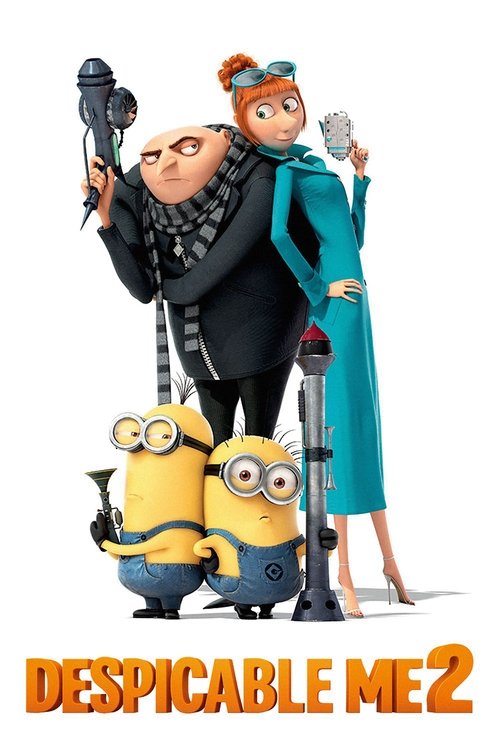
Despicable Me 2
2013 · Directed by Pierre Coffin
Woke Score
CriticCritic Score
Audience
Ultra Based
Critics rated this 54 points above its woke score. Among Ultra Based films, this critic score ranks #841 of 1469.
Representation Casting
Score: 28/100
Cast includes actors of color in supporting roles, but casting appears incidental rather than strategic. No deliberate effort to foreground diverse representation in lead positions.
LGBTQ+ Themes
Score: 5/100
No LGBTQ+ themes or characters. Heterosexual romance between Gru and Lucy forms the romantic subplot without any queer subtext or representation.
Feminist Agenda
Score: 18/100
Female characters exist in the narrative but lack explicit feminist agenda. Lucy is competent but primarily functions as romantic interest and comedic support rather than as a vehicle for gender commentary.
Racial Consciousness
Score: 0/100
No overt racial consciousness or commentary. Characters of color exist in the narrative without the film engaging in racial themes or social consciousness.
Climate Crusade
Score: 0/100
No climate-related themes, environmental consciousness, or ecological commentary present in the film.
Eat the Rich
Score: 8/100
The villain plot involves crime and theft, but not as critique of capitalism. The narrative treats villainy as character motivation rather than systemic commentary.
Body Positivity
Score: 0/100
No explicit body positivity messaging. Character designs are stylized and cartoony without commentary on body diversity or acceptance.
Neurodivergence
Score: 0/100
No representation of neurodivergent characters or exploration of neurodiversity themes.
Revisionist History
Score: 0/100
The film contains no historical content or revisionist historical narratives.
Lecture Energy
Score: 8/100
Minimal preachy messaging. The film prioritizes entertainment and comedy over delivering lessons or social instruction to its audience.


Synopsis
Gru is recruited by the Anti-Villain League to help deal with a powerful new super criminal.
Consciousness Assessment
Despicable Me 2 represents the transitional moment when animated family films began tentatively acknowledging that families come in various configurations without yet developing the self-congratulatory apparatus that would follow. The film's central plot involves Gru's adoption of three girls and his romantic entanglement with a fellow agent, presenting these scenarios as natural rather than exceptional. The female characters are competent and drive portions of the narrative, though none could be accused of carrying explicitly feminist baggage. Kristen Wiig's Agent Lucy exists primarily as a romantic interest and comedic support, a characterization that predates the era when such roles became subject to intense scrutiny regarding agency and purpose.
The voice cast reflects a modest nod toward diversity without the deliberate signaling that would become standard practice. Benjamin Bratt voices a romantic rival, Miranda Cosgrove provides the eldest daughter's voice, and Ken Jeong contributes comic relief as a scientist. These choices feel incidental rather than strategic, which is to say they lack the contemporary texture of intentional representation. The film's humor derives primarily from slapstick, the minions' gibberish, and situational comedy rather than commentary on social structures or systemic inequities.
Despicable Me 2 is a fundamentally apolitical entertainment product designed to move merchandise and secure franchise continuity. The adoption narrative, while touching, serves the plot rather than interrogating adoption, class, or family formation as social phenomena. No climate anxieties burden the narrative. No capitalist critique troubles the surface. The film simply is what it appears to be: a sequel that existed in a moment before animated films felt obligated to perform cultural consciousness. It remains charming in its innocence, which is perhaps the least progressive quality any film can possess.
Analysis generated by our Consciousness Algorithm
Critic Reviews
“The funniest kids’ cartoon of the summer.”
“For now, the franchise has enough zip and humor to be worthwhile. ”
“There are so many ways Despicable Me 2 could have gone wrong, and so many things it does right.”
“The script's jumble of plot asides and family-friendly pandering is enough to make you want to root for a hero. ”
Consciousness Markers
Cast includes actors of color in supporting roles, but casting appears incidental rather than strategic. No deliberate effort to foreground diverse representation in lead positions.
No LGBTQ+ themes or characters. Heterosexual romance between Gru and Lucy forms the romantic subplot without any queer subtext or representation.
Female characters exist in the narrative but lack explicit feminist agenda. Lucy is competent but primarily functions as romantic interest and comedic support rather than as a vehicle for gender commentary.
No overt racial consciousness or commentary. Characters of color exist in the narrative without the film engaging in racial themes or social consciousness.
No climate-related themes, environmental consciousness, or ecological commentary present in the film.
The villain plot involves crime and theft, but not as critique of capitalism. The narrative treats villainy as character motivation rather than systemic commentary.
No explicit body positivity messaging. Character designs are stylized and cartoony without commentary on body diversity or acceptance.
No representation of neurodivergent characters or exploration of neurodiversity themes.
The film contains no historical content or revisionist historical narratives.
Minimal preachy messaging. The film prioritizes entertainment and comedy over delivering lessons or social instruction to its audience.