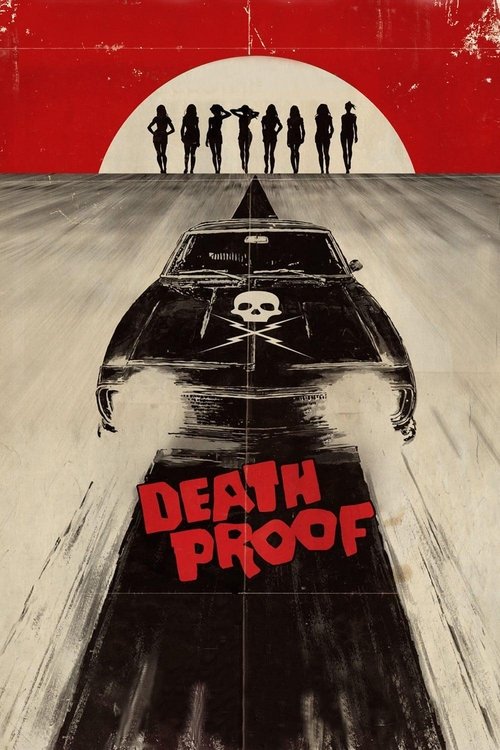
Death Proof
2007 · Directed by Quentin Tarantino
Woke Score
CriticCritic Score
Based
Critics rated this 38 points above its woke score. Among Based films, this critic score ranks #242 of 345.
Representation Casting
Score: 45/100
The cast includes women of different racial backgrounds (Sydney Tamiia Poitier, Rosario Dawson), though the film makes no explicit commentary on race and diversity appears incidental rather than intentional.
LGBTQ+ Themes
Score: 0/100
No LGBTQ characters or themes are present in the film.
Feminist Agenda
Score: 55/100
Female characters are granted voice, agency, and physical competence, particularly in the second half. However, the first half indulges in extended scenes of female vulnerability and objectification that complicate any straightforward feminist reading.
Racial Consciousness
Score: 0/100
While the cast includes women of color, the film contains no explicit engagement with racial themes or systemic inequality.
Climate Crusade
Score: 0/100
No climate-related themes or messaging appear in the film.
Eat the Rich
Score: 0/100
The film contains no critique of capitalism or wealth inequality.
Body Positivity
Score: 0/100
No body positivity themes are present in the film.
Neurodivergence
Score: 0/100
No neurodivergent representation or themes appear in the film.
Revisionist History
Score: 0/100
The film contains no historical content or revisionist framing of historical events.
Lecture Energy
Score: 0/100
The film contains no preachy messaging or explicit lectures about progressive politics.


Synopsis
Austin's hottest DJ, Jungle Julia, sets out into the night to unwind with her two friends Shanna and Arlene. Covertly tracking their moves is Stuntman Mike, a scarred rebel leering from behind the wheel of his muscle car, revving just feet away.
Consciousness Assessment
Death Proof occupies an awkward position in the contemporary discourse surrounding gender representation in action cinema. The film's structure presents two distinct populations of women: the first are victims of predation, displayed in extended sequences of vulnerability and flirtation before being targeted by Kurt Russell's Stuntman Mike. The second group, led by stunt performer Zoë Bell, seizes agency and tactical control in the film's second half, turning the tables with competence and physical prowess. This reversal was celebrated by some critics as progressive filmmaking, though the extended runtime devoted to the vulnerability of the first group complicates any straightforward reading of empowerment.
Tarantino's dialogue-heavy approach grants his female characters voice and interiority. They articulate their own desires, frustrations, and humor without mediation by male characters, which represents a departure from conventional action cinema where female characters often exist primarily as objects of male desire or protection. The casting includes women of varying backgrounds, including Sydney Tamiia Poitier and Rosario Dawson, though the film makes no explicit commentary on racial dynamics or systemic inequality. The film engages with none of the other markers of contemporary progressive cultural consciousness: there is no climate consciousness, no anti-capitalist messaging, no neurodivergent representation, no revisionist history, and no preachy lecture energy.
The film remains primarily a genre exercise, a thriller that happens to grant its female characters more agency than was conventional at the time of its release. Its social consciousness, such as it exists, emerges from stylistic choices and narrative structure rather than from any explicit ideological positioning. We are presented with a work of entertainment that contains certain progressive elements without being fundamentally animated by a progressive agenda.
Analysis generated by our Consciousness Algorithm
Critic Reviews
“Horror fans, read our Death Proof (2007) review — covering story, scares, and how it ranks among modern classics.”
“While "Death Proof" does not have much of a story development or progression due to the limitations of the grindhouse films that inspired it, it still finds Tarantino at a creative peak with groovy feelings, plot twists, high octane energy and an incredible Kurt Russell.”
“Even though Death Proof has been considered a true project of Tarantino by himself and by fans, it never really was. What fans can appreciate about the 2007 genre gem is its ability to capture the feel of '70s grind house movies that gave rise to a filmmaker like Tarantino.”
“After gleefully watching an hour and a half of blood-sputtering zombies being mauled by one-legged women with machine guns as prosthetic legs in the first film, the exceptionally slow pace of Death Proof proves nearly unbearable.”
Consciousness Markers
The cast includes women of different racial backgrounds (Sydney Tamiia Poitier, Rosario Dawson), though the film makes no explicit commentary on race and diversity appears incidental rather than intentional.
No LGBTQ characters or themes are present in the film.
Female characters are granted voice, agency, and physical competence, particularly in the second half. However, the first half indulges in extended scenes of female vulnerability and objectification that complicate any straightforward feminist reading.
While the cast includes women of color, the film contains no explicit engagement with racial themes or systemic inequality.
No climate-related themes or messaging appear in the film.
The film contains no critique of capitalism or wealth inequality.
No body positivity themes are present in the film.
No neurodivergent representation or themes appear in the film.
The film contains no historical content or revisionist framing of historical events.
The film contains no preachy messaging or explicit lectures about progressive politics.