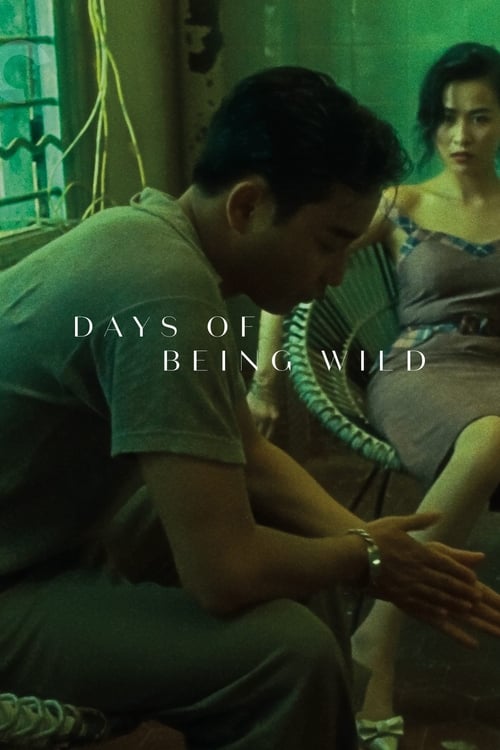
Days of Being Wild
1990 · Directed by Wong Kar-Wai
Woke Score
CriticCritic Score
Audience
Ultra Based
Critics rated this 85 points above its woke score. Among Ultra Based films, this critic score ranks #81 of 1469.
Representation Casting
Score: 15/100
The film features an entirely Hong Kong cast in a Hong Kong setting, which reflects geographic authenticity rather than conscious progressive casting choices. No evidence of deliberate diversity initiatives.
LGBTQ+ Themes
Score: 25/100
While Leslie Cheung was personally openly queer, the film contains no explicit LGBTQ+ themes, relationships, or narrative content. Queer subtext exists only through the actor's personal identity, not through the text itself.
Feminist Agenda
Score: 10/100
Female characters exist primarily as romantic interests and objects of male desire rather than as protagonists with agency or feminist consciousness. No critique of gender dynamics or feminist agenda is present.
Racial Consciousness
Score: 0/100
The film engages with post-colonial Hong Kong through historical atmosphere rather than contemporary racial consciousness or social justice framing. No evidence of modern racial awareness messaging.
Climate Crusade
Score: 0/100
No environmental or climate-related themes are present in the film.
Eat the Rich
Score: 15/100
The film depicts impoverished living spaces and economic constraint through its visual language, but this serves an existential and atmospheric purpose rather than constituting a critique of capitalism or class consciousness.
Body Positivity
Score: 0/100
No body positivity messaging or commentary on body diversity is present in the film.
Neurodivergence
Score: 0/100
No representation of or engagement with neurodivergence is evident in the film.
Revisionist History
Score: 10/100
The film engages with post-colonial Hong Kong's historical moment through nostalgic, atmospheric means rather than through contemporary revisionist reinterpretation. Historical backdrop is present but not reframed through modern social justice.
Lecture Energy
Score: 5/100
The film is highly artistic and atmospheric, functioning as a tone poem rather than a message-driven narrative. It avoids preachiness and explicit social commentary almost entirely.


Synopsis
Yuddy, a Hong Kong playboy known for breaking girls' hearts, tries to find solace and truth after discovering the woman who raised him isn't his mother.
Consciousness Assessment
Days of Being Wild is a masterwork of visual and emotional atmosphere that predates contemporary progressive sensibilities by several decades, a fact that requires no apology. Wong Kar-Wai's 1990 Hong Kong drama concerns itself with the timeless preoccupations of cinema: identity, belonging, and the ache of unrequited love set against the languorous backdrop of 1960s Hong Kong. The film unfolds as a tone poem rather than a vehicle for social messaging, its narrative fragmentary and its visual language hypnotic. Characters inhabit small, confined spaces, trapped in emotional isolation, but this existential condition emerges organically from the story rather than serving as a platform for contemporary critique.
The casting of Leslie Cheung, a performer who would later live openly as a queer man during a period of significant persecution, carries a certain historical resonance. Yet the film itself makes no explicit statement regarding sexual identity or progressive politics. Cheung's presence is that of a charismatic lead, and his performance captures a particular kind of masculine ennui and vulnerability. The female characters, while portrayed with tenderness, function primarily as objects of the protagonist's affection rather than as subjects with their own agendas or consciousness. This is neither progressive nor particularly regressive, it simply is.
The film engages with post-colonial Hong Kong's anxieties and temporal slipperiness through pure atmosphere rather than preachy commentary. There is no lecture, no explicit messaging about historical injustice or contemporary social conditions. What remains is a work of cinema primarily concerned with aesthetic innovation and emotional truth, divorced from the frameworks of modern cultural consciousness that would arrive decades later. It is a film of its time, and that time was not particularly concerned with the metrics by which we now measure progressive sensibility.
Analysis generated by our Consciousness Algorithm
Critic Reviews
“It's inexplicable that Wong's early masterpiece has been virtually absent from American screens since he completed it in 1991.”
“As he (Wong Kar-wai) floods the screen with beauty and fills the soundtrack with hypnotic rhythms, he forges a filmmaking style of incomparable eroticism.”
“Sometimes cinema's highest achievements become clear only in retrospect. Days of Being Wild--now clearly revealed as one of the peaks of Hong Kong filmmaking and a masterwork of contemporary cinema giant Wong.”
Consciousness Markers
The film features an entirely Hong Kong cast in a Hong Kong setting, which reflects geographic authenticity rather than conscious progressive casting choices. No evidence of deliberate diversity initiatives.
While Leslie Cheung was personally openly queer, the film contains no explicit LGBTQ+ themes, relationships, or narrative content. Queer subtext exists only through the actor's personal identity, not through the text itself.
Female characters exist primarily as romantic interests and objects of male desire rather than as protagonists with agency or feminist consciousness. No critique of gender dynamics or feminist agenda is present.
The film engages with post-colonial Hong Kong through historical atmosphere rather than contemporary racial consciousness or social justice framing. No evidence of modern racial awareness messaging.
No environmental or climate-related themes are present in the film.
The film depicts impoverished living spaces and economic constraint through its visual language, but this serves an existential and atmospheric purpose rather than constituting a critique of capitalism or class consciousness.
No body positivity messaging or commentary on body diversity is present in the film.
No representation of or engagement with neurodivergence is evident in the film.
The film engages with post-colonial Hong Kong's historical moment through nostalgic, atmospheric means rather than through contemporary revisionist reinterpretation. Historical backdrop is present but not reframed through modern social justice.
The film is highly artistic and atmospheric, functioning as a tone poem rather than a message-driven narrative. It avoids preachiness and explicit social commentary almost entirely.