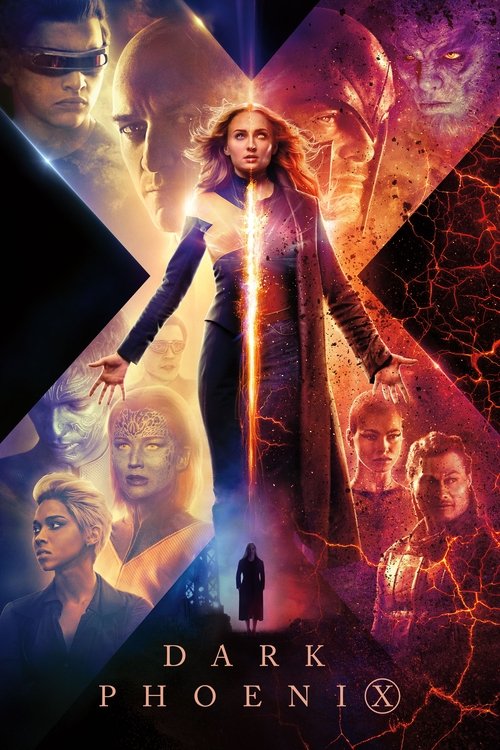
Dark Phoenix
2019 · Directed by Simon Kinberg
Woke Score
CriticCritic Score
Audience
Based
Critics rated this 5 points above its woke score. Among Based films, this critic score ranks #328 of 345.
Representation Casting
Score: 65/100
The film features multiple prominent female characters including Sophie Turner as Jean Grey, Jessica Chastain, Jennifer Lawrence, and Alexandra Shipp in significant roles. The ensemble cast includes diverse representation with characters of color in substantial positions.
LGBTQ+ Themes
Score: 0/100
There is no evidence of LGBTQ+ themes or representation in the film. The plot focuses on Jean Grey's power struggle with no significant LGBTQ+ narrative elements.
Feminist Agenda
Score: 45/100
The central narrative concerns Jean Grey's loss of control and male characters attempting to manage her power, which undermines potential feminist messaging. While the film attempts to position female strength as central, the execution conflates female power with instability and danger.
Racial Consciousness
Score: 15/100
The film includes characters of color in the ensemble cast, but there is minimal engagement with racial consciousness or meaningful exploration of racial themes. Their presence is largely incidental to the narrative.
Climate Crusade
Score: 0/100
There is no evidence of climate change messaging or environmental consciousness in the film. The plot concerns cosmic forces and alien conflict, not environmental themes.
Eat the Rich
Score: 0/100
The film contains no discernible anti-capitalist messaging or critique of wealth and economic systems. The narrative focuses on superhero conflict rather than economic critique.
Body Positivity
Score: 0/100
There is no evidence of body positivity messaging or representation of diverse body types. The film features conventionally attractive actors without engagement with body diversity themes.
Neurodivergence
Score: 0/100
There is no representation of neurodivergent characters or engagement with neurodivergence themes in the film.
Revisionist History
Score: 0/100
As a superhero science fiction film, Dark Phoenix does not engage with historical revisionism or reinterpretation of historical events.
Lecture Energy
Score: 20/100
While the film occasionally delivers dialogue about power and responsibility, it lacks the heavy-handed expository moralizing characteristic of high lecture energy. The messaging is relatively restrained for a 2019 blockbuster.


Synopsis
The X-Men face their most formidable and powerful foe when one of their own, Jean Grey, starts to spiral out of control. During a rescue mission in outer space, Jean is nearly killed when she's hit by a mysterious cosmic force. Once she returns home, this force not only makes her infinitely more powerful, but far more unstable. The X-Men must now band together to save her soul and battle aliens that want to use Grey's new abilities to rule the galaxy.
Consciousness Assessment
Dark Phoenix represents a curious artifact of 2019 blockbuster ambition, one that assembles the machinery of progressive representation without quite knowing what to do with it. The film positions itself around female power as its organizing principle: Jean Grey, played by Sophie Turner, becomes the focal point of the narrative, her immense cosmic abilities rendering her simultaneously the hero and the threat. This setup carries latent feminist potential, yet the film's actual engagement with this premise reveals the gulf between surface-level casting choices and substantive thematic work. Jean's power is consistently framed as a problem to be managed rather than a source of liberation or self-determination. The male ensemble, from James McAvoy's Professor Xavier to Michael Fassbender's Magneto, circulate around her storyline primarily as mediators of her instability, which undercuts any feminist reading of her agency.
The supporting cast includes Jessica Chastain, Jennifer Lawrence, and Alexandra Shipp in meaningful roles, creating a visible ensemble of women on screen. Yet this representation functions more as demographic spreadsheet than narrative substance. The film's treatment of these characters lacks the commitment to depth that would elevate casting diversity into genuine progressive storytelling. There is no meaningful engagement with race, sexuality, or other dimensions of social consciousness. The narrative concerns itself almost exclusively with the mechanics of superhero action and Jean's internal struggle, leaving little room for the kind of thematic exploration that would justify a higher assessment of cultural awareness.
Simon Kinberg's direction prioritizes spectacle over meaning, which perhaps explains the film's tonal confusion. It wants to be serious about female power and trauma while also delivering summer blockbuster thrills, but achieves neither with particular conviction. The result is a film that checks representation boxes without interrogating what those boxes contain or why they matter. For contemporary audiences attuned to the presence or absence of progressive sensibilities, Dark Phoenix offers surface-level gestures that feel hollow upon examination.
Analysis generated by our Consciousness Algorithm
Critic Reviews
“Turner’s damaged conviction holds Dark Phoenix together, giving it a treacherous life force.”
“For what is being called a final installment, it all tends to feel both anticlimactic and a little grim in the end.”
“To an extent, the movie waters down its moral complexity by introducing a flat-out villainess, who begins to guide Jean’s actions, thus absolving Jean of some moral responsibility. Still, it’s hard to complain when the villainess is played by Jessica Chastain, the best person in the world to play a cool, coiffed, composed entity of evil, looking for a new planet for her displaced people.”
“Dark Phoenix doesn’t just suck big time. It’s the worst movie ever in the X-Men series.”
Consciousness Markers
The film features multiple prominent female characters including Sophie Turner as Jean Grey, Jessica Chastain, Jennifer Lawrence, and Alexandra Shipp in significant roles. The ensemble cast includes diverse representation with characters of color in substantial positions.
There is no evidence of LGBTQ+ themes or representation in the film. The plot focuses on Jean Grey's power struggle with no significant LGBTQ+ narrative elements.
The central narrative concerns Jean Grey's loss of control and male characters attempting to manage her power, which undermines potential feminist messaging. While the film attempts to position female strength as central, the execution conflates female power with instability and danger.
The film includes characters of color in the ensemble cast, but there is minimal engagement with racial consciousness or meaningful exploration of racial themes. Their presence is largely incidental to the narrative.
There is no evidence of climate change messaging or environmental consciousness in the film. The plot concerns cosmic forces and alien conflict, not environmental themes.
The film contains no discernible anti-capitalist messaging or critique of wealth and economic systems. The narrative focuses on superhero conflict rather than economic critique.
There is no evidence of body positivity messaging or representation of diverse body types. The film features conventionally attractive actors without engagement with body diversity themes.
There is no representation of neurodivergent characters or engagement with neurodivergence themes in the film.
As a superhero science fiction film, Dark Phoenix does not engage with historical revisionism or reinterpretation of historical events.
While the film occasionally delivers dialogue about power and responsibility, it lacks the heavy-handed expository moralizing characteristic of high lecture energy. The messaging is relatively restrained for a 2019 blockbuster.