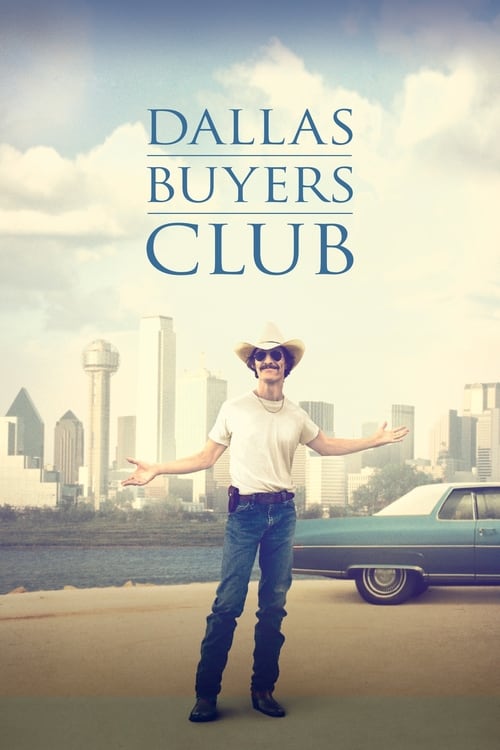
Dallas Buyers Club
2013 · Directed by Jean-Marc Vallée
Woke Score
CriticCritic Score
Audience
Based
Critics rated this 55 points above its woke score. Among Based films, this critic score ranks #98 of 345.
Representation Casting
Score: 25/100
While the film includes LGBTQ+ characters and was praised for bringing attention to the AIDS crisis, the casting of a cisgender actor in the role of Rayon and the stereotypical, sexualized portrayal of that character undermines genuine representation. The LGBTQ+ characters serve primarily as supporting figures in a straight man's redemption narrative.
LGBTQ+ Themes
Score: 35/100
The film addresses LGBTQ+ themes through its subject matter and portrayal of the AIDS crisis, but does so through a heteronormative lens that centers a homophobic protagonist's transformation. Rayon's character is criticized by scholars for perpetuating stereotypes rather than presenting authentic LGBTQ+ experience.
Feminist Agenda
Score: 0/100
No significant feminist themes or gender consciousness is evident in the film. Female characters are minimal and peripheral to the narrative.
Racial Consciousness
Score: 0/100
The film does not engage with racial themes or demonstrate racial consciousness in its storytelling or casting choices.
Climate Crusade
Score: 0/100
No climate-related themes or environmental consciousness appears in the film.
Eat the Rich
Score: 20/100
The film depicts Woodroof's black market drug distribution as a form of resistance to institutional gatekeeping, but it frames this primarily as individual entrepreneurship rather than systemic critique of pharmaceutical capitalism or medical gatekeeping as structural problems.
Body Positivity
Score: 0/100
No body positivity themes are present in the film. The depiction of AIDS-related physical deterioration serves the narrative of tragedy rather than any conscious exploration of bodily diversity or acceptance.
Neurodivergence
Score: 0/100
The film contains no exploration of neurodivergence or neurodivergent representation.
Revisionist History
Score: 15/100
While based on true events, the film revises the historical record by marginalizing the actual LGBTQ+ activists and communities central to the AIDS crisis response, instead centering a heterosexual male protagonist's arc. This represents a selective reframing of historical agency.
Lecture Energy
Score: 15/100
The film has modest preachy moments regarding FDA policy and treatment access, but it avoids heavy-handed moralizing. The tone is primarily dramatic rather than instructional.


Synopsis
Loosely based on the true-life tale of Ron Woodroof, a drug-taking, women-loving, homophobic man who in 1986 was diagnosed with HIV/AIDS and given thirty days to live.
Consciousness Assessment
Dallas Buyers Club presents the strange case of a film that courts progressive validation through its subject matter while simultaneously undermining that validation through its narrative choices. The film centers on Ron Woodroof, an initially homophobic drug dealer who discovers he has AIDS and, through self-interest, stumbles into advocacy. This framing transforms the AIDS crisis into a story about straight male redemption rather than a story about the LGBTQ+ communities who bore the brunt of the epidemic and drove the response. The representation of Rayon, a transgender sex worker played by cisgender actor Jared Leto, has drawn substantial scholarly criticism for leaning heavily into stereotypes and sexualization. Academic analysis describes the character as deployed primarily for dramatic contrast and pathos, with the film's cinematic grammar reinforcing rather than interrogating these reductive framings.
What the film does accomplish is sincere documentation of the underground drug distribution networks that emerged when mainstream medicine abandoned AIDS patients. It portrays genuine institutional failure and medical gatekeeping. The performances are undeniably committed. Yet the film's progressive credentials rest uneasily atop a narrative architecture that centers heterosexual male redemption. The protagonist's homophobia is treated as a character trait to overcome rather than a structural problem. LGBTQ+ characters exist primarily to facilitate his transformation, not to inhabit the center of their own story. The film asks us to celebrate his growth while the actual historical agents of AIDS activism remain peripheral.
The film's success at the Academy Awards, including wins for both lead performances, cemented a particular version of this story in the cultural memory. It demonstrated that mainstream audiences and institutions could embrace a film about an AIDS crisis so long as the moral center remained a heterosexual male protagonist. This is not progressive storytelling dressed in contemporary language. It is traditional narrative dressed in the clothes of social consciousness, and the fit is imperfect.
Analysis generated by our Consciousness Algorithm
Critic Reviews
“What's remarkable about Dallas Buyers Club is its lack of sentimentality. The movie, like its star, is all angles and elbows, earning its emotion through sheer pragmatism.”
“Dallas Buyers Club represents the best of what independent film on a limited budget can achieve — powerful, enlightening and not to be missed.”
“Vallée, working with a lean, lively script by Craig Borten and Melisa Wallack, neatly avoids excess, letting Woodroof’s terrific yarn stand on its own and getting out of the way of his extraordinary actors, who channel the story without condescension or manipulative cheats.”
“There is warmth and intelligence here, and undeniable sincerity, but also a determination, in the face of much painful and fascinating history, to play it safe.”
Consciousness Markers
While the film includes LGBTQ+ characters and was praised for bringing attention to the AIDS crisis, the casting of a cisgender actor in the role of Rayon and the stereotypical, sexualized portrayal of that character undermines genuine representation. The LGBTQ+ characters serve primarily as supporting figures in a straight man's redemption narrative.
The film addresses LGBTQ+ themes through its subject matter and portrayal of the AIDS crisis, but does so through a heteronormative lens that centers a homophobic protagonist's transformation. Rayon's character is criticized by scholars for perpetuating stereotypes rather than presenting authentic LGBTQ+ experience.
No significant feminist themes or gender consciousness is evident in the film. Female characters are minimal and peripheral to the narrative.
The film does not engage with racial themes or demonstrate racial consciousness in its storytelling or casting choices.
No climate-related themes or environmental consciousness appears in the film.
The film depicts Woodroof's black market drug distribution as a form of resistance to institutional gatekeeping, but it frames this primarily as individual entrepreneurship rather than systemic critique of pharmaceutical capitalism or medical gatekeeping as structural problems.
No body positivity themes are present in the film. The depiction of AIDS-related physical deterioration serves the narrative of tragedy rather than any conscious exploration of bodily diversity or acceptance.
The film contains no exploration of neurodivergence or neurodivergent representation.
While based on true events, the film revises the historical record by marginalizing the actual LGBTQ+ activists and communities central to the AIDS crisis response, instead centering a heterosexual male protagonist's arc. This represents a selective reframing of historical agency.
The film has modest preachy moments regarding FDA policy and treatment access, but it avoids heavy-handed moralizing. The tone is primarily dramatic rather than instructional.