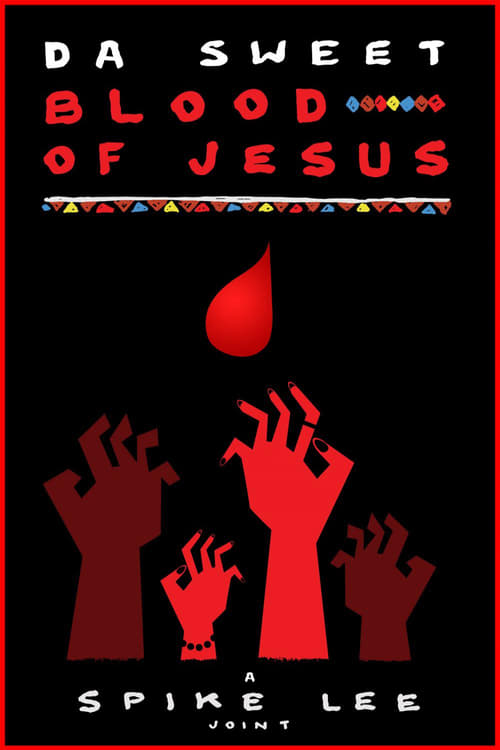
Da Sweet Blood of Jesus
2015 · Directed by Spike Lee
Woke Score
CriticCritic Score
Audience
Woke
Critics rated this 10 points below its woke score. Among Woke films, this critic score ranks #82 of 88.
Representation Casting
Score: 65/100
Features Black lead actors in a romantic vampire narrative, centering Black characters in a genre space where they were historically marginalized. This represents meaningful representation, though it is part of Lee's broader career trajectory rather than a novel statement.
LGBTQ+ Themes
Score: 0/100
No evidence of LGBTQ+ representation, themes, or characters in the film.
Feminist Agenda
Score: 40/100
Zaraah Abrahams' character is an active participant in the romantic and narrative arc, but the film does not foreground feminist critique or gender analysis as a primary concern.
Racial Consciousness
Score: 75/100
The film explicitly engages with African identity through the cursed artifact, explores Black wealth and class dynamics, and centers questions of African cultural representation. Lee's signature racial analysis is present throughout.
Climate Crusade
Score: 0/100
No evidence of climate-related themes, environmental messaging, or climate consciousness in the film.
Eat the Rich
Score: 60/100
The film examines wealth and class through Hess Green's affluent status and the dynamics of addiction and consumption, though this remains more observational than systematically anti-capitalist critique.
Body Positivity
Score: 0/100
No evidence of body positivity messaging or discussion of body image in the film.
Neurodivergence
Score: 0/100
No evidence of neurodivergence representation or discussion in the film.
Revisionist History
Score: 35/100
The film engages with African cultural artifacts and identity, updating the 1973 original for contemporary context, but this reflects cultural continuity rather than historical revisionism proper.
Lecture Energy
Score: 55/100
Lee's directorial voice and thematic complexity carry a certain pedagogical weight typical of his work, though the film is primarily a genre exercise rather than an explicitly preachy text.

Synopsis
Dr. Hess Green becomes cursed by a mysterious ancient African artifact and is overwhelmed with a newfound thirst for blood. Soon after his transformation he enters into a dangerous romance with Ganja Hightower that questions the very nature of love, addiction, sex, and status.
Consciousness Assessment
Spike Lee's 2015 vampire remake examines wealth, addiction, and African cultural identity through the transformation of a wealthy Black anthropologist cursed by an ancient artifact. The film functions as both a formal homage to Bill Gunn's 1973 "Ganja & Hess" and a contemporary exploration of race and class dynamics, anchored by Lee's characteristic visual language and thematic density. Yet the work remains a genre exercise that deploys social consciousness as atmospheric texture rather than systematic interrogation.
The film's engagement with progressive sensibilities is modest and uneven. It centers Black performers in a romantic vampire narrative at a moment when such representation in horror remained scarce, and it foregrounds questions of African identity and cultural imperialism that reflect Lee's ongoing preoccupations. However, it does not substantially engage with the specific markers of 2020s cultural awareness. There is no LGBTQ+ representation, no body positivity discourse, no discussion of neurodivergence or climate concerns. The feminist elements remain implicit.
What results is a work belonging to an earlier tradition of Black cinema, one concerned with race and class as primary analytical categories. The film's cultural moment (2015) places it before the full crystallization of contemporary progressive sensibilities, and its artistic ambitions remain rooted in Lee's long-standing project of representing Black life with formal complexity. It is a serious work that scorns easy answers, which is to say it scorns the neat pedagogical impulses one might expect from a more conventionally progressive text.
Analysis generated by our Consciousness Algorithm
Critic Reviews
“A dizzying hall-of-mirrors stunt, a horror remake as autobiographical X-ray, and a work of fantasy that serves as a decadently cleansing creative exorcism.”
“For all its loose ends and unanswered practicalities, its wild urgency is thrilling. It defies the expectations fostered by Lee’s prior films; it steps back even as it moves inward. It is, in the modern-classic sense, a late film.”
“This great-looking, often spellbinding film also shows Lee’s sometimes pervasive theatricality threatening to chomp into the story. But the swirling strangeness of “Sweet Blood” makes it his most mesmerizing work since the underrated “Bamboozled” (2000) and “25th Hour” (2002).”
“Da Sweet Blood Of Jesus is, without question, bold, distinct, and idiosyncratic filmmaking with its own voice. Unfortunately, that doesn’t necessarily mean it’s good or in any kind of reasoned key.”
Consciousness Markers
Features Black lead actors in a romantic vampire narrative, centering Black characters in a genre space where they were historically marginalized. This represents meaningful representation, though it is part of Lee's broader career trajectory rather than a novel statement.
No evidence of LGBTQ+ representation, themes, or characters in the film.
Zaraah Abrahams' character is an active participant in the romantic and narrative arc, but the film does not foreground feminist critique or gender analysis as a primary concern.
The film explicitly engages with African identity through the cursed artifact, explores Black wealth and class dynamics, and centers questions of African cultural representation. Lee's signature racial analysis is present throughout.
No evidence of climate-related themes, environmental messaging, or climate consciousness in the film.
The film examines wealth and class through Hess Green's affluent status and the dynamics of addiction and consumption, though this remains more observational than systematically anti-capitalist critique.
No evidence of body positivity messaging or discussion of body image in the film.
No evidence of neurodivergence representation or discussion in the film.
The film engages with African cultural artifacts and identity, updating the 1973 original for contemporary context, but this reflects cultural continuity rather than historical revisionism proper.
Lee's directorial voice and thematic complexity carry a certain pedagogical weight typical of his work, though the film is primarily a genre exercise rather than an explicitly preachy text.