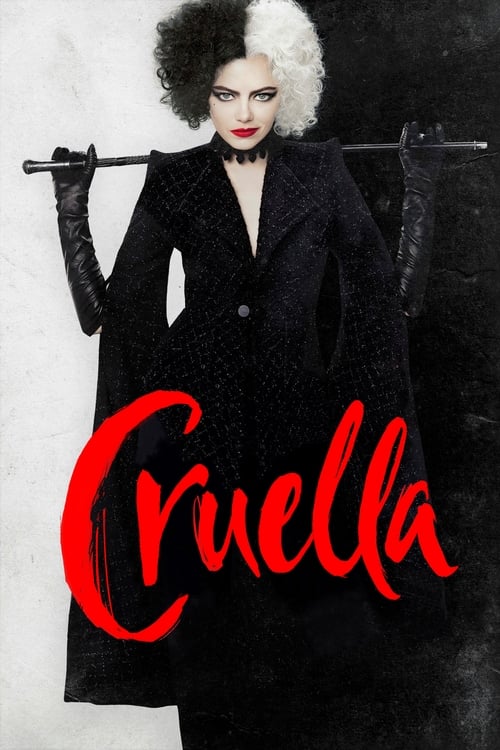
Cruella
2021 · Directed by Craig Gillespie
Woke Score
CriticCritic Score
Audience
Woke-Adjacent
Critics rated this 7 points above its woke score. Among Woke-Adjacent films, this critic score ranks #117 of 151.
Representation Casting
Score: 35/100
The ensemble cast includes actors of color in supporting roles, but the narrative centers on white protagonists and does not thematize diversity or representation.
LGBTQ+ Themes
Score: 0/100
No LGBTQ+ themes, characters, or storylines are present in the film.
Feminist Agenda
Score: 70/100
The film actively frames Cruella as rejecting traditional femininity and male validation, with critics noting the absence of male love interests saving the day. The punk rock rebellion and female ambition are central, though the feminism remains individualistic rather than systemic.
Racial Consciousness
Score: 0/100
Despite a diverse cast, the film engages with no racial themes, racial history, or racial consciousness in its narrative.
Climate Crusade
Score: 0/100
No climate-related themes or environmental consciousness appears in the film.
Eat the Rich
Score: 65/100
The film engages clearly with class struggle and wealth exploitation. Estella's poverty and the Baroness's wealth drive the narrative, though critique remains focused on individual villainy rather than systemic inequality.
Body Positivity
Score: 0/100
The film is obsessed with fashion, appearance, and beauty as markers of status and power. Body positivity is absent from its thematic concerns.
Neurodivergence
Score: 0/100
No neurodivergent characters or representation is present in the film.
Revisionist History
Score: 25/100
The film reimagines a classic villain as sympathetic and justified, though this is character rehabilitation rather than genuine historical revisionism.
Lecture Energy
Score: 40/100
Dialogue between Cruella and the Baroness contains pointed commentary on power, ambition, and female competition, but the film avoids becoming preachy or preachy overall.


Synopsis
In 1970s London amidst the punk rock revolution, a young grifter named Estella is determined to make a name for herself with her designs. She befriends a pair of young thieves who appreciate her appetite for mischief, and together they are able to build a life for themselves on the London streets. One day, Estella's flair for fashion catches the eye of the Baroness von Hellman, a fashion legend who is devastatingly chic and terrifyingly haute. But their relationship sets in motion a course of events and revelations that will cause Estella to embrace her wicked side and become the raucous, fashionable and revenge-bent Cruella.
Consciousness Assessment
Cruella arrives as a case study in the modern villain rehabilitation narrative, a genre that has become as predictable as it is philosophically slippery. The film dutifully positions its protagonist as a proto-feminist figure rebelling against a patriarchal fashion establishment, though the actual mechanics of this rebellion are primarily personal and aesthetic rather than systemic. Emma Stone's performance carries the weight of a character designed to be sympathetic, wronged, and ultimately justified in her vengeance, which is to say the film asks us to perform considerable emotional labor to excuse cruelty in the name of ambition and style.
The class consciousness on display here reads as genuine if somewhat surface-level. Estella's poverty and the Baroness's wealth form the film's ideological spine, and the narrative does engage seriously with themes of exploitation and upward mobility. Yet this engagement remains largely individual. We are watching one woman's personal revenge against another woman, not a critique of the systems that enabled either of them to exist in such extreme positions of power or powerlessness. The punk rock aesthetic provides visual cover for what is essentially a story about personal triumph through spite.
What emerges from the film's social positioning is neither particularly progressive nor particularly retrograde, but rather opportunistic. It adopts the visual language and some of the rhetorical gestures of contemporary cultural consciousness without committing to any genuine ideological project. The costume design, which earned the film its Oscar, is genuinely imaginative, suggesting that the production's real artistic ambition lay in the surface rather than the substance. For a film so obsessed with appearance, this feels almost honest.
Analysis generated by our Consciousness Algorithm
Critic Reviews
“The fashion alone, designed by the great Jenny Beavan (an Oscar winner for “A Room with a View” and “Mad Max: Fury Road”), is worth the ticket price; if that doesn’t do it for you, there’s also slyly brilliant work from the two Emmas — Stone and Thompson — working hard to upstage the gorgeous outfits in which they’re swathed.”
“None of this works without Stone, though. She’s got the comic timing for the lighter scenes as well as the acting chops to pull off the character’s psychological transformation and personal reckoning.”
“This film is so sexy and cool and punk rock, you forget all about that Mickey logo and Cinderella’s cutesy castle. ”
“Cruella takes one of the richest narrative archetypes — the madwoman — and whittles her down into a glossy, hollow, capitalism-approved monster fueled by girl-boss politics. It has nothing to say about how women move through the world.”
Consciousness Markers
The ensemble cast includes actors of color in supporting roles, but the narrative centers on white protagonists and does not thematize diversity or representation.
No LGBTQ+ themes, characters, or storylines are present in the film.
The film actively frames Cruella as rejecting traditional femininity and male validation, with critics noting the absence of male love interests saving the day. The punk rock rebellion and female ambition are central, though the feminism remains individualistic rather than systemic.
Despite a diverse cast, the film engages with no racial themes, racial history, or racial consciousness in its narrative.
No climate-related themes or environmental consciousness appears in the film.
The film engages clearly with class struggle and wealth exploitation. Estella's poverty and the Baroness's wealth drive the narrative, though critique remains focused on individual villainy rather than systemic inequality.
The film is obsessed with fashion, appearance, and beauty as markers of status and power. Body positivity is absent from its thematic concerns.
No neurodivergent characters or representation is present in the film.
The film reimagines a classic villain as sympathetic and justified, though this is character rehabilitation rather than genuine historical revisionism.
Dialogue between Cruella and the Baroness contains pointed commentary on power, ambition, and female competition, but the film avoids becoming preachy or preachy overall.