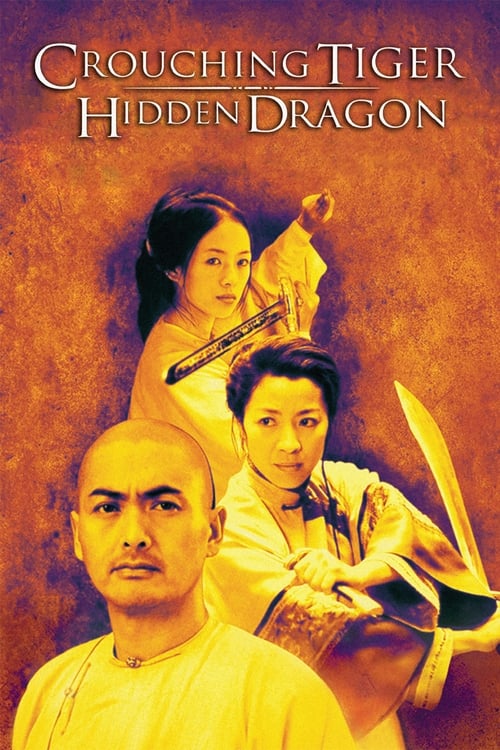
Crouching Tiger, Hidden Dragon
2000 · Directed by Ang Lee
Woke Score
CriticCritic Score
Audience
Woke-Adjacent
Critics rated this 46 points above its woke score. Among Woke-Adjacent films, this critic score ranks #3 of 151.
Representation Casting
Score: 75/100
All-Asian cast with Michelle Yeoh and Zhang Ziyi in lead roles, representing meaningful diversity in international prestige cinema. The casting reflects artistic authenticity to the source material rather than diversity mandate, yet achieves substantial representation nonetheless.
LGBTQ+ Themes
Score: 35/100
Coded homoerotic subtext between Jen and Lo exists within the narrative, but remains implicit and textual rather than explicit. The film does not address same-sex desire directly or advocate for LGBTQ+ recognition.
Feminist Agenda
Score: 60/100
Two female protagonists possess agency, skill, and interiority. The narrative engages with resistance to patriarchal marriage expectations and female autonomy, though framed through personal ethics rather than systemic critique.
Racial Consciousness
Score: 25/100
The film contains no explicit examination of racial dynamics or systemic racial inequality. While the all-Asian cast represents positive representation, the film does not engage in racial consciousness or commentary.
Climate Crusade
Score: 0/100
No evidence of climate-related themes or environmental consciousness in the film.
Eat the Rich
Score: 20/100
The film contains minimal critique of economic systems or capitalist structures. While the narrative involves conflict over material objects (the sword), this serves plot mechanics rather than ideological statement.
Body Positivity
Score: 0/100
No evidence of body positivity messaging or critique of beauty standards in the film.
Neurodivergence
Score: 0/100
No representation of neurodivergent characters or engagement with neurodiversity themes.
Revisionist History
Score: 0/100
The film is set in a fictional, mythic version of imperial China and does not attempt to revise historical narratives or challenge established historical accounts.
Lecture Energy
Score: 15/100
The film maintains contemplative pacing and philosophical depth without preachy explanation. Characters discuss honor and duty in naturalistic dialogue rather than expository lectures about social values.


Synopsis
Two warriors in pursuit of a stolen sword and a notorious fugitive are led to an impetuous, physically-skilled, teenage nobleman's daughter, who is at a crossroads in her life.
Consciousness Assessment
Crouching Tiger, Hidden Dragon occupies an unusual position in the cultural timeline, arriving just before the crystallization of contemporary progressive discourse yet containing several elements that would later be coded as aligned with such sensibilities. The film centers a strong female protagonist and features two complex, capable women navigating systems that constrain them, yet does so in service of a story fundamentally concerned with honor codes and philosophical questions rather than explicit social critique. Michelle Yeoh and Zhang Ziyi deliver performances of genuine power and interiority, moving beyond the typical martial arts heroine archetype of Western action cinema. The film's all-Asian cast and Ang Lee's direction constitute meaningful representation in international prestige cinema, though one must note this emerges from artistic necessity rather than ideological positioning.
The film's engagement with same-sex desire remains coded and textual rather than explicit, a reflection of the historical moment and the source material's constraints. The romantic tension between Jen and Lo contains undeniable homoerotic charge, yet the narrative never permits this to surface into open acknowledgment. Whether this constitutes progressive representation or merely subtext awaiting excavation by contemporary viewers remains contested ground. The film's critique of patriarchal marriage expectations and female autonomy reads as genuinely felt rather than inserted, rooted in the philosophical traditions the film explores. However, these themes operate within a register of personal ethics and duty rather than systemic analysis.
What distinguishes this film is its refusal of preachiness. It contains progressive elements without announcing them, allowing viewers to encounter female agency, cross-cultural collaboration, and implicit queerness as natural features of its world rather than subjects demanding commentary. This restraint reads differently now than it did in 2000, when such representation felt novel. By contemporary standards, the film's obliqueness on social questions and its preoccupation with individual honor over collective struggle mark it as somewhat distant from the explicit consciousness that emerged in the subsequent two decades.
Analysis generated by our Consciousness Algorithm
Critic Reviews
“Handsome, passionate and fun. It's everything we go to the movies for.”
“This is a great movie, but it needs a sales job because it's in Mandarin.”
“You have never seen a movie like Crouching Tiger, Hidden Dragon because there has never been a movie like it.”
“The film may be too talky for action-minded viewers and too fantastic for more serious spectators, but it brings appealing twists - including a feminist sensibility - to the venerable martial-arts genre.”
Consciousness Markers
All-Asian cast with Michelle Yeoh and Zhang Ziyi in lead roles, representing meaningful diversity in international prestige cinema. The casting reflects artistic authenticity to the source material rather than diversity mandate, yet achieves substantial representation nonetheless.
Coded homoerotic subtext between Jen and Lo exists within the narrative, but remains implicit and textual rather than explicit. The film does not address same-sex desire directly or advocate for LGBTQ+ recognition.
Two female protagonists possess agency, skill, and interiority. The narrative engages with resistance to patriarchal marriage expectations and female autonomy, though framed through personal ethics rather than systemic critique.
The film contains no explicit examination of racial dynamics or systemic racial inequality. While the all-Asian cast represents positive representation, the film does not engage in racial consciousness or commentary.
No evidence of climate-related themes or environmental consciousness in the film.
The film contains minimal critique of economic systems or capitalist structures. While the narrative involves conflict over material objects (the sword), this serves plot mechanics rather than ideological statement.
No evidence of body positivity messaging or critique of beauty standards in the film.
No representation of neurodivergent characters or engagement with neurodiversity themes.
The film is set in a fictional, mythic version of imperial China and does not attempt to revise historical narratives or challenge established historical accounts.
The film maintains contemplative pacing and philosophical depth without preachy explanation. Characters discuss honor and duty in naturalistic dialogue rather than expository lectures about social values.