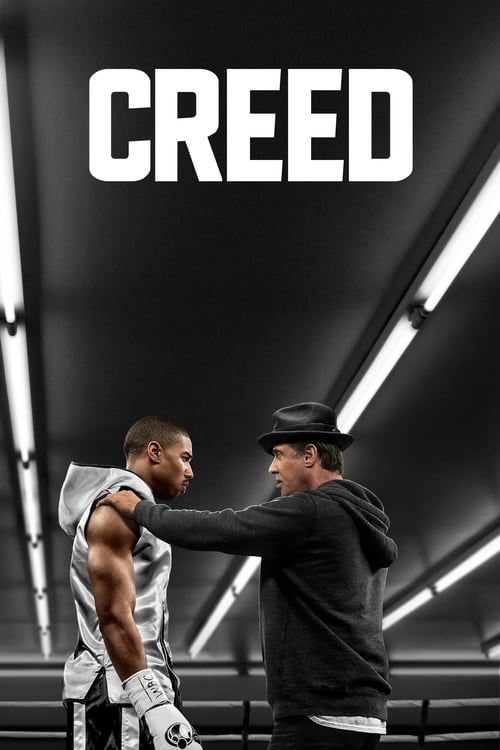
Creed
2015 · Directed by Ryan Coogler
Woke Score
CriticCritic Score
Audience
Ultra Based
Critics rated this 64 points above its woke score. Among Ultra Based films, this critic score ranks #312 of 1469.
Representation Casting
Score: 35/100
The film features a diverse cast with Michael B. Jordan in the lead and Tessa Thompson and Phylicia Rashad in substantial roles. However, the casting reflects natural contemporary diversity rather than explicit attention to representation as a thematic concern.
LGBTQ+ Themes
Score: 0/100
No LGBTQ+ themes, characters, or representation present in the film.
Feminist Agenda
Score: 15/100
Tessa Thompson's character has some agency as a musician and love interest, but the narrative remains centered on the male protagonist and does not foreground feminist themes or women's experiences.
Racial Consciousness
Score: 20/100
While the film features a predominantly Black cast and engages with Apollo Creed's legacy, it does not explicitly address systemic racism or racial consciousness as central thematic concerns. The focus remains on personal ambition rather than structural critique.
Climate Crusade
Score: 0/100
No climate-related themes or environmental consciousness present in the film.
Eat the Rich
Score: 0/100
The film celebrates personal achievement and wealth accumulation through boxing. It operates within capitalist frameworks without critique.
Body Positivity
Score: 0/100
The film celebrates athletic physiques and boxing prowess without engaging in body positivity messaging or inclusive representation of diverse body types.
Neurodivergence
Score: 0/100
No representation of neurodivergence or neurodivergent characters in the film.
Revisionist History
Score: 0/100
The film is a fictional spinoff continuing the Rocky universe and does not engage with real historical events or revisionist history.
Lecture Energy
Score: 10/100
The film uses mentorship scenes and dialogue to convey themes, but these remain character-driven and narrative-integrated rather than preachy or preachy.


Synopsis
The former World Heavyweight Champion Rocky Balboa serves as a trainer and mentor to Adonis Johnson, the son of his late friend and former rival Apollo Creed.
Consciousness Assessment
Creed presents itself as a straightforward inheritance narrative, the kind of film where one generation passes its burdens and wisdom to another through the medium of boxing. Director Ryan Coogler brings a steady hand to this material, crafting a film that is competent, occasionally moving, and fundamentally uninterested in interrogating the social conditions surrounding its characters. Michael B. Jordan's Adonis Creed is driven by personal ambition and the weight of his father's legacy, not by any particular consciousness of the world around him.
The film's approach to representation might be mistaken for progressive sensibility by those unfamiliar with the distinction between mere presence and thematic engagement. A predominantly Black cast occupies the screen, but the narrative does not concern itself with what that presence might signify culturally or historically. Adonis is wealthy, driven, and ultimately successful not because of systemic barriers overcome, but because he possesses talent and determination. Tessa Thompson's character exists primarily as a romantic interest and sounding board, a musician who represents artistic sensitivity but whose own agency remains secondary to the central male narrative.
The film operates within the conventions of the sports drama genre without questioning those conventions or the ideological assumptions they carry. There is no interrogation of capitalism, no examination of structural inequality, no suggestion that the personal triumph of one individual might be insufficient to address broader social questions. Creed asks us to invest in Adonis's journey, and it is a perfectly serviceable journey, but it asks very little of itself in terms of cultural awareness or critical perspective. This is a film content to entertain within established boundaries.
Analysis generated by our Consciousness Algorithm
Critic Reviews
“By the time Coogler wraps things up, his film manages the difficult trick of looking back with earned nostalgia and standing alone as a genuinely strong dramatic piece.”
“Creed is corny like the old Rocky films, but riveting like the old Rocky films, too.”
“There are as many quietly effective moments as there are stand-up-and-cheer moments, and they’re all handled with skill and dexterity on both sides of the camera.”
“At this stage of this saga, you kind of know where it’s going and which emotional buttons will be punched, the ones I predicted way back in 1984 with my little "IV-I.V.” crack. Another two hours and 13 minutes of it, even with decent “Rocky” style (roundhouse punch after roundhouse punch) is hardly merited.”
Consciousness Markers
The film features a diverse cast with Michael B. Jordan in the lead and Tessa Thompson and Phylicia Rashad in substantial roles. However, the casting reflects natural contemporary diversity rather than explicit attention to representation as a thematic concern.
No LGBTQ+ themes, characters, or representation present in the film.
Tessa Thompson's character has some agency as a musician and love interest, but the narrative remains centered on the male protagonist and does not foreground feminist themes or women's experiences.
While the film features a predominantly Black cast and engages with Apollo Creed's legacy, it does not explicitly address systemic racism or racial consciousness as central thematic concerns. The focus remains on personal ambition rather than structural critique.
No climate-related themes or environmental consciousness present in the film.
The film celebrates personal achievement and wealth accumulation through boxing. It operates within capitalist frameworks without critique.
The film celebrates athletic physiques and boxing prowess without engaging in body positivity messaging or inclusive representation of diverse body types.
No representation of neurodivergence or neurodivergent characters in the film.
The film is a fictional spinoff continuing the Rocky universe and does not engage with real historical events or revisionist history.
The film uses mentorship scenes and dialogue to convey themes, but these remain character-driven and narrative-integrated rather than preachy or preachy.