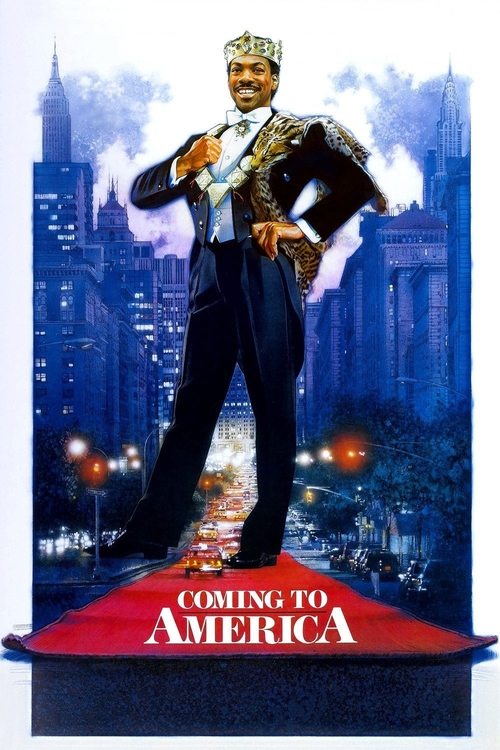
Coming to America
1988 · Directed by John Landis
Woke Score
CriticCritic Score
Audience
Ultra Based
Critics rated this 32 points above its woke score. Among Ultra Based films, this critic score ranks #1231 of 1469.
Representation Casting
Score: 45/100
The film features a predominantly Black cast in a major studio comedy, which was notable for 1988. However, this representation serves primarily comedic purposes rather than expressing deliberate progressive casting philosophy.
LGBTQ+ Themes
Score: 0/100
No LGBTQ+ themes or characters appear in the film. Sexual orientation is not addressed or explored in any capacity.
Feminist Agenda
Score: 15/100
Nala expresses a desire for an intelligent partner over an arranged marriage, which could be interpreted as mild feminist sentiment. However, the film does not seriously engage with gender dynamics or women's agency beyond this romantic subplot.
Racial Consciousness
Score: 8/100
While the film features African characters and culture, it treats Africa primarily as exotic backdrop rather than engaging with any serious racial consciousness or critique of racial systems.
Climate Crusade
Score: 0/100
Environmental themes are entirely absent from the film. Climate change and ecological concerns are not mentioned or addressed.
Eat the Rich
Score: 5/100
The film's plot involves a wealthy prince learning humility through temporary poverty, but this registers as a standard romantic comedy trope rather than genuine anti-capitalist critique.
Body Positivity
Score: 0/100
The film contains no body diversity messaging or body positivity themes. Physical appearance is treated conventionally for 1980s comedy cinema.
Neurodivergence
Score: 0/100
Neurodivergence and disability representation are entirely absent. No characters are depicted with developmental or neurological differences.
Revisionist History
Score: 0/100
The film makes no attempt to rewrite or reinterpret historical events. Historical consciousness is not present in the narrative.
Lecture Energy
Score: 5/100
The film occasionally moralizes about the importance of finding a partner based on character and intelligence rather than social status, but these moments are light and never achieve preachy intensity.


Synopsis
An African prince decides it's time for him to find a princess... and his mission leads him and his most loyal friend to Queens, New York. In disguise as an impoverished immigrant, the pampered prince quickly finds himself a new job, new friends, new digs, new enemies and lots of trouble.
Consciousness Assessment
Coming to America presents a curious artifact of late 1980s comedy cinema, one where an all-Black cast and African subject matter do not necessarily signify what we might now recognize as progressive cultural awareness. The film's treatment of Africa functions primarily as exotic backdrop and comic fodder rather than as serious engagement with African identity or politics. Prince Akeem's journey to America, while nominally about self-discovery and finding a partner based on intellectual compatibility, mostly serves as a vehicle for Murphy and Hall to showcase their comedic range through various characters. The film does deserve credit for its sheer concentration of Black performers in leading and supporting roles, a notable achievement for a major studio comedy in 1988, yet this representation exists largely divorced from any articulate social consciousness about race relations or Black identity.
The film's racial politics, such as they are, operate at a level of almost complete abstraction. We encounter no genuine examination of racism, no critique of power structures, no interrogation of why an African prince might feel compelled to travel to America in the first place. Instead, the humor derives from situational comedy, physical comedy, and Murphy's improvisational talents. Shari Headley's Nala is presented as an intelligent, independent woman who rejects arranged marriage, which might register as mildly progressive for 1988, though the film never seriously grapples with gender dynamics or feminist concerns. The movie's Africa, depicted in the opening sequences, trades in visual stereotypes and caricature. By contemporary standards, the film's treatment of African culture reads as Orientalist Othering, the kind of strategic exoticization that critical scholars have since identified as problematic.
What remains most striking about Coming to America, viewed through the lens of present-day cultural analysis, is its profound indifference to the very categories we now use to evaluate films. It is simply a comedy that happened to star Black actors, made by white director John Landis, for a broad mainstream audience. This makes it neither admirably ahead of its time nor particularly culpable by modern standards. It occupies a kind of cultural middle ground, innocent of the specific preoccupations that define contemporary progressive sensibilities, yet not innocent of the stereotyping that marked entertainment of its era.
Analysis generated by our Consciousness Algorithm
Critic Reviews
“Eddie Murphy does everything in this movie successfully. Coming To America remains his most personal work and a great argument that a movie can be decent and wholesome despite having enough profanity to make Bill Cosby lose sleep. A perfect argument for Eddie Murphy as decent guy even without the fame and fortune. Not that he's planning on giving it back though.”
“It's a sweet, oft-told story, and Murphy and Hall add a number of very sharp supporting roles-hidden by makeup-to add spice to the general level of gentleness. [1 Jul 1988, p.A]”
“Eddie Murphy's latest picture, Coming to America, is a harmless, fairly amusing comedy that will delight Eddie Murphy fans and keep everyone else mildly entertained. [30 Jun 1988, p.E1]”
“In past celluloid lives Eddie Murphy has been responsible for a handful of the most popular movies ever made, which explains why he has been able to bring Coming to America to your neighborhood theatre with its misogyny, technical ineptitude and witlessness intact.”
Consciousness Markers
The film features a predominantly Black cast in a major studio comedy, which was notable for 1988. However, this representation serves primarily comedic purposes rather than expressing deliberate progressive casting philosophy.
No LGBTQ+ themes or characters appear in the film. Sexual orientation is not addressed or explored in any capacity.
Nala expresses a desire for an intelligent partner over an arranged marriage, which could be interpreted as mild feminist sentiment. However, the film does not seriously engage with gender dynamics or women's agency beyond this romantic subplot.
While the film features African characters and culture, it treats Africa primarily as exotic backdrop rather than engaging with any serious racial consciousness or critique of racial systems.
Environmental themes are entirely absent from the film. Climate change and ecological concerns are not mentioned or addressed.
The film's plot involves a wealthy prince learning humility through temporary poverty, but this registers as a standard romantic comedy trope rather than genuine anti-capitalist critique.
The film contains no body diversity messaging or body positivity themes. Physical appearance is treated conventionally for 1980s comedy cinema.
Neurodivergence and disability representation are entirely absent. No characters are depicted with developmental or neurological differences.
The film makes no attempt to rewrite or reinterpret historical events. Historical consciousness is not present in the narrative.
The film occasionally moralizes about the importance of finding a partner based on character and intelligence rather than social status, but these moments are light and never achieve preachy intensity.